Premarket: U.S. stock futures dip as Intel plunges, geopolitical concerns linger
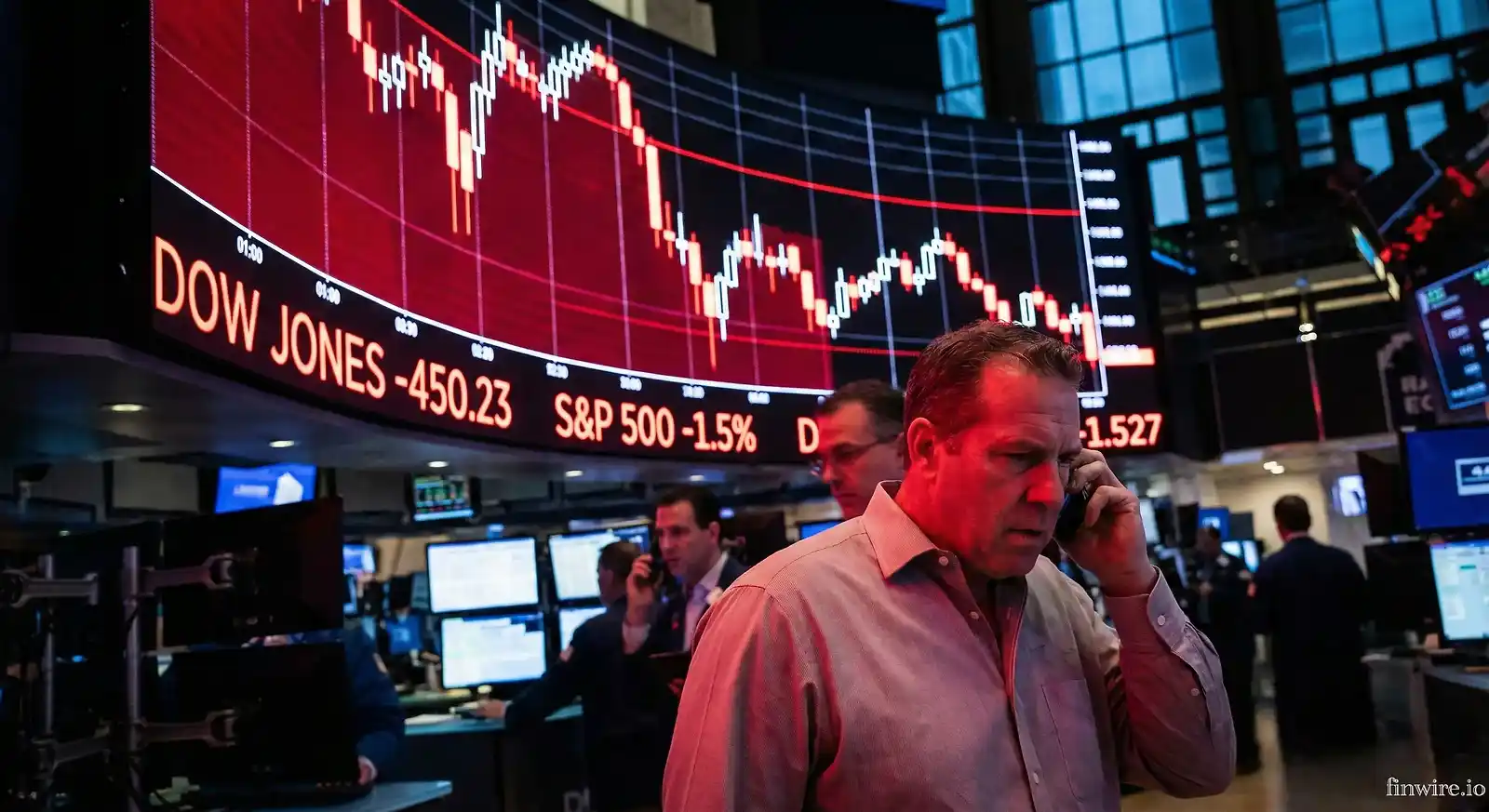
U.S. stock futures dipped on Friday, signaling a second consecutive week of declines for the S&P 500 and Nasdaq, as Intel’s shares plunged after disappointing forecasts, while lingering geopolitical tensions weighed on sentiment.
Stocks have rebounded in the past two sessions following Tuesday’s sharp selloff triggered by U.S. President Donald Trump’s threats to impose tariffs on European allies until Washington was allowed to buy Greenland.
Although Trump later backed off from tariff threats and ruled out taking Greenland by force, the benchmark S&P 500 and the tech-heavy Nasdaq still look set to end the week with losses.
Safe-haven gold rallied to a record high in further evidence of the risk-off mood prevailing among investors.
By 5:57 a.m. ET, S&P 500 E-minis were down 16.25 points, or 0.23 per cent. Nasdaq 100 E-minis fell 91 points, or 0.35 per cent, and Dow E-minis dropped 117 points, or 0.24 per cent
Intel’s shares slid 13.6 per cent in premarket trading after the chipmaker forecast quarterly revenue and profit below market estimates, saying it struggled to satisfy demand for its server chips used in AI data centers. Its shares have surged about 50 per cent since the start of the year.
Many of the so-called Magnificent Seven stocks, including Apple, Tesla and Microsoft, are set to report earnings next week. Given their weightage on indexes, their outlooks will be closely watched to see how much juice remains in the growth stories which so far have justified their sky-high valuations.
Driven by a strong U.S. economy and expectations of interest rate cuts this year, market gains have broadened beyond the megacap names to other pockets in the stock market. Both the small-cap Russell 2000 and the Dow Jones Transports indexes touched record highs on Thursday.
After some better-than-expected economic data releases on Thursday, investors await the S&P Global’s business activity surveys for January and University of Michigan’s consumer sentiment data later in the day.
The Federal Reserve is widely expected to hold interest rates in the 3.5 per cent-3.75 per cent range after its policy meeting next week.
Trump, who has criticized Jerome Powell for waiting too long to cut interest rates, said he will soon announce his pick for the next Fed chair.
Among other movers, Intuitive Surgical rose 3.7 per cent after it beat Wall Street estimates for fourth-quarter profit and revenue on growing demand for its surgical robots used in minimally invasive procedures.
U.S.-listed shares of silver miners such as Hecla Mining and Coeur Mining rose 2 per cent and 0.7 per cent, respectively, as silver prices touched record highs and neared $100-per-ounce mark for the first time.
The yen traded choppily on Friday with traders nervous that Japanese authorities are close to intervening directly in markets to support their currency, while global stocks held firm after U.S. President Donald Trump’s softer stance on Greenland.
The Bank of Japan earlier in the day signalled its readiness to continue raising still-low borrowing costs against the backdrop of a politically-charged atmosphere, with the country’s snap election next month.
And, early in London trading, the yen suddenly swung from a loss to a sudden gain versus the dollar, causing traders to infer some Japanese authorities may have run rate checks with banks -- often used to signal to the market their readiness to intervene to support a currency at 18 month lows to the dollar.
Meanwhile, two-year Japanese government bond yields climbed to 1.25 per cent for the first time since August 1996.
“The (BOJ’s) tone appears hawkish,” said David Chao, global market strategist for Asia-Pacific at Invesco in Singapore. “The BOJ has raised four of its six inflation projections and indicated that further rate hikes are likely if these forecasts are realised.”
Global stocks have clawed back much of the ground lost early in the week on rising tensions between the United States and Europe over Greenland, after President Donald Trump said he would not slap on trade tariffs for now and would not take the territory by force.
Global stocks were up 0.1 per cent, while European stocks opened broadly flat.
“Trump is really unpredictable, we know that. We still can have some threats one way or the other... It’s sure that the Europeans are still very cautious on this environment,” said Marie de Leyssac, portfolio manager at Edmond de Rothschild Asset Management.
Some big Northern European investors are increasingly wary of the risks of holding U.S. assets.
“What it absolutely does is to heighten risk... It is making us think about cash levels and about our allocations to bonds and equities,” said Neil Birrell, chief investment officer at Premier Miton.
The U.S. dollar index, which measures the currency’s strength against a basket of six currencies, was last broadly flat at 98.336, close to its lowest levels of the year after logging its biggest one-day fall in six weeks on Thursday.
The dollar was last down 0.2 per cent versus the yen at 158.02.
Fed funds futures are pricing an implied 95 per cent probability that the U.S. Federal Reserve will keep rates on hold at its next two-day meeting on January 28, little changed from a day earlier, according to the CME Group’s FedWatch tool.
The yield on the U.S. 10-year Treasury bond was last at 4.2351 per cent.
Precious metals markets including gold set new records. Spot gold hit a record $4,967.03 before slipping 0.6 per cent to $4,908.
In energy markets, Brent crude futures were last up 1.1 per cent at $64.74 a barrel, steadying after Trump’s softer tone towards Greenland and as Iran eased fears of geopolitical risks disrupting supply.
Reuters