TSX suffers its steepest drop since early June as commodity prices tumble
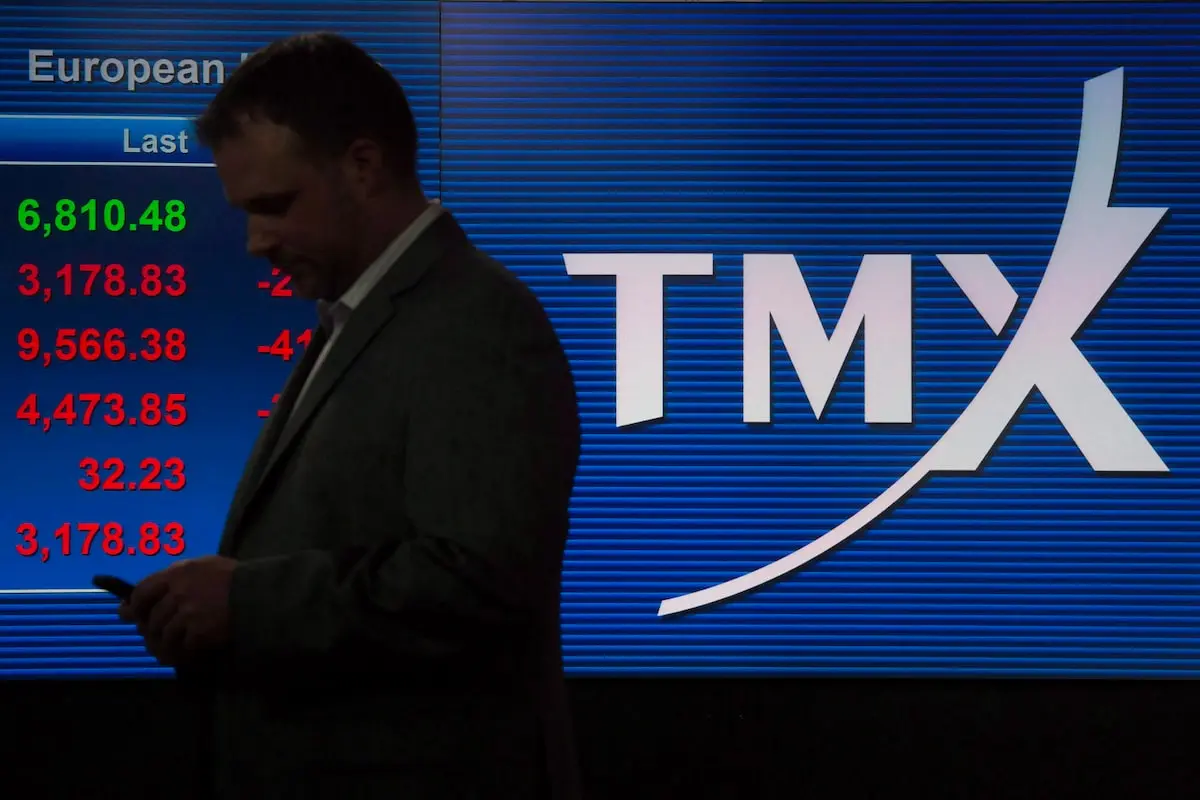
Canadian benchmark at lowest closing level since June 10; Wall Street ends mixed
Listen to this article
Learn more about audio
Canada’s main stock index fell more than 2% to hit a five-month low on Wednesday, as declines for oil and metal prices triggered a selloff in the energy and materials sectors.
The S&P/TSX Composite Index ended down 737.25 points, or 2.1%, at 34,578.05, its steepest decline since June 5 and the lowest closing level since June 10.
The decline was much steeper than for many other indexes globally, including the S&P 500, owing to its much heavier weighting in commodity stocks. The US benchmark was down 0.2% as investors digested Nvidia’s results ahead of Anthropic’s initial public offering pricing.
“The TSX has held up relatively better than other markets for the last few years on the strength of commodities,” said Greg Taylor, chief investment officer at PenderFund Capital Management. “That’s coming back in the last month or so and it’s definitely leaving a mark on a lot of portfolios.”
The TSX has climbed 9% since the start of 2026 after adding 28% in 2025, outperforming the S&P 500 both years.
The materials group, which includes metal mining shares, fell 5.4% on Wednesday, with Agnico Eagle Mines down 6.3%.
The price of gold dropped 3.4% to trade at a 14-month low as hawkish comments from Federal Reserve Governor Christopher Waller boosted the US dollar, while copper posted an even steeper decline, falling 5.25%. The red metal marked its biggest percentage loss in 19 months as speculators rushed to sell, spurred by worries over rising inflation and a buoyant greenback.
US crude oil futures settled 3.2% lower at US$83.26 a barrel, contributing to a 3.8% decline for energy, after US crude and fuel inventories data added to expectations of a supply surplus.
Heavily weighted financials also lost ground, falling 2.2%.
Most other major TSX sectors notched gains, including consumer discretionary, which was up 0.9%.
On Wall Street, after gyrating early in the session, the Nasdaq closed modestly higher, the Dow ended sharply lower, and the S&P 500 reversed its modest gains to settle in negative territory following the release of the latest Fed minutes.
Minutes from the Fed’s October policy meeting showed the central bank remained focused on inflation risks, recognizing the need for further rate hikes if the economy progresses as expected. A few policymakers argued the case for a 50-basis-point rate hike “if incoming inflation data were unfavorable.”
Consumer and producer price data released after the October meeting showed hotter-than-expected price growth.
Financial markets are pricing in a near-certain probability of a 25-basis-point interest rate hike at the conclusion of the Fed’s December meeting, according to CME’s FedWatch tool.
Nvidia’s quarterly results released late Tuesday beat analyst expectations, and the AI chipmaker forecast quarterly revenue above estimates. Even so, its shares fell 2.9% amid uncertainties caused by co-founder Jensen Huang’s sudden departure last week.
The Philadelphia SE Semiconductor Index, which has handily outperformed the broader market this year, eked out a 0.1% gain after spending much of the session in the red, underscoring lofty expectations for the sector amid massive spending on AI infrastructure and potential risk associated with the nascent technology.
Anthropic priced its IPO at $83 a share, above its targeted range of $70 to $78 per share, in one of the largest stock market IPOs on record and the first by a major frontier AI model developer, according to a person familiar with the matter. Bloomberg News first reported the pricing.
Other chipmakers were mixed. Intel dropped 0.9%, Micron dipped 1%, but Advanced Micro Devices gained 5.3%.
“There’s been a lot of dark clouds of uncertainty over technology, chip stocks and AI in general,” said Ryan Detrick, chief market strategist at Carson Group in Omaha. “It’s important to remember the market’s not totally falling apart here. It clearly is top-heavy with tech, but there are other groups that are actually doing pretty well under the surface.”
Among other U.S. stocks, Target jumped 4% after the discount retailer provided an upbeat holiday outlook. Results from its larger rival Walmart are expected on Thursday.
TJX surged 8% after forecasting strong annual sales, banking on high demand ahead of the holiday shopping season.
Take-Two Interactive shares rose 6.2% ahead of the rollout of its Grand Theft Auto VI video game.
On the sector level, consumer discretionary was a clear outperformer, with a boost from a 3.8% gain in Amazon shares.
The Dow Jones Industrial Average fell 561.25 points, or 1.11%, to 50,198.17, the S&P 500 lost 16.89 points, or 0.23%, to 7,323.64 and the Nasdaq Composite gained 101.50 points, or 0.42%, to 24,429.89.
Declining issues outnumbered advancers by a 1.41-to-1 ratio on the NYSE. There were 43 new highs and 642 new lows on the NYSE. On the Nasdaq, 2,197 stocks rose and 2,569 fell as declining issues outnumbered advancers by a 1.17-to-1 ratio. The S&P 500 posted 4 new 52-week highs and 8 new lows, while the Nasdaq Composite recorded 33 new highs and 439 new lows.
Volume on US exchanges was 17.46 billion shares, compared with the 18.90 billion average for the full session over the last 20 trading days.
Reuters, Globe staff