Major stock indexes end sharply lower as Anthropic’s debut fails to revive AI fervour
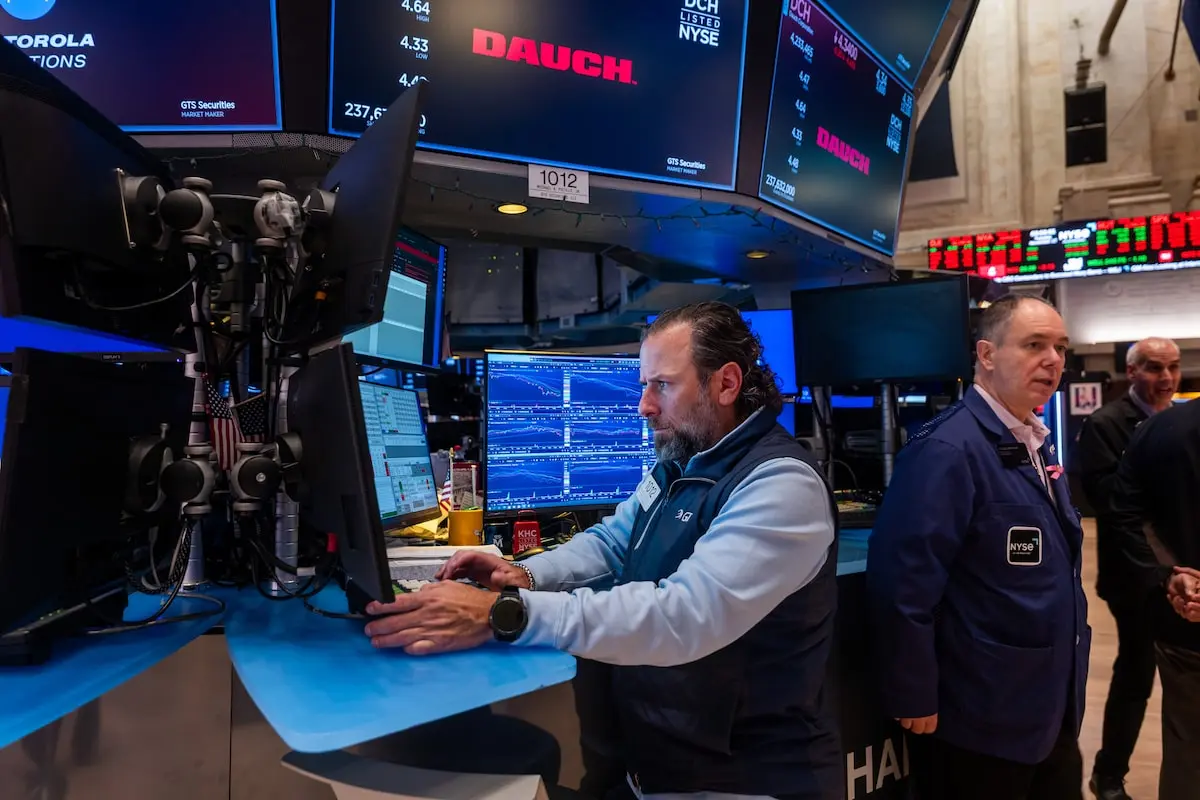
Major stock indexes closed sharply lower on Thursday after Anthropic’s super-sized IPO failed to revitalize faded enthusiasm over artificial intelligence, with the S&P 500 and TSX marking their longest losing streaks since 2024. The Dow tumbled more than 1,100 points.
Anthropic’s debut, the largest IPO on record, was priced late Wednesday at US$83 per share and was widely viewed as the next high bar to clear for the AI trade. The stock opened at US$111.50 shortly before noon. After the company’s market valuation briefly surpassed US$2-trillion, its momentum began to lose steam. The stock closed at $97.17.
Markets broadly started selling off once Anthropic began trading, with some investors heavily selling off existing stock positions to buy into Anthropic.
“The Anthropic IPO is attracting gobs of attention,” said Jed Ellerbroek, portfolio manager at Argent Capital in St. Louis, Missouri. “That money is coming from somewhere; investors are making changes in their portfolio to incorporate Anthropic, so I wouldn’t extrapolate a whole lot of meaning from today’s trading behavior, whether it’s up or down.”
The S&P 500 dropped 2% for a sixth straight loss. It’s down 8.2% from its record set last month and is now flirting with correction territory - which is triggered when an index falls 10% from recent highs.
Canada’s S&P/TSX Composite Index didn’t fare much better than U.S. indexes, falling 1.59%. The domestic tech sector lost 3.2% and a further drop in gold prices kept the heavily weighted materials sector under pressure.
AI euphoria has somewhat cooled in recent weeks, marked by Nvidia CEO Jensen Huang’s exit, but now shifts Wall Street’s spotlight on to its rival OpenAI as the industry’s next major public listing.
“We like the enterprise AI narrative, but we do not like overpaying for market sentiment. It isn’t a prudent ’buy-at-any-price’ opportunity for retail wealth clients,” said Talley Leger, chief market strategist at The Wealth Consulting Group. “History shows that retail investors buying hot tech IPOs on day one historically underperform broad market indexes over a 3-year horizon.”
AI technology has boosted economic growth, but sparked doomsday warnings and arguably helped usher in a data-center-skeptic Democratic tsunami in the U.S. midterm elections.
Investors who once embraced the boom have turned skeptical in recent weeks over concerns that the enormous spending needed to build out the sector and the mounting debt loads may not be justified by the eventual returns. Anthropic, too, has signalled it may tap debt markets.
Interest rates have also been key to the pullback in markets in recent weeks.
Following Wednesday’s release of minutes from the US Federal Reserve’s October policy meeting, investors are recalibrating their expectations pertaining to upcoming rate decisions.
The minutes revealed a desire to rein in inflation even prior to the recent release of consumer and producer price indexes, which showed price pressures heating up.
Financial markets are currently pricing in a 96.4% likelihood of a 25-basis-point rate hike at the central bank’s December meeting, with a small chance of a super-sized 50-basis-point increase, according to CME’s FedWatch tool.
Next week, the Commerce Department is expected to release its personal consumption expenditures (PCE) report, which includes the Fed’s preferred inflation gauge, the PCE price index. Analysts expect the report to show year-on-year core inflation of 3.2%, well above the central bank’s 2% annual target.
Expectations for higher U.S. interest rates have influenced the outlook for rates in Canada as well. Money markets are now pricing in close to a 75% chance the Bank of Canada will hike interest rates at its next policy meeting in December.
The S&P/TSX Composite Index ended down 549.32 points at 34,028.73, its lowest closing level since May 19. The daily losing streak was the longest since December 2024. All the major sectors traded in negative territory.
Gold fell 1.6% to a 14-month low as it continued to face pressure from US dollar strength, a reflection of expectations the Fed will hike interest rates soon. The materials sector fell 2.9%.
Heavily weighted financials and energy in Toronto both ended 1% lower. US crude oil futures settled down 0.1% at $83.21 a barrel as the prospect of surplus supply offset fresh reports of tanker disruptions in the Strait of Hormuz.
Telus, the target of a Quebecor takeover proposal, was a bright spot. Its shares rose 13.7% after the Globe and Mail reported that BCE has held preliminary discussions with the company.
The Dow Jones Industrial Average fell 1,101.11 points, or 2.19%, to 49,097.06, the S&P 500 lost 147.80 points, to 7,175.83 and the Nasdaq Composite lost 550.68 points, or 2.25%, to 23,879.20.
Among other U.S. stocks, Advanced Micro Devices shares tumbled 7.7% after investigative outlet Hunterbrook said its affiliated fund, Hunterbrook Capital, had taken a short position in the company.
Nvidia declined 3.3%, its sixth straight losing session, after the chipmaker’s upbeat revenue forecast did little to lift sentiment.
The Philadelphia Semiconductor Index closed 2.4% lower on the day. Neocloud firms CoreWeave dropped 6.1% and Nebius slid 9.4%. The broader technology sector ended down 1.9%.
Elsewhere, Palo Alto Networks shares jumped 6.4% after the cybersecurity firm raised its 2027 revenue guidance. And Walmart slipped 1.0% following the retail giant’s disappointing annual sales forecast.
Reuters, Globe staff