Stocks close lower as Nvidia falls
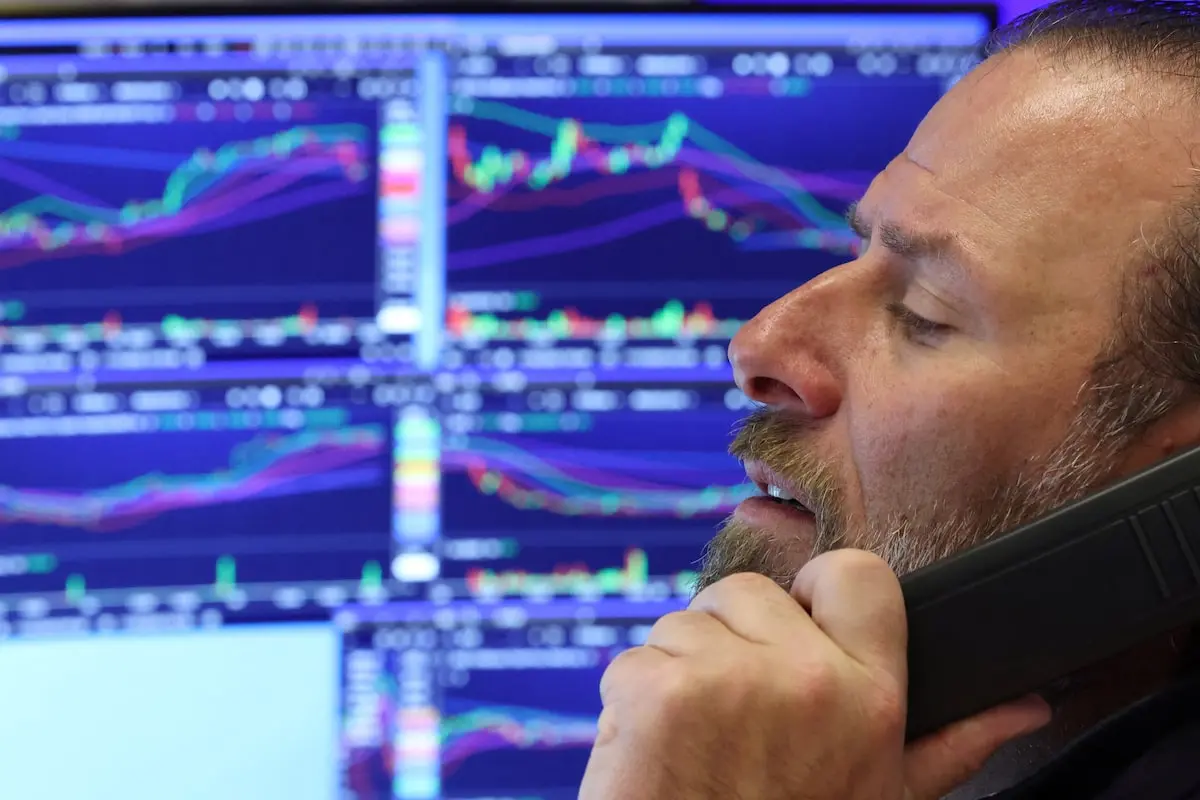
U.S. stocks closed lower on Thursday, as a drop in Nvidia shares after CEO Jensen Huang’s exit outweighed gains in energy shares. Canadian equities were also lower, as a drop in gold prices weighed on metal mining shares.
The chip company’s shares fell 4.3 per cent but were well off the day’s lowest level after earlier dropping nearly 12 per cent. Retail investors bought Nvidia shares worth about US$111 million in the first half hour of trading, the biggest opening bid on record for the stock, according to data from Vanda Analytics.
Global AI-linked stocks fell and AI cloud firm Nebius tumbled 16.8 per cent, its biggest daily percentage drop since July 1, after reporting its quarterly earnings and outlook. But Nvidia competitors such as Broadcom, Advanced Micro Devices and Alphabet each moved higher and were among the biggest boosts to the S&P 500.
Jensen Huang’s downfall threatens to burst AI bubble
Equities have been volatile in recent days. Sweeping Democratic victories in the U.S. midterm elections have sparked investor concern about more AI regulation. Worries about Nvidia’s leadership have also pressured one of the foundations of the current bull market. Nvidia tabbed chief financial officer Colette Kress as interim CEO.
“Right now, the market is selling AI stocks and tech stocks and buying safe stuff, just like it did in the first halo trade in January and February of this year, but it will flip back,” said Jed Ellerbroek, portfolio manager at Argent Capital Management in St Louis. “That’s the tug of war the market is doing right now. It’s concerns about deceleration versus just pointing out that the absolute valuation and growth rates are still pretty compelling.”
Even with Huang’s departure, some investors expect questions to persist about the future of AI companies with strong ties to Nvidia. The company has backed several firms, including its own customers, through financing arrangements that face greater scrutiny after Huang’s departure.
“Nvidia is the circular-funder-in-chief; they’re the biggest by far at this point, and I assume that activity will moderate,” said Ellerbroek.
The Philadelphia Semiconductor index declined 0.5 per cent after surging 17.2 per cent over the prior four sessions.
Along with Nebius, peer CoreWeave dropped 6.9 per cent. Shares of data center-related firms IREN and Applied Digital slumped 6.5 per cent and 5.4 per cent, respectively.
The Dow Jones Industrial Average fell 189.40 points, or 0.36%, to 52,297.09, the S&P 500 lost 26.98 points, or 0.35%, to 7,592.40 and the Nasdaq Composite lost 100.10 points, or 0.39%, to 25,366.09.
The S&P/TSX Composite Index ended down 274.53 points, or 0.75 per cent, at 36,137.19, extending the choppy pattern of recent days after the index posted on Monday the highest closing level in two months.
Heavily weighted financials lost 0.5 per cent and the materials group, which includes metal mining shares, ended 3.2 per cent lower. The price of gold fell 2.8 per cent, touching its lowest level since October 2025, as fading hopes for peace in the Middle East boosted oil prices, spurring concern about higher inflation and elevated interest rates. President Donald Trump wrote on social media that the US did not need a deal with Iran.
Canada’s 10-year yield rose 7.7 basis points to 3.794 per cent, tracking moves in US Treasuries. U.S. crude oil futures settled 2.55 per cent higher at $88.74 a barrel, which helped lift energy in Toronto by 0.8 per cent.
Technology in Toronto also notched gains, adding 0.8 per cent. It was led by a 4.8 per cent gain for electronic equipment firm Celestica.
“With Nvidia going through its turmoil, there’s a view that Broadcom and AMD (Advanced Micro Devices) could gain market share. That may be helping lift Celestica, which does business with some of those chipmakers,” said Michael Dehal, a senior portfolio manager at Dehal Investment Partners at Raymond James.
Cargojet was a standout in Toronto. Its shares rose 10.3 per cent after the air cargo services company’s third-quarter results beat estimates.
On Wall Street, the S&P 500 energy index rose 1.5 per cent, its fourth straight session of gains, as the best-performing of the 11 major S&P sectors.
Investors are awaiting the release of the U.S. Producer Price Index on Friday, which will follow a hotter-than-expected consumer price reading earlier this week.
Markets are completely pricing in a December rate hike of at least 25 basis points by the U.S. Federal Reserve, with a 15-per-cent chance of a 50-basis-point increase, according to CME FedWatch.
Comments from multiple Fed officials earlier this week suggested the U.S. central bank was open to a more aggressive path of rate hikes as price pressures worsen.
Cleveland Fed President Beth Hammack said on Thursday she does not believe the central bank needs to shift to more aggressive rate hikes to combat inflation, while San Francisco Federal Reserve President Mary Daly said she thinks the central bank will likely need to raise interest rates further to deal with elevated inflation, but did not suggest any urgency.
Declining issues outnumbered advancers by a 3.4-to-1 ratio on the NYSE, and by a 3.18-to-1 ratio on the Nasdaq. The S&P 500 posted 18 new 52-week highs and 2 new lows, while the Nasdaq Composite recorded 55 new highs and 267 new lows.
Volume on U.S. exchanges was 19.18 billion shares, compared with the 18.61 billion average for the full session over the last 20 trading days.
Reuters, Globe staff