North American stock indexes jump as U.S.-Iran truce calms investors
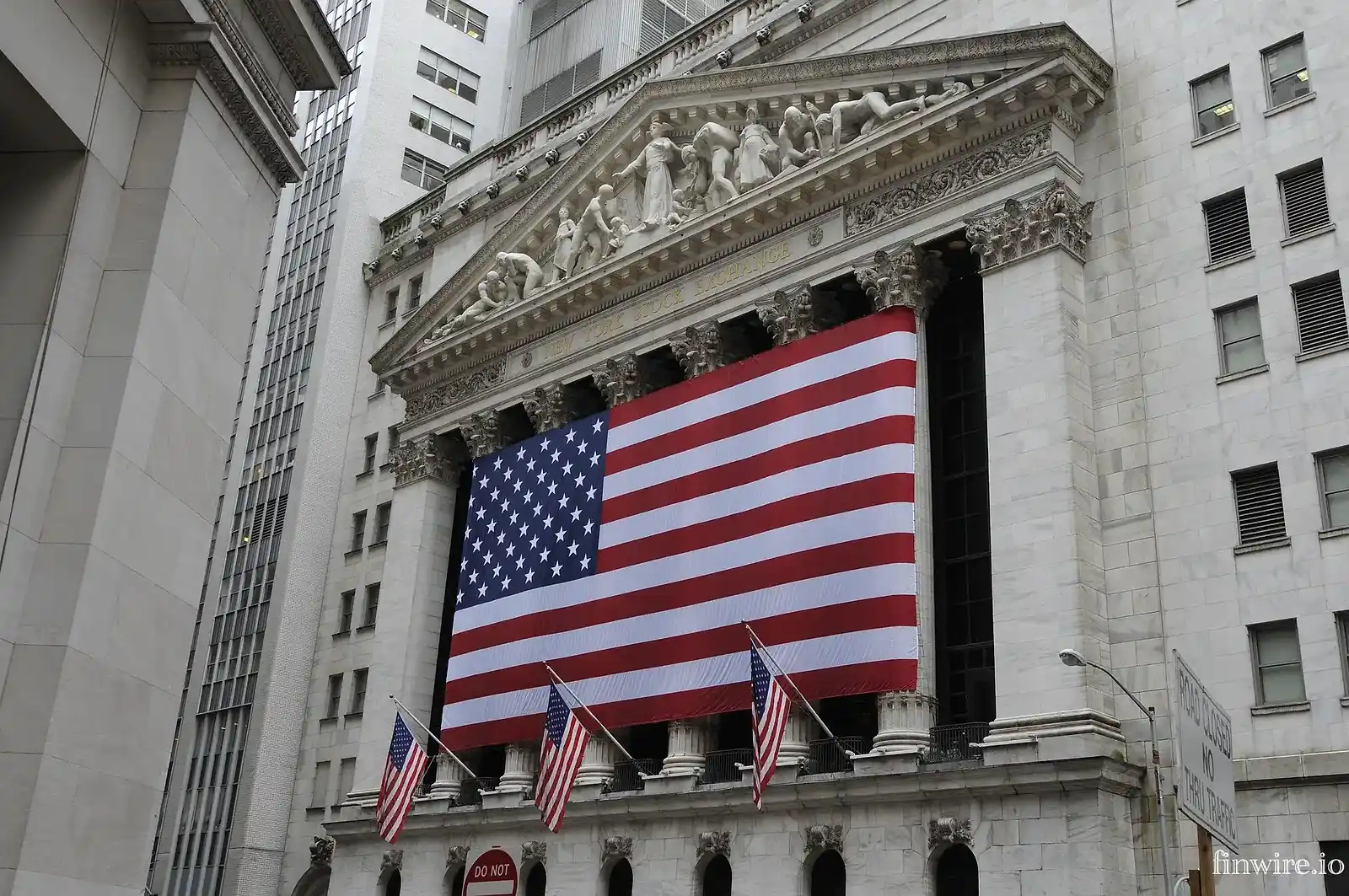
North America’s main stock indexes opened higher on Wednesday after the U.S. and Iran agreed to a two-week ceasefire, sending crude prices lower on expectations that energy supplies through the Strait of Hormuz could resume.
Canada’s main stock index saw broad-based gains led by mining stocks At 9:30 a.m. ET, the S&P/TSX Composite Index was up 0.97 per cent at 33559.11 points.
In New York, the Dow Jones Industrial Average rose 393.7 points, or 0.85 per cent, at the open to 46,978.17. The S&P 500 rose 137.5 points, or 2.08 per cent, to 6,754.36, while the Nasdaq Composite rose 803.4 points, or 3.65 per cent, to 22,821.209 at the opening bell
The announcement came hours before U.S. President Donald Trump’s deadline for Iran to reopen the Strait of Hormuz, the narrow waterway that typically handles about one-fifth of global oil trade.
Trump said on Wednesday that the U.S. will work closely with Iran and will be talking about tariffs and sanctions relief with Tehran.
The ceasefire brought immediate relief to global markets that has been reeling under conflicting signals from both sides. Equity indexes in the Asian and European markets climbed between 4 per cent and 5 per cent, while crude prices slid over 14 per cent to below US$100 a barrel.
“Whether these early ‘risk-on’ moves are sustainable or not is another matter... If shipping starts to move through the Strait of Hormuz again, and there’s strong evidence that things can return to pre-war normality, that will embolden investors,” said David Morrison, senior market analyst at Trade Nation.
“But given the complexity of the issues around this, a two-week ceasefire is unlikely to be sufficient to convince investors that it’s safe to go back in the water.”
The CBOE Volatility Index slumped 5.48 points to 20.31, its lowest point since February 27.
U.S. energy stocks tumbled in early trading, tracking global oil prices. Shares of Exxon Mobil shed 6.8 per cent, Chevron dropped 5.4 per cent, and Occidental Petroleum lost 9.4 per cent.
Stocks linked to travel and leisure sectors edged higher. Shares of American Airlines and United Airlines jumped 12.5 per cent and 13.3 per cent, respectively, while cruise operators Carnival and Norwegian Cruise Line added 13.9 per cent and 10.9 per cent, respectively.
Delta Airlines also advanced 11.4 per cent, in line with peers, even as it forecast lower-than-expected profit for the second quarter. It did not update its annual outlook, due to uncertainty over fuel prices linked to the Iran war.
Concerns lingered that soaring energy costs could weigh on economic growth and complicate the Federal Reserve’s monetary policy trajectory.
Interest-rate futures show investors see a 56 per cent chance of a 25-basis-point cut by the end of 2026, according to LSEG-compiled data, compared to expectations of no easing this year, a day ago.
Before the war erupted, traders were betting on at least two 25-basis-point interest rate cuts this year.
Later in the day, investors will parse comments from Fed policymakers Mary Daly and Christopher Waller, and minutes from the central bank’s March 17-18 meeting.
Markets will also be looking forward to analyzing the local inflation readings later in the week for signs of whether the elevated crude prices during the war have added to price pressures.
Benchmark U.S. crude sank US$18.43 to US$94.52 a barrel, a nearly 16 per cent decline. Brent crude, the international standard dropped US$15.54 to US$93.73 a barrel. Natural gas futures declined close to 5 per cent.
The drops reversed some of the rise in oil prices since the start of the war more than five weeks ago that had effectively blocked passage through the strait that’s a crucial route for global supplies.
“Yet the mood remains one of cautious optimism rather than outright celebration,“ said Tim Waterer, chief market analyst at KCM Trade. ”The ceasefire is only two weeks long, and markets will be watching closely to see whether shipping through the Strait of Hormuz normalizes as promised and whether the fragile truce can pave the way for a more durable peace agreement.“
Late Tuesday, Trump said he was holding off on his threatened attacks on Iranian bridges, power plants and other civilian targets. Iran’s foreign minister said passage through the strait would be allowed for the next two weeks under Iranian military management.
But analysts warned against too much optimism.
“There is a reason to be optimistic, but it is still too early to tell, because, as you know, after all, it is Trump,” said Takashi Hiroki, chief strategist at MONEX.
Elsewhere, in Europe France’s CAC 40 added 4.5 per cent by midday, while the German DAX soared nearly 5 per cent. Britain’s FTSE 100 gained 2.9 per cent.
In Asia, Japan’s benchmark Nikkei 225 gained 5.4 per cent to finish at 56,308.42. Australia’s S&P/ASX 200 jumped 2.6 per cent to 8,951.80. South Korea’s Kospi soared 6.9 per cent to 5,872.34. Hong Kong’s Hang Seng surged 3.1 per cent to 25,893.02, while the Shanghai Composite added 2.7 per cent to 3,995.00.
In currency trading, the U.S. dollar fell to 158.39 Japanese yen from 159.52 yen Wednesday. The euro cost US$1.1701, up from US$1.1597. The dollar usually becomes a safe haven during geopolitical uncertainty, so the ceasefire deal worked to lessen that appeal.
The Associated Press and Reuters