North American markets rise as oil ticks lower despite Middle East tensions
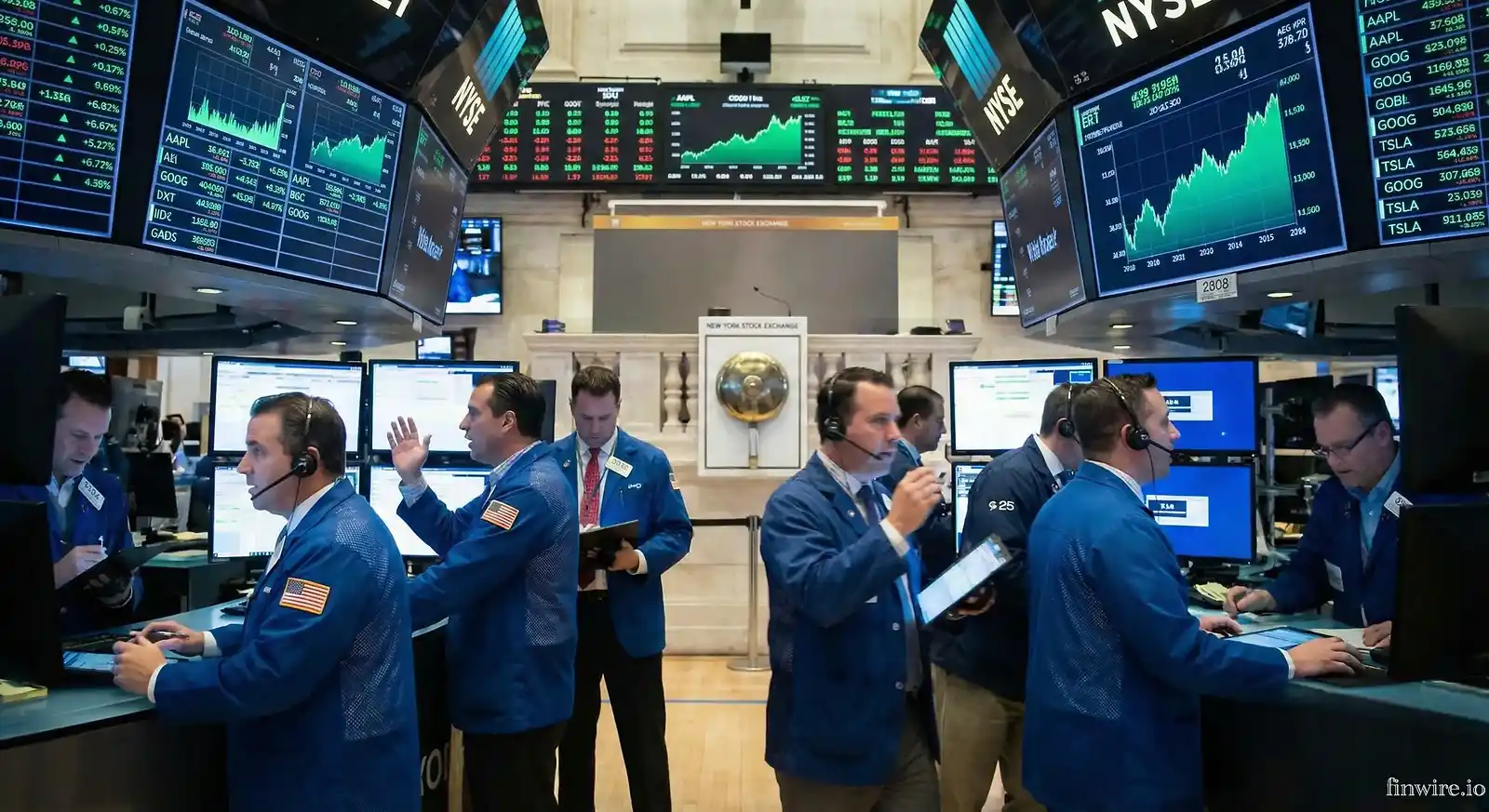
Canada’s main stock index edged higher on Tuesday, lifted by mining stocks and corporate earnings, but a slump in Shopify shares after a muted forecast and renewed Middle East tensions capped gains.
At 11:17 a.m. ET, the Toronto Stock Exchange’s S&P/TSX composite index was up 0.2 per cent at 33,704.69 points with nine of 11 sectors trading in green.
The heavyweight mining sector gained 1.2 per cent as gold prices roseon inflationary concernstied to the fragile Middle East truceafter U.S. and Iranian forces exchanged fire in the Strait of Hormuz, fueling fears of further escalation.
Meanwhile, the technologysub-index was down 2.4 per cent, weighing on the TSX, after shares ofe-commerce platform Shopify slumped 9 per cent followingtepid forecasts for second-quarter sales and profit, signaling softer demand.
Among other stocks, Thomson Reuters was up 3.6 per cent after the company reported a double-digit first-quarter revenue rise, boosted by gains in its legal, corporates and tax, and audit and accounting segments.
Colliers fell 3.3 per cent after the real estate services firm missed first-quarter profit estimates.
Ero Copper rose 4.5 per cent after the miner’sfirst-quarter revenue beat analysts’estimates.
“Earnings have been quite strong so far, and while the conflict hasn’t resolved itself, investors have really said earnings are very good and we’re going to pile back into stocks,” said Matthew Kempton, portfolio manager at Verecan Capital Management.
“There’s still a struggle over whether the market cares more about earnings or headlines around Iran and oil.”
The U.S. stock market is rising toward records Tuesday after an easing of oil prices let Wall Street turn its focus back to the big profits that companies keep producing.
The S&P 500 rose 0.6 per cent and was on track to top its all-time high set at the end of last week. The Dow Jones Industrial Average was up 248 points, or 0.5 per cent, and the Nasdaq composite was heading toward its own record after climbing 0.7 per cent.
Stocks got a boost after oil prices gave back some of their big jumps from Monday. The price for a barrel of Brent crude, the international standard, fell 3.3 per cent to US$110.70 after briefly topping US$115 on Monday, though it’s still well above its roughly US$70 price from before the war with Iran.
A ceasefire in the war appears to be holding, even after the United Arab Emirates said Monday that Iran fired missiles and drones at it. The U.S. military is trying to force open a path in the Strait of Hormuz, which would allow oil tankers to resume shipments from the Persian Gulf and hopefully bring down the price of crude.
Iran’s powerful parliamentary speaker and chief negotiator, Mohammad Bagher Qalibaf, accused the United States of undermining regional security with the effort to end Iran’s stranglehold on the strait and warned that Tehran will respond.
Even with the war ongoing, the U.S. stock market has remained remarkably resilient on its record-setting run. That’s in large part due to the strong profits that U.S. companies have reported for the start of 2026 despite the rise in oil prices since the end of February.
“This has been a `why ask why’ market,“’ according to Scott Wren, senior global market strategist at Wells Fargo Investment Institute. “You just have to go with it.”
Even though many risks are still weighing on the market, “investors are looking at earnings” and how much companies are spending on AI data centers and other investments, he said.
DuPont’s stock rallied 8.7 per cent Tuesday after the chemical giant led another cavalcade of companies reporting better-than-expected profits for the latest quarter.
DuPont said its water technologies business felt some impact because of the war with Iran due to logistics disruptions in the Middle East. But it nevertheless raised its forecasts for financial results over the full year due in part to its strong start to 2026.
Other winners included American Electric Power Co., which rose 1.8 per cent, and Cummins, which added 1.7 per cent, after they likewise made more money during the first three months of the year than analysts expected.
Pinterest soared 14 per cent after the online bulletin board topped Wall Street’s first-quarter sales and profit targets as its number of active monthly users jumped 11 per cent to 631 million.
AB InBev likewise topped analysts’ profit forecasts, and it credited growth for its Corona, Stella Artois and Michelob Ultra brands outside of their home markets. “Cheers to beer,” CEO Michel Doukeris said, as the company’s stock that trades in the United States jumped 9.2 per cent.
They helped offset a drop for Palantir Technologies, which fell 4.3 per cent even though it reported stronger results for the latest quarter than analysts expected. Its stock has struggled this year with worries about increased competition, like many software companies have. Its stock is also coming off a huge run where it more than doubled in each of the last three years.
In stock markets abroad, indexes were mixed in Europe. The CAC 40 rose 0.6 per cent in Paris, but the FTSE 100 fell 1.7 per cent in London. Many Asian markets were closed for holidays, as Hong Kong’s Hang Seng fell 0.8 per cent.
Australia’s S&P/ASX 200 slipped 0.2 per cent after the central bank raised its benchmark interest rate to 4.35 per cent, saying conflict in the Middle East had sharply increased fuel and commodity prices that were already adding to inflation.
In the U.S. bond market, Treasury yields eased after oil prices gave back some of Monday’s gains and reports on the U.S. economy came in mixed.
One report said growth for U.S. services businesses unexpectedly decelerated last month, with some companies saying the war is slowing spending. A separate report said U.S. employers were advertising slightly more job openings at the end of March than economists expected, an encouraging signal for the job market.
The yield on the 10-year Treasury fell to 4.42 per cent from 4.45 per cent late Monday.
That’s still well above its 3.97 per cent level from just before the war began. That rise has made mortgages and other kinds of loans for U.S. households and businesses more expensive.
Reuters and The Associated Press