Market Factors: Lucrative ‘fat pitches’ are here for investors
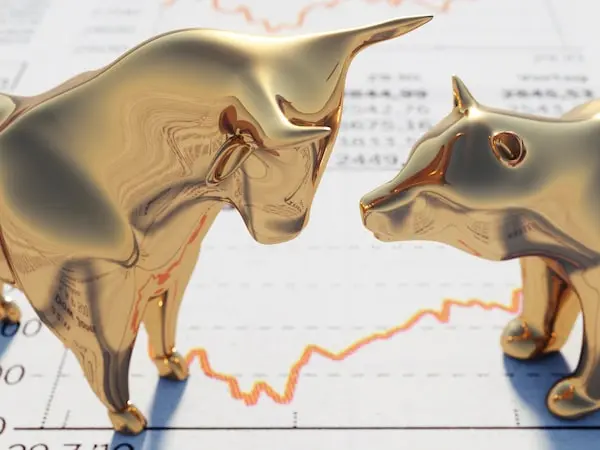
Both bears and bulls are in abundance
This edition of Market Factors begins with a call to arms as Morgan Stanley’s prominent chief equity strategist thinks the market has bottomed and poised for a sustained rally. Conversely, Citi strategist Dirk Willer sees too many parallels to early 2000 to put new money to work in stocks. The diversion is another maddening list – top actors of all time in this case. Scotiabank strategist Hugo Ste-Marie, Palo Alto Networks and Torsten Slok are featured in quick hits.

peterschreiber.media/iStockPhoto / Getty Images
The optimist
Time to swing the bat
Warren Buffet compared investors to a baseball hitter with unlimited strikes. They could watch endless pitches waiting for the perfect “fat pitch” they could knock over the fence. Morgan Stanley chief equity strategist Michael Wilson believes the fat pitch for investors is here and it’s time to get active in the market.
Mr. Wilson’s Weekly Warm-Up report issued before markets opened Monday morning argued that last week’s sell-off represented the investor capitulation he was waiting for – this includes wash-out selling by hedge funds as they unwound bullish positions – and that stock prices are now generally below fair value.
The S&P 500 is currently priced for 6.0 per cent earnings growth in 2027 when the consensus expects 17 per cent. Earnings revisions remain positive, indicative of future market expansion, and low jobless claims imply low recession risk.
As of the time of his report, the S&P 500 market was trading at 16.4 times forward earnings when Mr. Wilson believes earnings growth justifies 19.0 to 19.6 times. The NASDAQ 100 was trading below 17 times earnings and its COVID lows. In terms of individual sectors, the strategist cites weakness in hyperscalers, industrials and high-quality cyclicals as offering profitable entry points.
Mr. Wilson’s forecasts for 2027 were published last week. His quality cyclicals screen, which includes credit ratings and improving earnings projections, uncovered Wayfair Inc. (W-N), ON Holding AG (ONON-N), Starbucks (), Mastercard (MA-N), Visa (V-N), Trane Technologies (TT-N), Micron Technologies (MU-Q), Arista Networks (ANET-N), and Linde PLC (LIN-Q) as attractive opportunities.
The strategist is also optimistic about non-technology companies leading the way in AI adoption. These include Blackstone Inc. (BX-N), eBay Inc. (EBAY-Q), GE Aerospace (GE-N), Lowe’s Companies (LOW-N), Procter & Gamble (PG-N), RTX Corp. (RTX-N) and Visa (V-N).
The Federal Reserve is the biggest risk to Morgan Stanley’s bullish outlook. Market prices already account for some rate hikes, but more rate increases than expected could derail Mr. Wilson’s bullish outlook.
The pessimist
Two bearish observations
Citi global strategist Dirk Willer made two interesting observations in a Friday research report. One, that markets are increasingly looking early 2000-ish and two, the recent volatility in copper markets signals a peak in global manufacturing activity.
Mr. Willer highlighted an “aggressive change in leadership” within stock picking criteria strategies. High quality stocks (strong balance sheets, consistent earnings) and value stocks have outperformed high growth and strong momentum stocks over the past six months. The move was 75 per cent as strong as the same pattern ahead of the dot-com bubble collapse.
There is also a growing degree of correlation between quality and value stocks, at the expense of the correlation between quality and growth. This is similar to the pattern in February 2000, one month before the end of the first internet tech bubble.
The second observation, the predictive power of the copper price, is also cause for concern. The copper price has dropped 17.7 per cent since Sept. 9 because AI-related demand is in doubt, the U.S. dollar has strengthened, and the economic surprise indexes (they measure economic data relative to consensus estimates) for a group of nine major currencieshave turned negative.
Historically, the copper price has peaked roughly 2.5 months after the peak in the global purchasing manager index. Current market action implies that global growth peaked in July, and cyclical sectors like commodities will see declining demand.

An exhibit is seen during the Exhibition Preview for "Marilyn Monroe: Hollywood Icon" Hosted by The Academy Museum at Academy Museum of Motion Pictures, in Los Angeles, on May 27, 2026.VALERIE MACON/AFP/Getty Images
Diversions
Top actors of all time
We have another list, actors this time instead of music, and it won’t surprise readers to hear that I have thoughts. Let’s begin.
Variety magazine ranked the 100 greatest movie stars of all time. Only a fool would have issues with Marilyn Monroe at number one and I certainly have no qualms about Humphrey Bogart in second place. Jack Nicholson at four seems right and I was happy to see Katherine Hepburn in fifth. Marlon Brando in seventh and Tom Cruise right behind him feels accurate and Akira Kurosowa’s favourite actor Toshiro Mifune has earned his spot at nine. Barbra Streisand at 10th is the first of many travesties.
Paul Newman would be my pick as the greatest movie star ever and he’s not listed until 31. The Rewatchables podcast (which is great) frequently talks about which actors had the best ten-year run of movies and I’m always muttering “Newman, ’61 to ‘71” when they do. The Hustler, Hud, Harper, Cool Hand Luke and Butch Cassidy and the Sundance Kid in the space of a decade. Then The Sting in ’73.
To be fair, the 11-20 rankings are pretty good. Clint Eastwood is maybe slightly over-ranked at 11, followed by Cary Grant (12), James Dean (14), Clark Gable (15), Bette Davis (16), Tom Hanks (17), Ingrid Bergman (18), John Wayne (19) and Denzel Washington (20). Julia Roberts is probably over-ranked at 13, but not in a way that irritates me.
I’m well aware that these lists are subjective but there are numerous cases where the relative rankings are difficult to justify. Still, the list is a lot of fun and I appreciate Variety taking on the task even if they are VERY WRONG in many cases.
The essentials
Looking for our updates on market movers, analyst actions, stock technicals, insider trades and other daily, weekly and monthly insight? Click here to visit our Inside the Market page.
Globe Investor highlights
Don’t mistake the TSX for a refuge from AI turmoil, says Tim Shufelt
Who wins in the latest telecom shakeup in Canada? David Berman suggests that it may be the stock that’s been hurt the most
Billionaire investor Ken Fisher is urging the Bank of Canada to put a halt to its interest rate hikes
Quick hits
Scotiabank strategist Hugo Ste-Marie noted on Friday that the orderly nature of the TSX’s recent decline hides considerable damage under the surface. Just under 75 per cent of TSX stocks were lower by 10 per cent or more and 48 per cent of them were lower by 20 per cent or more. Fully 90 per cent of materials stocks (the subindex is dominated by precious metals) were down more than 20 per cent. Half of the companies in the industrials and tech sectors saw stock prices fall at least 20 per cent or more.
Major network security breaches are seemingly a daily event, which is good news for revenue growth at cybersecurity provider Palo Alto Networks. The company’s earnings report last week featured a 66 per cent year-over-year increase in next generation security recurring revenue. Management guided higher on both revenue and profits. The AI security division saw a significant increase in demand. BofA Securities analyst Tal Liani raised his 12-month price target on PANW-Q stock to US$430 from US$420, implying a 20.0 per cent return from current levels.
Torsten Slok from Apollo Global Management highlighted the dominance of U.S. equities in his Monday newsletter. U.S. stocks now make up 75 per cent of developed market equity value when 18 years ago it was 50 per cent. This is an extreme that concerns me.