Market Factors: Former Fed president sees five reasons the equity rally will end in 2027
This Market Factors starts with a step-by-step argument for the end of the technology-led equity market rally. We move on to a surprising global perspective on Canadian trade negotiations. The diversion covers the sharp rise in liver disease and we have quick hits as always.

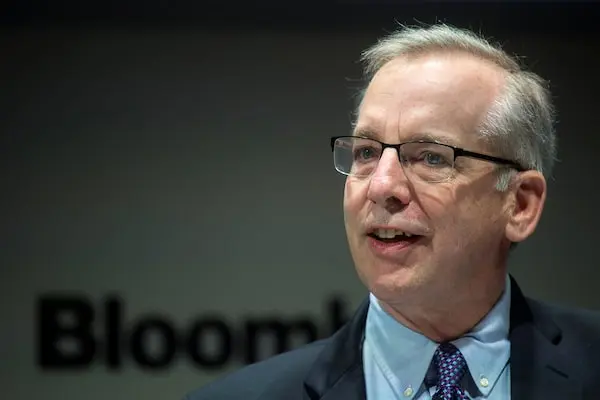
Bill Dudley speaks during the Bank of England Markets Forum 2018 in LondonPOOL/Reuters
Equities
Five reasons for pessimism
Federal Reserve presidents tend to stick with macroeconomic concerns like interest rates and inflation and leave stocks to their own devices, even when retired. But Bill Dudley, former president of the Federal Reserve Bank of New York, recently used a Bloomberg column to buck this trend by outlining five reasons the equity rally will end next year.
Mr. Dudley’s first reason for pessimism is his expectation for slowing investment in AI infrastructure next year.
He cites a lack of construction workers, electrical power and semiconductor production for capex to expand even if demandstays firm.
For stocks, it is changes in the rate of growth, the second derivative of growth, not the spending level itself that matters. If investment in semiconductors, for instance, declines 10 per cent year over year in 2027, the related stocks will fall hard even if the gross amount of investment remains high. We saw a similar phenomenon after the pandemic as the spectacular rate of profit growth for stocks like Zoom Communications fell sharply as lockdowns ended, taking the stock price lower.
Second, profit forecasts will fall and compress price-to-earnings ratios as revenue declines for data centre equipment companies. Lower profits and lower valuations mean much lower stock prices.
Third, Mr. Dudley is concerned about the opacity of data centre financing. It is increasingly through special purpose vehicles and venture capital funds rather than clearly visible in the quarterly accounting for the hyperscaler companies.
Circular financing agreements reminiscent of 1990s telecom vendor financing are also becoming common. Nvidia, for instance, is investing US$30-billion in OpenAI, with the latter likely to use much of these funds to buy Nvidia GPUs.
Fourth, Mr. Dudley predicts a sharp increase in AI-related IPOs in 2027 that will spread out the available investment funds across more companies. Market history also suggests that company quality declines as IPOs increase.
Finally, the former Fed president believes the rally will end because bond yields will climb towards the S&P 500 earnings yield in 2027, and investors will begin to divert investment assets away from stocks and towards fixed income. Mr. Dudley calculates that the current earnings yield - the profits of S&P 500 stocks divided by the level of the index - is only 1.1 percentage points ahead of inflation-adjusted bond yields, with the equity yield much more volatile than bond yields.
All of these trends are apparent in a market that is clearly expensive relative to history in terms of the Shiller cyclically adjusted price-to-earnings ratio and equity risk premium, adding further risk to equities.

Canadian minister responsible for Canada-U.S. relations, Dominic LeBlanc, looks on while Canada’s Prime Minister Mark Carney speaks with the news media on Aug. 22 after he suspended trade negotiations with the United States.Chris Tanouye/Reuters
Tariffs
Canadian trade negotiators not so nice
Sam Lowe is an economist and former member of the Strategic Trade Advisory Practice that recommends trade policy to the U.K. government. He is currently a regular contributor to the Financial Times, Wall Street Journal, BBC and the New York Times. He provided an interesting perspective on Canadian trade negotiations in a recent post on substack - the thrust being that Canadians are brutal negotiators.
Mr. Lowe recounted the fury of U.K. officials when Canada refused to roll over the post-Brexit trade pact with the U.K. in 2019. The U.K. government was offering lower tariffs to other countries and Canada wanted better terms too.
In Mr. Lowe’s words, Canadian negotiators historically “will push and push and push, storm out of negotiations at the last minute, and hold up deals until they get what they want.”
This perspective was offered as pretext for Mr. Lowe’s theory that Canadian negotiators were looking for an excuse to walk out of talks with the U.S. Outside of the obviously offensive propositions – U.S. control over Canadian trade deals and critical minerals production – there were more contentious areas like dairy markets and provincial liquor boards where domestic negotiators refused to budge.
The hope, according to Mr. Lowe’s thesis, is that Canada planned to storm out of the U.S. talks in an effort to reset expectations for a future deal that more favours Canada.
I don’t see this perspective often. We view Canadian trade negotiators as willing, reasonable negotiators when from a foreign view we are seen as pigheaded and stubborn in the most successful way possible.
Diversions
Liver disease on the rise
The University of Virginia warned of a quadrupling in U.S. liver injury reports between 2000 and 2024 and, in more than 80 per cent of cases, the reporting patient required hospitalization. Researcher Christopher P. Holstege of the UVA Health’s Blue Ridge Poison Center blamed “xenobiotics”, a fancy and probably unnecessary word for toxic substances, for the trend.
Acetaminophen is the primary culprit. The incidence of acetaminophen-related liver damage reports increased steadily over the 24-month period despite a cap on dosages by the U.S. Food and Drug Administration (FDA) in 2011. Sadly, attempted suicide was estimated to be the main cause of acetaminophen poisoning.
Alcohol is a distant second cause of liver injury, exacerbated by the pandemic. Street drugs, and herbal and dietary supplements and environmental toxins also played a role in the upsurge in liver problems.
Dr. Holstege urged caution for people tempted to take supplements and unregulated cures.
Globe Investor highlights
The Contra Guys have a suggestion for a contrarian bet in the cannabis sector
David Berman provides four reasons why he’s not going to let the trade war prevent him from buying U.S. stocks and bonds
Norman Rothery highlights his buyback portfolio - and how it can lead to outperformance
Copper prices are flirting with all-time highs. This Number Cruncher looks at some equities in the sector that may be undervalued
The Rundown
Looking for our updates on market movers, analyst actions, stock technicals, insider trades and other daily, weekly and monthly insight? Click here to visit our Inside the Market page.
Quick hits
Wells Fargo real estate analyst Amanda Martinez is stridently recommending data centre-related REITs to clients. Ms. Martinez argues that data centre construction is evolving, from giant centralized facilities to smaller, more local facilities used by multiple companies to serve different cities. The trend provides significant opportunity to REITs that are developing and leasing local facilities although unhelpfully there were no specific REITs mentioned in Ms. Martinez’s most recent report. Wells Fargo analyst Eric Luebchow has overweight ratings on Equinix Inc. (EQIX-Q) and Digital Realty Trust (DLR-N) and broader exposure is available in the U.S.-traded Global X Data Center & Digital Infrastructure ETF (DTCR-Q).
Hedge fund giant Stanley Druckenmiller is arguably the best investor/trader alive and also the mentor for current U.S. Treasury Secretary Scott Bessent. Mr. Druckenmiller wrote an editorial for the Wall Street Journal arguing that Mr. Bessent’s plan to increase Treasury Department buying of bonds was a mistake and that “Governments defending prices against fundamentals always lose.” In a fact that might only interest me, economist Claudia Sahm ran the editorial through software that indicated it was almost certainly written by AI.
Read this week’s earnings and economic calendar here