Investors shouldn’t be cautiously optimistic about 2026. It’s time for dogged realism
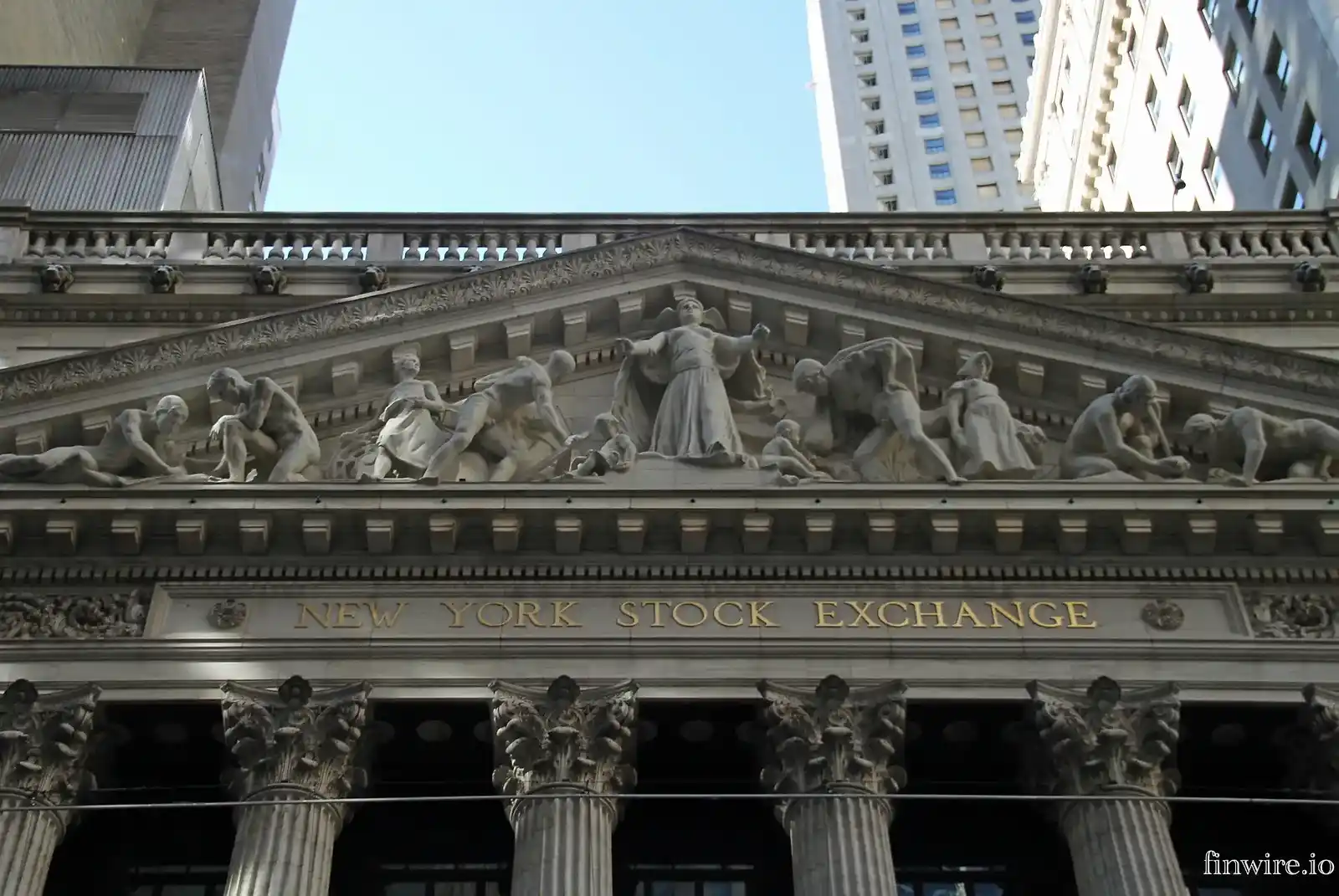

Traders work on the floor at the NYSE.Brendan McDermid/Reuters
Two things happen every January. First, there is a significant spike in gym memberships as people make good on their New Year’s resolutions – at least for the month. Second, we see lots of articles about what to expect in capital markets for the coming year. The end result in both cases is that the best of intentions are often optimistic, ephemeral and ultimately, unrealistic.
Behavioural economics tells us that it is human nature to succumb to the fresh-start effect where people use markers such as the beginning of a new year as a starting line for what the future may hold.
The problem with economists, portfolio managers and strategists is that they are largely homogeneous from one commentator to another, and homogenous from year to year. Just look back at predictions over the past eight or nine years and you’ll notice that the consensus viewpoint was remarkably similar.
In late December, a note to investors from BMO Global Asset Management said: “As we turn the page to 2026, we remain cautiously optimistic ... ” It is a common sentiment among commentators, this year and every year. The vast majority say the market will go up by something in the high single-digit range.
Seven charts to make sense of stock markets in 2026
But the phrase “cautiously optimistic” has become a catch-all platitude that captures the gist of what people expect for the future, only without a specific time frame. If you ask these pundits what they think the future holds over the next five, ten or 20 years, they will likely share the view that things will be largely favourable, while precise details are unknowable. And so, they are cautiously optimistic.
What is the opposite of that? There is really no viable antonym to that phrase. I think the approach we should take should be called “doggedly realistic.”
Here’s an illustration: In 2022, I wrote an article in response to the opinion of a prominent economist who said the coming year would be a good one. In my response, I pointed out that interest rates had recently gone to zero and everyone knew there would be many rate hikes that year, meaning bonds would lose value and something similar would likely happen to stocks. Sure enough, both stocks and bonds dropped by over 15 per cent that year.
Being able to see something like that coming is nearly akin to predicting the sun will rise tomorrow, yet prominent commentators didn’t seem to see it coming. For an industry that takes a long-term perspective, it strikes me as odd that the financial service industry’s short-term views are so conspicuously unchanging.
Looking for investment opportunities in major geopolitical events? Don’t bother
The industry engages in something I call “bullshift.” It consistently shifts people’s attention to make them feel bullish. The intent is a deliberate resetting of long-term expectations that sacrifices genuine assessments of short-term outcomes.
Less than three weeks into the new year, we are already seeing this play out. U.S. President Donald Trump announced he would impose a 10-per-cent tariff on European countries opposed to his plans of annexing Greenland, and threatened he would increase those tariffs to 25 per cent if the transaction is not completed by June. He then abruptly backed down. Only a fool would have expected a “normal” geopolitical landscape in 2026.
Put another way, everyone knew the craziness would continue, and that Mr. Trump escalates matters as a diversion when he seems cornered. We all saw what happened to capital markets last April, when the so-called “Liberation Day” tariffs were announced. Did anyone think we’d get through 2026 without more of the same?
People suffer from recency bias. The last severe and prolonged bear market ended in March, 2009. Many people think they can handle whatever capital markets throw at them simply because they have not panicked in a generation or so. Of course, it may well be that there has simply been no real cause for panic over that time frame.
To be clear, this is not a forecast of market behaviour, but it will prove to be a reliable forecast of human behaviour. Bear markets have not been eradicated. No one knows when the next one will come, what will cause it, how far things will drop or how long it will last.
In my 32-plus years as a financial adviser and portfolio manager, I have often seen overconfidence rear its head. Despite my best intentions, in 2009, I had a difficult time getting my clients to rebalance their portfolios, even though they had previously committed to that in writing. The fact is anyone can be a good behavioural coach in a bull market.
Opinion: This is what investors should expect from the stock market this year
Most investors have made money in recent years. No matter what the near-term future may hold, I think it wise to revisit your risk appetite and make tactical adjustments to your portfolio to protect those gains going forward. This might be an opportunity to take profits in some of the things that have done well, to reposition into other asset classes that have done less well.
Particular consideration might be given to alternative assets. For example, there’s a music royalties product that has been paying about 10 per cent for some time now. It features strong cash flows, diversified holdings and a moat around the business model in the form of millions of subscribers who are eager to consume a wide variety of genres and artists, and willing to pay ever-higher subscription costs.
Like many alternative products, it has no real correlation to traditional capital markets. Similarly, there’s a clean (renewable) energy offering that has long offered high single-digit returns, featuring stable cash flows and a growing market.
No one in the financial services industry would ever be accused of reliable clairvoyance, but it’s astonishing how many people fall for the same banal platitudes year after year, without looking back to compare what was forecast with what transpired.
The industry wants investors to be calm and confident. You should only feel that way if the reality of the times is consistent. We’re in a new world order, but people in finance pretend nothing much has changed. Be flexible and clear-eyed in how you assess things.
John De Goey is a portfolio manager with Designed Securities Ltd. (DSL), which is a member of CIRO and CIPF.