How exposed is the S&P 500 to an AI trade bust?
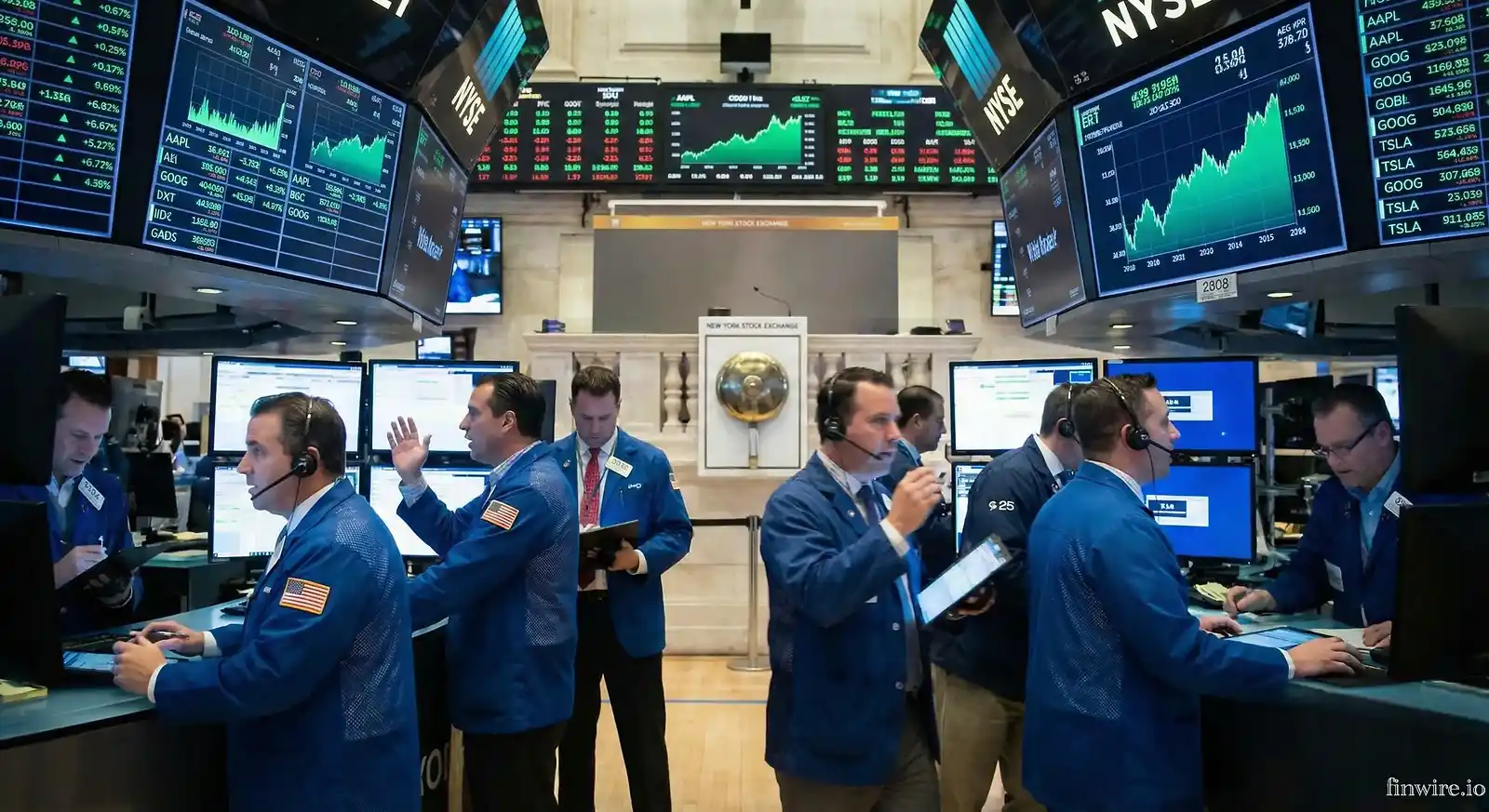
Around half of the S&P 500’s market capitalization has exposure to artificial intelligence in some form, a Capital Economics analysis suggested, using an approach in which the AI industry and ecosystem was divided into five kinds of companies ranging from AI infrastructure providers to data center builders.
The research comes at a time when the AI trade has suffered a brutal sell-off, driven by concerns around massive debt-fueled financing of the AI infrastructure buildout, uncertain returns on the billions being poured into the nascent technology, the regulatory ramifications of a sweeping Democratic victory in the U.S. midterm elections, and an unprecedented governance crisis at AI darling Nvidia.
The AI rout led to Wall Street sliding into correction territory on Friday, with the benchmark S&P 500 index posting its worst weekly performance since April 2025. The tech-heavy Nasdaq Composite is now approaching bear market territory, having slid over 18% from its most recent record close.
“The U.S. stock market and, increasingly, the U.S. economy are heavily exposed to AI. But as the technologies’ influence and ecosystem have grown, prices of firms in different segments have drifted apart,” James Reilly, senior markets economist at Capital Economics, said in a note on Friday.
“For example, semiconductor firms and hyperscalers tend to be closely associated with AI. But they have been uncorrelated for much of this year,” he added.
In his approach, the analyst split all AI-exposed stocks into five groups: companies that make up the physical AI supply chain, termed as ‘infrastructure’; cloud and platform firms that build data centers and sell computing capacity, or ‘platforms’; companies investors expect to profit from AI use, or ‘adopters’; firms who will see disruption from the technology, or ‘disrupted’; and those with no reliable AI link, or ‘neutral.’
“This approach suggests that around 50% of the S&P 500, by market capitalization, is positively exposed to AI in some form,” Reilly said.
He also noted that the above categories could be used to map out how downside risks to the AI trade could unfold.
“For example, the entire ecosystem would suffer if demand for AI waned amid a lack of evidence it was boosting productivity; but if the primary concern was tighter regulation of the AI buildout, the Infrastructure basket would likely fall while the Platform basket would hold up,” he said.
The analyst sees the S&P 500 falling from around 7,150 points now to 6,500 by the end of the year, and “perhaps further in the interim.” The benchmark gauge last closed at 6,910.39 points.
“As things are going now, it may get there sooner,” Reilly said.
“This doesn’t mean we think the technology is a dud, nor that demand will collapse. But the revenue hurdle to justify the scale of AI investment looks very demanding. And a combination of the other risks, even in minor form, looks plausible: for example, somewhat stricter regulation of the buildout and application of AI, plus a tightening of AI-related financing,” he added.
Here are some popular exchange-traded funds that track the S&P 500: SPDR S&P 500 ETF Trust, Vanguard S&P 500 ETF, and iShares Core S&P 500 ETF.