Equal doesn’t always mean fair in estate planning, especially when it comes to the family cottage
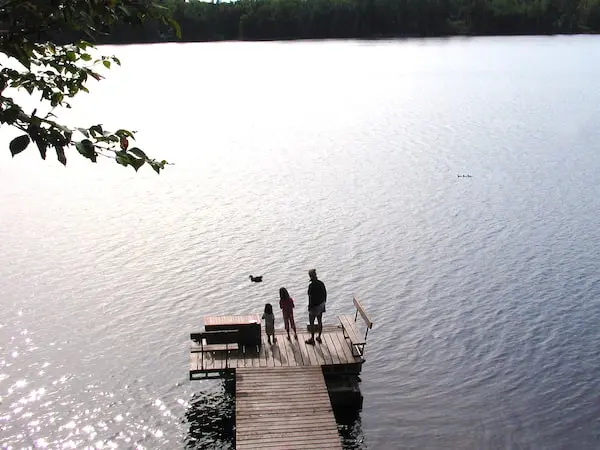

Joint ownership of a cottage between siblings often sounds simple, in theory, but becomes much more complicated in practice.PierreDesrosiers/iStockPhoto / Getty Images
One of the most important principles in estate planning is recognizing equal doesn’t always mean equitable. That’s especially true as it pertains to the family cottage.
When clients begin thinking about their estate, they often tell us, “I just want all of my children to enjoy the cottage the way we always have.”
It’s a fabulous sentiment, but one that requires careful planning.
Unlike cash or investment portfolios, a cottage is an indivisible asset. Although it can be owned jointly, it can’t be divided easily among multiple beneficiaries.
More importantly, adult children often have very different lives than they did growing up. One child may live nearby and use the cottage regularly. Another may have relocated across the country for work, life or love. One may have the financial flexibility to maintain a second property, while another is focused on raising a young family or paying down a mortgage.
Although everyone may treasure the memories, they may not all want, or be able, to own the cottage together.
Joint ownership between siblings often sounds simple, in theory, but becomes much more complicated in practice. There are multiple questions that need to be answered:
- Who pays for repairs and ongoing maintenance?
- How are property taxes divided?
- Who decides when renovations are necessary?
- How is vacation time allocated?
- What happens if one sibling wants to sell and another refuses?
- What if someone can no longer afford their share of the expenses?
These decisions are both emotional and financial. Over time, they can strain even the closest families, making the cottage that once brought everyone together a source of lasting conflict.
Equal or equitable?
Treating children equally is an admirable goal, but fairness isn’t always achieved by dividing every asset into identical shares. Let’s imagine an estate consisting of:
- a cottage valued at $2-million,
- investment assets valued at $2-million,
- three adult children.
A strictly equal approach might leave each child with one-third of the cottage and one-third of the investment portfolio.
But is that really the best outcome?
What happens when one child has always dreamed of keeping the cottage in the family and is both willing and financially able to maintain it, while the other two children have little interest in owning recreational property and would prefer investments they can access more easily?
There are also taxes to consider. In Canada, when someone dies, they’re generally deemed to have disposed of their capital property at its fair market value. Unless the property transfers to a surviving spouse or common-law partner under the tax rollover rules, that can trigger a capital gain.
Many cottages have appreciated substantially over several decades. As a result, families are often surprised to find a significant tax liability even though the property hasn’t actually been sold. If the estate doesn’t have enough liquid assets to cover the taxes, beneficiaries may be forced to sell the cottage just to pay the taxes.
An equitable solution could involve leaving the cottage to the child who wants it while allocating a greater share of the liquid investment assets to the other beneficiaries. If necessary, equalization payments can help balance the overall value of the inheritance. Each child receives a fair economic outcome, without creating years of shared ownership challenges.
Let’s look at the equalization breakdown for the estate above, which has a gross value of $4-million consisting of:
- a $2-million cottage,
- a $250,000 TFSA,
- a $500,000 RRSP,
- a $1.25-million non-registered account.
Assuming a 40 per cent tax rate on the RRSP, a $1-million capital gain on the cottage and a $500,000 gain on the non-registered account, the total estimated tax is $500,000, leaving a net estate of approximately $3.5-million. Divided equally among three adult children, each child’s after-tax entitlement is approximately $1.17-million.
If one child keeps the $2-million cottage and the capital gains tax on it is treated as an estate liability shared among all three children rather than borne solely by the one child, the child who owns the cottage would need to provide approximately $833,000 in equalization payments to the two siblings.
That would leave each child with roughly $1.17-million of net economic value, with the other two children receiving their shares from the remaining investment assets and the equalization payment.
Planning ahead
If keeping the cottage in the family is the ultimate goal, planning should begin well before an estate is finalized to keep options open.
Open conversations with family members can reveal preferences and concerns that might otherwise remain hidden. A host of questions to begin with include:
- Does everyone truly want to own the cottage?
- Can future owners afford the ongoing costs comfortably?
- How will maintenance expenses be shared?
- What happens if someone wants to exit ownership?
- Should there be a formal co-ownership agreement?
There’s rarely a one-size-fits-all solution. Every family is different and every estate deserves a strategy that reflects both financial realities and family dynamics.
Thoughtful planning considers not only the value of the assets being transferred, but the needs, circumstances and goals of the people receiving them.
The fairest solution is often ensuring every beneficiary receives comparable value in a way that aligns with their individual circumstances.
The greatest legacy most families hope to leave isn’t simply wealth, but strong relationships.
A well-designed estate plan can help protect both.
Amanda Baxter is an investment advisor with Hillside Wealth Management at iA Private Wealth Inc. in Vancouver.