Culture shift in cottage country: More buyers see ownership as an investment, not a lifestyle
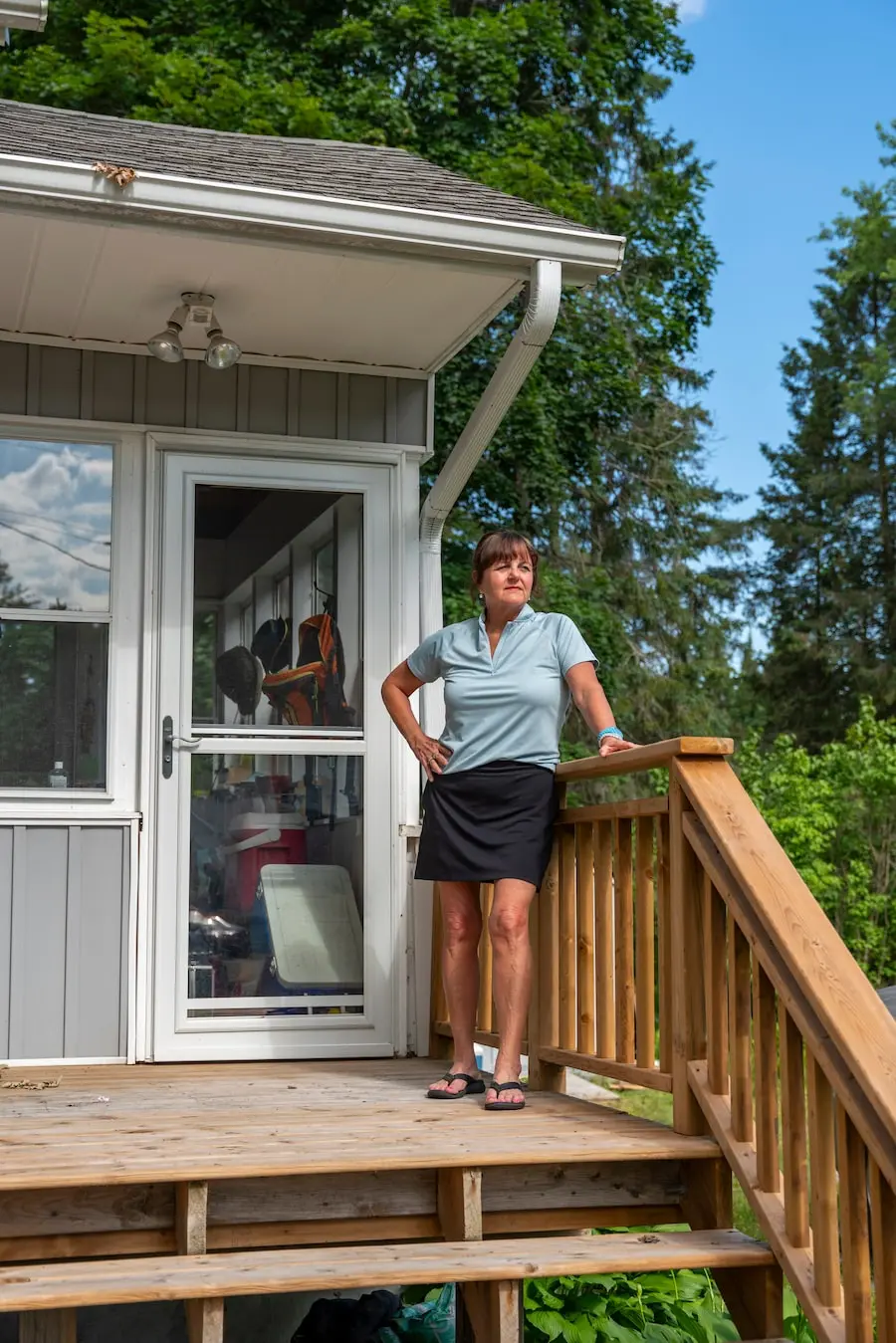
After eight years of owning a cottage in Haliburton County in central Ontario, Barb Daize-Mason and her husband are ready to call it quits on the lifestyle.
Some of their adult children don’t visit as often because they’re busy with their own kids. Others don’t even live in the province anymore.
All the while, the couple says the traffic, prices at the pump and increasing carrying costs are weighing on them and preventing them from travelling to other places around the world. Their monthly maintenance costs have increased by roughly 33 per cent since they purchased the property, from $600 to $800.

Barb Daize-Mason clears out the sunroom of her cottage. After eight years of ownership and countless family memories made at the cottage, Ms. Daize-Mason and her husband have decided to sell.Liv Talarico/The Globe and Mail
Ms. Daize-Mason says it’s sad to give up the cottage; her family created lots of memories in a little less than a decade. But the reality is that selling quickly was always their plan.
“When we first purchased it, we did think that maybe in 10 years, we could sell it and make some money,” said Ms. Daize-Mason.
Realtors, cottage associations and market experts say a cultural shift is underway in cottage country. A growing number of buyers are entering the market with plans to own for only a short period, rather than settling into the community for the long haul and passing the cottage down to the next generation.
Major increases in the price of cottages mean that purchasers are forced to approach ownership as an investment, rather than a lifestyle, and often choose to cash in on that investment earlier. At the same time, higher running costs are also making it difficult for adult children to justify holding on to a cottage they inherit.
“These higher prices have really changed the market. What you had before was an emotional asset that happened to be valuable. Now you have a highly valuable asset that happens to be emotional,” said Victor Couture, an associate professor of economic analysis and policy at the University of Toronto.
“When something is worth a million and a half, you’re going to be way more unemotional about the decision and more prone to do the math than when it is worth $100,000,” he said.
Ontario cottage market searches for stability, squeezed by limited supply and mortgage renewals
Jeff Strano, a real estate agent in Haliburton County, said he has seen the cottage market change first-hand. Before the mid-2010s, middle-class buyers could purchase a year-round cottage in the area for as little as $250,000, and they would remain as “lifers.” Now, finding one under $900,000 is challenging, and the people purchasing these homes only own them for a little more than a decade to capitalize on the market and sell when their kids grow up.

Ms. Daize-Mason says it’s sad to give up the cottage, but selling quickly was the plan when she and her husband bought the property less than a decade ago.Liv Talarico/The Globe and Mail
It’s the same situation in other areas such as Muskoka, where the median selling price for a waterfront property in 2025 was just under $1.3-million, according to statistics from Royal LePage. A report by the real estate company 15 years earlier found that a cottage in the same region ranged between $300,000 to $750,000.
In British Columbia, the average selling price of a recreational home reached $1-million in 2025, up from $595,077 in 2017.
“The people who bought cottages after the mid-2010s, they’re a different breed,” said Mr. Strano. “They’re not maybe as emotionally invested as someone who inherited it from dad, who built it in the 60s.”
Mr. Williams has had his cottage in the family for 80 years, dating back to when his grandfather purchased the Lake of Bays property with a veteran’s war grant.
He inherited the cottage after his parents died in the 1970s, when it was worth roughly $24,000. Now it’s worth $890,000.
He worries that the capital gains that his kids would have to pay upon inheritance would be insurmountable, and they would be forced to sell.
“When I was a kid, most of the cottages were multigenerational,” said Mr. Williams, who has watched many of the properties on his lake sell. “Now it’s a rarity.”
He has considered moving into the cottage with his wife for longer periods to make it their primary residence, so that they would be exempted from capital- gains taxes.

Realtor Glenn Vickery says he has seen an increasing number of cottage inheritors who are choosing to sell.Liv Talarico/The Globe and Mail
Glenn Vickery, a director on the Lake of Bays Association and realtor, said he is seeing an increasing number of inheritors who are choosing to sell. Even if they don’t have to take on a mortgage for the cottage, they might be facing capital-gains taxes that extend into six figures.
And if the cottage needs any work, Mr. Vickery says inheritors may not be able to afford labour costs that have risen exponentially because of high demand.
An analysis of provincial real estate data by Muskoka realtor John Fincham found the turnover rate for cottages in Ontario has increased by roughly 29 per cent from 2015 to 2025. Mr. Fincham said part of that increase was driven by the pandemic, which prompted some families to cash in on homes that were suddenly worth much more.
Today, however, cottages aren’t necessarily a slam dunk as an investment. The market has been in decline – another reason why some families are choosing to sell their recreational properties. Some communities saw values drop by as much as 31 per cent immediately after the pandemic-buying frenzy. Prices have fluctuated since then, but Mr. Fincham said they could fall further this year.

Mr. Vickery shows off a display of old tools brought from his family cottage. After recently having to sell the property, he understands firsthand how costly cottage ownership and maintenance can be.Liv Talarico/The Globe and Mail
Rising maintenance costs are also a major challenge for cottage owners, with some also complaining of surging insurance costs because of climate-related events, such as heavy snow causing property damage.
Mr. Strano said his own yearly insurance premium on his home in Haliburton Country rose by $1,000 this year, and he expects the same increase for his cottage in the region.
Should she love or list the family cottage? Why this heir is wrestling with her decision
In Lake of Bays, Ont., 65-year-old Alan Williams says he has been dealing with more expensive utility bills for his property. He faces service charges of more than $300 per month, even when his electricity is shut off for his 800-square-foot cottage. That’s compared to just $100 to heat his 1,100-square-foot primary home in Cambridge, Ont.
Ian McClennan, president of the Clear Lake Property Owners Association in Muskoka, said what actually constitutes a cottage has also changed over the years. Many vacation properties are increasingly designed with the comforts of regular homes, and that is driving up maintenance costs.

Modern boathouses dot the waterfront on Lake Muskoka. According to statistics from Royal LePage, the median selling price for a waterfront property in the Muskoka area was just under $1.3-million last year.Fred Lum/The Globe and Mail
The 52-year-old said that during his childhood, his family cottage had no insulation, and mosquitos would fly in at night through holes in the wooden walls. His family used outhouses instead of indoor washrooms, and most of the cottages on his lake were the same.
“Now, most of the old cottages have been torn down and have been replaced with four-season buildings, and they need a whole lot of different maintenance,“ said Mr. McClennan.
He added that he doubts a single one of the roughly 130 cottages on his lake uses an outhouse any more. “I think people have lost the sense that going to the cottage means roughing it, giving up some of the big city amenities and being with family and nature.”
And who can blame them, when owning a cottage in the Clear Lake area can cost more than $1-million. If you’re spending that much money, Mr. McClennan concedes that you’re probably not looking to rough it.
Mr. McClennan and his two siblings will likely inherit their parents’ cottage. But the increase in ownership costs could eventually lead them to lose the family cottage.
“If the other two backed out, and I was forced with the prospect of paying for the upkeep and the taxes on that, that would be a struggle,” Mr. McClennan said.

For Ms. Daize-Mason, offloading her cottage will free up roughly $1,800 per month that was going toward maintenance and a small mortgage on the property.Liv Talarico/The Globe and Mail
Some homeowners have tried to use short-term rental bookings to offset the costs, but that doesn’t always fully cover the steep mortgage and maintenance expenses. Short-term rentals have also come under scrutiny by many municipal governments in cottage country, some of which are imposing limits on how long a property can be rented out, introducing licensing regimes and charging taxes on rental income.
Others are opting to sell their cottage so they can help their children buy a primary home in a major city.
“Home ownership in the city and suburbs is so much harder to attain than it was 20 or 30 years ago, and that’s put pressure on parents to help them out,“ Mr. Vickery said.
For sellers like Ms. Daize-Mason, whose cottage is now up for sale after eight years, offloading the cottage will free up roughly $1,800 per month that was going toward maintenance and a small mortgage on the property.
The 64-year-old says she’s looking forward to a new chapter that will focus on international travel to places such as Australia, Croatia and Greece, rather than routine, traffic-laden road trips from their home in Burlington just to check in on their property.