Barlow’s Research Roundup: Oil condensate shortage boosting profits for these stocks


Daily roundup of research and analysis from The Globe and Mail’s market strategist Scott Barlow
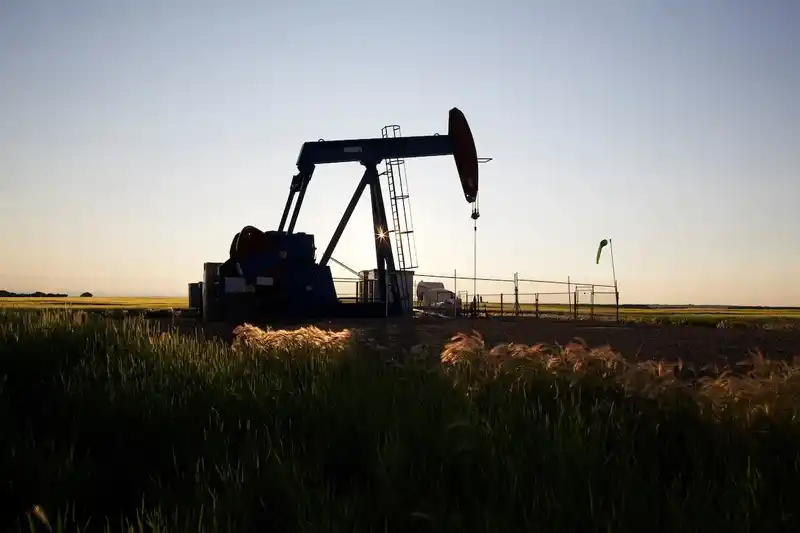
Condensate shortage
Scotiabank analyst Robert Hope outlines a shortage of condensate, the oil/gas mixture used by the agriculture industry and to facilitate the transport off heavy bitumen from the oil sands,
“One of the more notable themes in the market is the growing recognition that condensate availability could become a key determinant of future Canadian oil production growth. Western Canada is structurally short condensate and already relies on pipeline imports to meet oil sands diluent requirements. Anticipated growth in oil sands production is expected to materially increase diluent demand, implying that domestic supply will need to expand through increased Montney and Duvernay liquids-rich production, additional processing and fractionation capacity, greater diluent recovery, or incremental imports which presents numerous infrastructure opportunities. While domestic production can respond to near-term condensate demand growth, it cannot resolve the longer-term structural challenge: the significant reserve-life mismatch between oil sands and condensate resources which ultimately necessitates additional pipeline import capacity. From our upstream coverage, we highlight Ovintiv, Whitecap, Paramount, and Spartan Delta as key beneficiaries of strengthening Western Canadian condensate fundamentals. From our infrastructure coverage we see Keyera, Pembina and AltaGas as key beneficiaries”
Domestic defence
TD Securities analyst Tim James highlights Canadian defence stocks as the federal government looks to increase capacity to avoid U.S. relationships,
“Over the past 2 weeks, Canada defence developments highlight Canada’s ongoing leveraging of relationships with allies to expand procurement, industrial participation and export opportunities beyond the domestic market. We believe all of our coverage group stands to benefit with insights potentially ahead in Q3 reports from Bombardier, CAE, Exchange, AirBoss and Magellan. Valuations of North American defence stocks are up 2 per cent on average since Oct 16/26 based on Canadian defence multiples -2 per cent and U.S.-based defence multiples +8 per cent. Forward EV/EBITDA multiples for Canadian stocks with defence exposure are -12 per cent to +5 per cent. U.S.-based defence company forward EV/ EBITDA multiples are +3 per cent to +19 per cent … Canada is prioritizing domestic manufacturing, engineering and sustainment to strengthen strategic autonomy and supply-chain resilience. International partnerships: Canadian companies are partnering with allied suppliers to access technology, enter global programs and expand industrial cooperation. Examples include Magellan–Saab, Bombardier–BAE and 49North–UNWAVE … global defence revenue exposures for our Canadian covered stocks with Canadian defence exposure are CAE: 44 per cent; MAL: 36 per cent; BOS: 29 per cent; EIF: ~15-20 per cent (~50 per cent including other government services, 2025E); and BBD: ~12 per cent”
Midterms
Citi chief U.S. equity strategist Scott Chronert predicts the market reaction for different outcomes for today’s U.S. midterm elections,
“While probabilities increasingly favor a Blue sweep, several tightly contested Senate races leave open some possibility of Republican control of the Senate or, conversely, a greater than expected Democratic foothold in the Senate. Equity market reaction is likely positive in the former case and negative in the latter.
“Approval Ratings and Precedents — Mid-term flips in the House and Senate control are fairly normal, the magnitude of which ties back to approval ratings for the incumbent party heading into the election. Approvals & generic ballot polls imply a significant Dem pickup. Bush in ’06 seems the closest analogy. Beyond Congress — Other governorships and state specific issues will be influenced by the magnitude of Blue wave, or lack thereof if the Dems underperform poll expectations. The AI buildout is likely to be a key determinant here. Investors need to be wary that single state dynamics (e.g., Texas) could influence the AI trade with each of relative losers and winners. Election Playbook — Our preferred mid-term call to favor Health Care relative to Financials/Banks has mostly played out. Should Republicans retain the Senate, we expect a tactical tailwind. In the event Democrats gain an outsized Senate majority, we expect incremental pressure on equities. Budget, debt ceiling, deficit funding and tax rates all become important issues to prepare for headed into ’27”.
Bluesky post of the day
“.. The second derivative of hyperscaler capex expectations has clearly peaked.” @bloomberg.com
— Carl Quintanilla (@carlquintanilla.bsky.social) October 31, 2026 at 9:55 AM
[image or embed]
Diversion
“We’re Hoping Our Billionaire Overlords Took Away the Right Lessons from “Jurassic Park,” Because Scientists Just Found Dinosaur Blood" - Futurism
Related Articles
- Stock Markets News
Barlow’s Research Roundup: TD analyst sees buying opportunity in REITs
- Stock Markets News
Barlow’s Research Roundup: Two companies added to RBC Global Energy Best Ideas list of top picks
- Stock Markets News
Barlow’s Research Roundup: Federal budget a potential boost for this apartment REIT, says Scotiabank analyst
- Stock Markets News
Barlow’s Research Roundup: Market sprint to year-end ‘looking more like a 100-metre hurdles event’
- Stock Markets News
Brent crude jumps, settles up over $3 after tanker attacks