Asia stocks mixed as chip rout triggers KOSPI trading halt; China outperforms


Asia stocks mixed as chip rout triggers KOSPI trading halt; China outperforms
Asian stocks were mixed on Thursday, as a sharp selloff in semiconductor shares triggered a trading curb in South Korea, offsetting support from a steep decline in oil prices after Democrats' victories in the U.S. midterm elections.
U.S. stock futures were also mixed during Asian hours by 03:48 GMT, with tech-heavy Nasdaq 100 Futures leading losses. Wall Street closed higher overnight as investors welcomed the prospect of Democrats gaining control of Congress.
S.Korea, Japan chip stocks slide; KOSPI entered trading halt
South Korea's KOSPI fell as much as 5.2%, triggering a five-minute sell-side trading curb, known as a sidecar, as a sharp selloff in semiconductor stocks intensified.
Heavyweight chipmakers Samsung Electronics (KS:005930) and SK Hynix Inc (KS:000660) slumped 5.5% and 8%, respectively.
The losses came as disappointing earnings from U.S. chip designers Qualcomm (NASDAQ:QCOM) and Arm Holdings (NASDAQ:ARM) revived concerns over the semiconductor industry's growth outlook. The Philadelphia Semiconductor Index had dropped 3.1% overnight to a six-month low.
Chip equipment makers also came under pressure, reflecting concerns about weaker smartphone demand, rising memory costs and uncertainty over the returns from massive artificial intelligence investments.
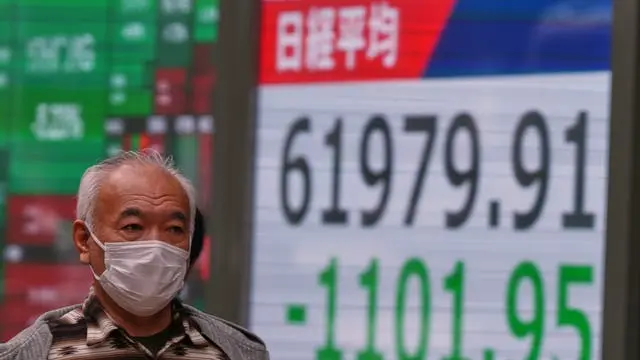
Japan's Nikkei 225 edged down 0.3%, while the broader TOPIX index rose 1.5%.Japan's chip and artificial intelligence-related shares also extended their losses on Thursday, following a steep selloff in the previous session. Chip-testing equipment maker Advantest (TYO:6857) fell 9.4%, while semiconductor equipment manufacturer Tokyo Electron (TYO:8035) dropped 7.7%. Technology investor SoftBank (TYO:9984) declined 5.3%.
China stocks outperform on tech gains
Chinese stocks bucked the regional technology selloff, with semiconductor shares advancing as Beijing's fresh support measures boosted investor appetite for domestic chipmakers.
The blue-chip Shanghai Shenzhen CSI 300 index rose 0.4%, while Shanghai Composite rose around 0.1%.
Hong Kong's Hang Seng index jumped 3.5% with Chinese chipmaking stocks leading gains.
Chinese semiconductor shares benefited from the People's Bank of China's decision to cut the interest rate on its relending facility for share buybacks and share purchases by 25 basis points to 1%.
Beijing's push to reduce reliance on U.S. semiconductor technology also continues to support domestic chip designers, foundries and equipment manufacturers.
The divergence underscored the different forces driving regional technology shares.
Oil prices slide; Aussie shares jump after strong trade data
Losses across Asia were capped by a more favourable macroeconomic backdrop after oil prices plunged on Wednesday. Brent crude settled 8.7% lower at $94.62 a barrel, while U.S. West Texas Intermediate fell 8.29% to $88.12, both reaching their lowest levels in about two months.
Australia's S&P/ASX 200 rose 2.4% after data showed the country's goods trade surplus widening sharply in September. The seasonally adjusted surplus jumped to A$2.83 billion from A$184 million in August, exceeding economists' expectations of A$940 million and reaching its highest level in seven months.
Elsewhere, Singapore's Straits Times Index gained 0.5%, while India's Nifty 50 futures traded flat.
The Democratic victories in U.S. midterms raised expectations that political pressure could accelerate efforts to end the U.S.-Iran conflict, potentially easing supply disruptions and reducing inflationary pressures.
Lower energy prices also boosted bond markets as investors scaled back expectations of further Federal Reserve interest-rate increases.
Treasury yields declined across the curve, while the dollar weakened, providing support to risk-sensitive assets and markets outside the technology sector.
Related Articles
- Stock Markets News
Why South Korea's Kospi has plunged over 5% on Thursday?
- World News
Asian shares and US futures are mixed as Democrats gain majorities in both the US House and Senate
- Stock Markets News
Asia stocks slip as chipmakers retreat; earnings, central bank meetings loom
- Stock Markets News
Why did South Korea's KOSPI erase Monday's 2.2% rally in one session?
- Stock Markets News
investingLive Asia-Pacific market news: Gold rocketed higher still