Home secretary announces plans to tackle 'perception of two-tier policing'
Shabana Mahmood announces stronger guidance on police impartiality in a speech to police chiefs.
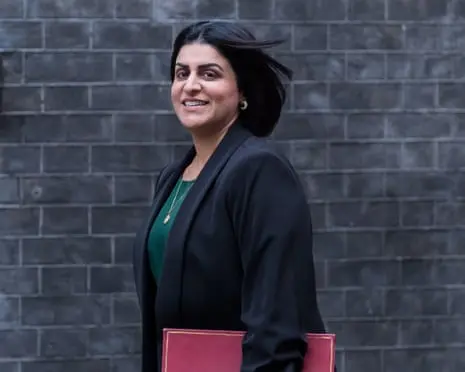
Home Secretary Shabana Mahmoodhas announced stronger guidance on police impartiality to tackle what she called the "corrosive and growing perception of two-tier policing".
She told a conference of police chiefs on Wednesdaythat they should avoid what she calls "misguided attempts at course correction" where the pursuit of equality leads instead to differential treatment.
Recent complaints about alleged two-tier policing have mostly come from those on the right in politics.
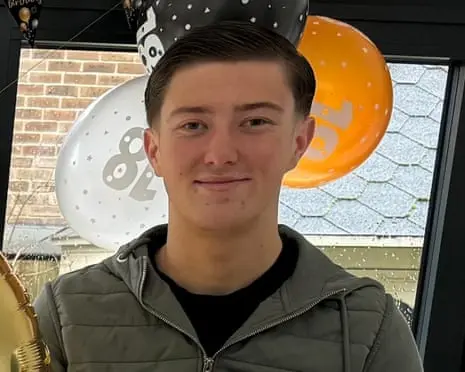
They have pointed to the arrest of Henry Nowak as he was dying after being stabbed by Vickrum Digwa who had accused him of racism.
Reform UK leader Nigel Farage has argued that white people are treated differently by police because of their race. But critics say this claim risks overlooking the long‑standing experiences of black and minority ethnic communities.
Some senior police figures have also strongly rejected the claim of two-tier policing.
Mahmood began her speech by hailing the bravery of police officers, but said community trust in forces was falling.
Mahmoodannounceda new national standard was being developed "to ensure all members of the public are treated equally".
"Now let me be clear: I know the vast majority of officers police impartially and that policing without fear or favour is their creed," she told the conference.
But failures have allowed some people to "whip up" the false narrative that two-tier policing exists, she said.
Mahmood called "clear, comprehensive guidance" on police impartiality, which reinforces that officers must apply the law consistently to avoid what she called "motivated actors" whipping up the idea that there's two-tier policing.
The home secretary said that community engagement can mean going to a residents' association meeting and having tea and biscuits - or samosas - but it shouldn't mean engaging with activists pushing an agenda.
"Leave the politics to the politicians," she added. "And we will leave the policing to you."
The home secretary said more needed to be done to tackle inequalities in policing, highlighting the persistently low proportion of black police officers.
However, she noted that some "well-intentioned approaches", such as the Police Anti-Racism Commitment, had "risked undermining confidence in impartial policing".
"As a Muslim home secretary, no one can doubt that equality in policing, and in our forces, matters to me,"she said.
"None of us can accept the racism that was repulsively on display at Charing Cross Police station.
"But we must also be wary of misguided attempts at course correction, where the pursuit of equality leads instead to differential treatment.
"To the public, it was patently absurd to tell police officers that fair policing "does not mean treating everyone the same."
In response, the Conservative Party said it had been "calling out unequal treatment for years".
Shadow Home Secretary Chris Philp added: "The home secretary finally admits there is a problem – and we will now hold her to her own commitments to make sure there is real change."
Jo Noakes who leads the College of Policing, the standards-setting body for the police, said it will issue new guidance for officers that will make clear on impartiality in Spring.
She said: "Policing must act in a way that maintains public confidence, which is dependent on officers and staff exercising their powers without fear or favour...
"Impartiality cannot be seen in isolation but needs to be considered alongside how policing acts with fairness and inclusion - both in its own ranks and with the public."
Get in touch
Have you been affected by the issues in this story? Share your experience
Contact form