Not Just OpenAI: There Are More Pre-IPO Names to Watch


There are more ways than ever to access late-stage private equity, and there are some big IPOs on the horizon. The post Not Just OpenAI: There Are More Pre-IPO Names to Watch appeared first on The Daily Upside.
With this many insiders, it’s no wonder that Members Only jackets are back in style.
Private companies have never been so in reach of retail investors, and a wave of cash has enabled companies to stay private for longer. And many pre-IPO companies — i.e., Anthropic and OpenAI — have people excited. “There’s more growth that’s accruing in those last two to three years before [private companies] become public that used to accrue to public markets,” said Laurence Russian, portfolio manager of ABS Global Investments’ Pre-IPO and Growth Fund, a closed-end interval fund. “When people want access, people will create ways to give it to them.”
Private Works Department
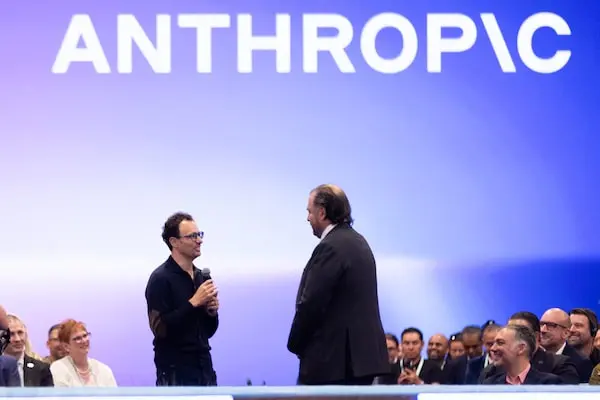
Anthropic and OpenAI represent hundreds of billions in funding and have both indicated that they plan to go public over the course of the next year. But other companies excite fund managers and retail investors alike, despite less headline attention or more time until their IPOs. Sources told Advisor Upside that they’re watching some of these names:
- Payment processing company Stripe, which was valued at $159 billion earlier this year.
- In the AI space, there is anticipation around Databricks, Cognition and Positron AI.
- And in the aerospace and defense category, people are closely watching Anduril, Shield AI and Jeff Bezos’ Blue Origin.
Private defense tech companies in particular are a highly sought-after commodity in the secondary market but are often difficult to access, said Logan Henderson, CEO of Gridline. “If you’re in defense technology, there’s a lot of focus on who your investors are, especially for government-related contracts,” he added.
There are a few ways nonaccredited investors can tap into these private companies. One is through a special purpose vehicle, or SPV, which pools capital from multiple sources — both institutional and smaller or nonaccredited investors. This is the most common way retail buyers can get access, said David Shapiro, CEO of OpenVC. Another way is buying shares in the company in a primary round, but that requires relationships within the company and is more difficult, needing “much larger check sizes,” he added.
A third way is buying an ETF that has exposure to the company in question, but there are limitations on how much private exposure an ETF can have — 15%, to be exact, since private investments are considered illiquid by the Investment Company Act of 1940. There are also “hybrid” ETFs that either participate in a financing round or buy SPVs.
Some of these ETFs distribute the remaining 85% of their assets across companies linked to the private firm in question, said Aga Kuplinska, head of product development at Tidal Financial Group. “[Issuers] look for proxies in order to target a certain company’s particular space, operating environment or ecosystem — unicorn suppliers,” she said. “They overlay the exposure of up to 15% with a thematic component, a group of companies that are highly correlated.”
Are You Open to Closed-End?
Last year, the Securities and Exchange Commission lifted the 15% cap for registered closed-end funds, opening this category up to more private investment. Examples of funds that took advantage of this rule change are the Robinhood Ventures funds, which invest in late-stage private or frontier companies, and the Destiny Tech100 (DXYZ) fund, composed of 100 late-stage private tech companies, including Stripe and Databricks. The issue is that funds can trade at a premium to their underlying holdings’ net asset values, meaning investors might pay more than what the holdings are worth — just for the exposure. “The disparity between a NAV of $500 billion when the market cap of a fund is $2 billion would mean that you’re paying a huge premium just for the privilege of sitting in that liquidity,” Shapiro said. “Investors should be wary of that because these funds can often trade off of the hype of having Anthropic or one of these specific names.”
Interval funds also provide access, but buyers are subject to their specified time horizon when it comes to getting investments back, said Ben Black, CIO of Powerlaw, which runs PWRL, a closed-end fund investing in private companies. “The challenge is, you can [typically] only get 5% of your cash back every quarter, so it takes you five years to get your money out,” he said. “For some investors, that’s fine.”
When it comes to SPVs, it can be difficult to know what exactly you’re buying. An SPV might hold another SPV, with fees throughout, Russian said. “Somebody might create an SPV with a general partner that’s on [the capitalization table — a document listing every shareholder of a company]. They then might create another SPV for other investors to invest in their SPV,” he said. “Very often, they’ll layer fees into these different vehicles … some of them can be quite expensive.”
Tidal (Liquidity) Wave. As private markets continue to open up to retail investors, Russian said interval funds will continue to proliferate, while “the Schwabs of the world” also get into the business. Many pre-IPO companies are already well-established and successful, so the category is beginning to comprise an asset class unto itself, he added.
The top priority for investors should be having a plan for after the coming “wave of liquidity,” said Tracy Gallagher, head of investment strategy at Allocate. “Do you plan to hold this position? How do you plan to diversify it?” she said. “Not necessarily a, ‘You must do this,’ but if you wait until that moment, you’re probably in a worse position to do anything intelligent or creative with the capital that’s coming back to you.”
Related Articles
- Business News
Sam Altman’s OpenAI eyes $30B fundraising round ahead of looming IPO: report
- Stock Markets News
OpenAI, ready to IPO in 2027, now counts majority of sales from enterprises, Brockman says
- Stock Markets News
The cost of intelligence is collapsing
- Stock Markets News
Anthropic sets stage for blockbuster IPO, highlighting AI’s benefits and risks for humanity
- General News
Anthropic’s IPO Stares Down a Wobbly AI Trade