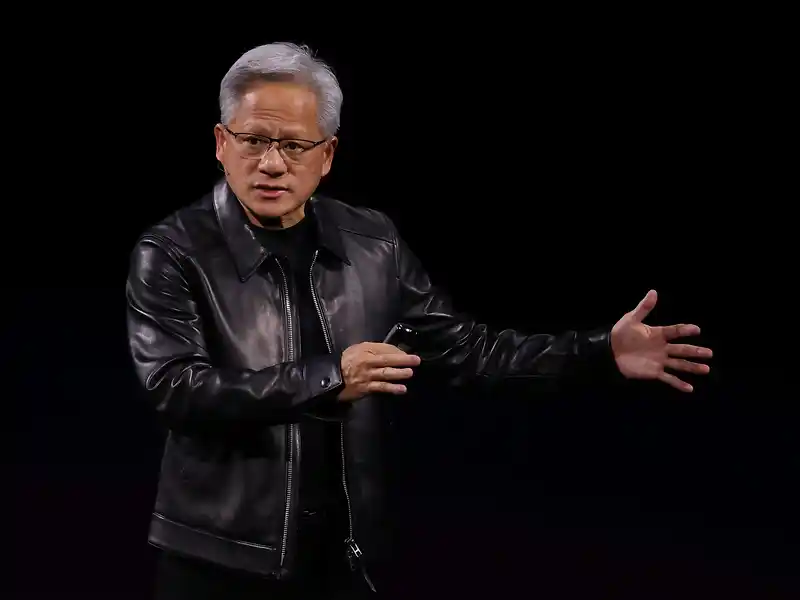
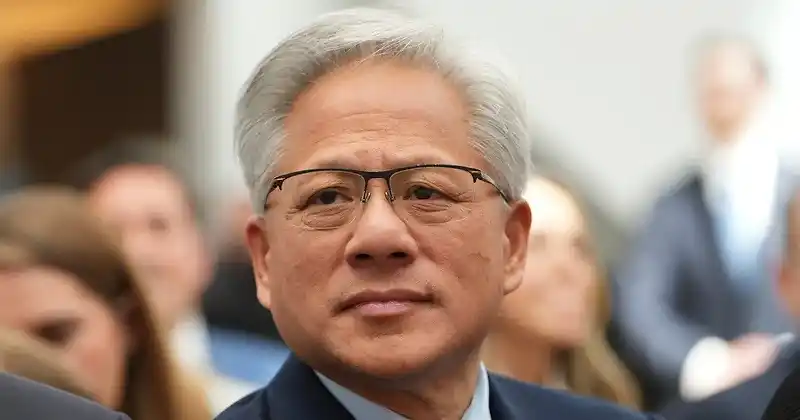
Jensen Huang’s Scandal: Quiet AI Tailwind?


Market Analysis by Luke Lango covering: Alphabet Inc Class A, Amazon.com Inc, NVIDIA Corporation, Marvell Technology Inc. Read Luke Lango's Market Analysis
In case you missed it, here’s a quick recap. In late October, The New York Times reported that U.S. intelligence had identified Alice Huang (no relation to Jensen Huang) as a suspected Chinese intelligence asset. She’s an executive at Megaspeed, a Singapore data center company that has bought billions of dollars’ worth of Nvidia chips. Follow-up reports said a U.S. government memo described her relationship with Jensen Huang as romantic. Then, over the weekend, Huang admitted he’d been unfaithful in his marriage. He didn’t name the woman. Nvidia’s board has launched an independent investigation, and the company says it has “no reason to believe” national security or company secrets were compromised.
This is a real problem for Nvidia. The board probe, a closed-door House briefing and open speculation about who could succeed Huang all add up to an overhang that won’t clear overnight. Huang has also been Washington’s loudest voice for selling chips to China. That influence is probably damaged, and any China upside with it. The story only becomes truly serious if the investigation finds he handed over something sensitive. Nothing reported so far suggests he did.
But it isn’t an AI problem, and the market agrees. As of this writing, NVDA is down about 4%, while the chip ETF SOXX is up almost 6% and the Nasdaq is up more than 2%. AMD, Broadcom and Marvell are each up 8% to 9%. Investors aren’t selling AI. They’re selling one company’s headline risk and moving the money into the rest of the trade.
That rotation makes sense, and it may be the most interesting part of the story. How much the AI buildout spends is set by hyperscaler budgets, not Nvidia’s stock price, and those budgets aren’t changing because of a CEO scandal.
A weakened Nvidia does change where that spending goes, though. Every big AI buyer already wants to depend less on a single supplier with roughly 70% gross margins. A distracted CEO, a board investigation and fading clout in Washington give those buyers more leverage. That speeds up a shift already underway toward AMD’s GPUs and custom chips like Google’s TPUs, Amazon’s Trainium and the designs Broadcom and Marvell build for hyperscalers. If Nvidia’s pricing power slips, more of each AI dollar flows to memory, networking, power and everything else in the stack.
To be clear, Nvidia isn’t losing its crown over this. CUDA and Nvidia’s roadmap keep customers loyal, and market share moves over product cycles, not news cycles. Nvidia also helps finance much of the buildout, so a badly wounded Nvidia would hurt some smaller players, too. But as long as this stays a contained, Nvidia-specific story, it nudges AI spending toward more of the supply chain.
Our take: This is messy for Nvidia. For the broader AI trade, it’s a nothing-burger, and maybe even a quiet tailwind.
Related Articles
- Business News
Nvidia launches investigation into CEO's affair with suspected Chinese spy
- World News
US chipmaker Nvidia investigates CEO Jensen Huang over affair
- World News
Zoe Kleinman: Nvidia CEO's affair will cause ripples across US and beyond
- Stock Markets News
Explainer-What we know about Nvidia’s probe into CEO Jensen Huang
- World News
Trump says FBI probing Nvidia CEO Huang’s affair with alleged spy