Could the Jensen Huang Controversy Become a Bigger Problem for Nvidia Investors?


Market Analysis by Davut Karabulut covering: NVIDIA Corporation. Read Davut Karabulut's Market Analysis
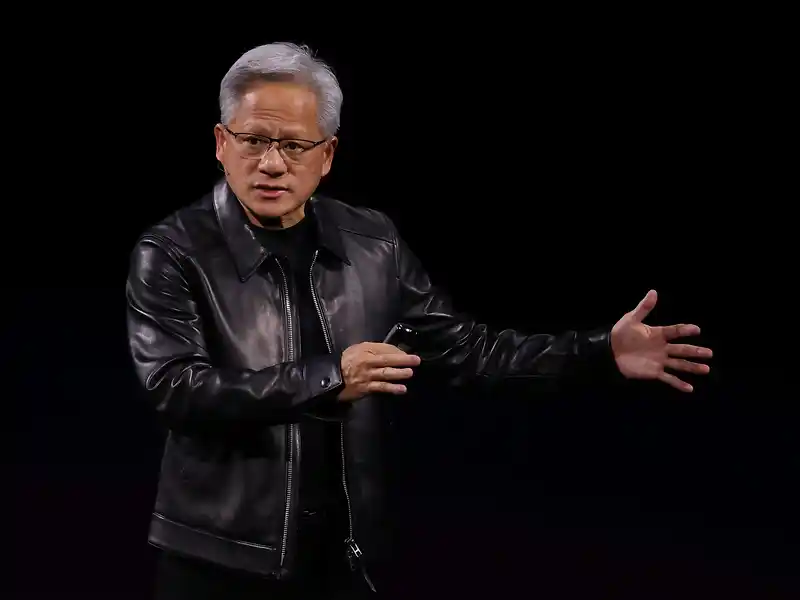
One of the most powerful figures in technology. The man behind the AI revolution. A key player in America’s technology rivalry with China.
Jensen Huang.
Huang turned Nvidia (NASDAQ:NVDA) from a graphics card maker into one of the world’s most valuable technology companies. Today, he plays a major role in billion-dollar deals and has considerable influence in both Silicon Valley and Washington.
But now, he faces a very different kind of crisis.
This time, the issue is not Nvidia’s rivalry with AMD (NASDAQ:AMD) or US restrictions on chip exports to China. Instead, the controversy involves Huang’s private life and a woman allegedly linked to Chinese intelligence.
The allegations go beyond personal relationships. They involve billions of dollars in Nvidia chip sales, suspicious business dealings in Southeast Asia, and US national security concerns.
So how did the CEO of one of the world’s most powerful technology companies become caught up in this controversy?
At the center of the allegations is Alice Huang, also known as Huang Le.
Her reported background includes television journalism, banking, and financial management. She later moved into the technology and data center business.
She is particularly associated with Singapore-based Megaspeed International and its Malaysian subsidiary, Speedmatrix.
The companies have attracted attention over their alleged involvement in Nvidia hardware transactions.
According to reports, more than $4.8 billion worth of Nvidia equipment was purchased between June 2024 and February 2026.
But the main concern in Washington was not the size of these purchases. It was the chips’ final destination.
The United States has imposed export restrictions to prevent advanced Nvidia processors, including the A100 and H100, from reaching China. These chips are used in AI development and could also support military applications.
Against this background, the activities of Megaspeed and its affiliated companies raised questions.
According to allegations, large quantities of Nvidia processors were stored in their original shipping crates at a facility in Malaysia. They had reportedly not been installed in operational data centers.
This raised a key question for US authorities:
Were the chips really intended for data centers, or were they being held for shipment to China?
The allegations have not necessarily been proven in court. They should not be treated as established facts. However, the potential impact on global technology security is significant.
The controversy becomes even more serious with allegations linking Alice Huang to China’s Ministry of State Security (MSS).
Reports suggest that US counterintelligence assessments examined her possible intelligence connections and contacts with Jensen Huang.
This raises an important question:
What could Chinese intelligence gain from a relationship with Nvidia’s CEO?
The answer may lie in the strategic information controlled by the company.
Nvidia’s chip allocation plans, customer priorities, and delivery schedules are highly sensitive. Information about its lobbying efforts in Washington and discussions over US export restrictions could also be valuable to Beijing.
The global AI race is not just about software. Access to powerful processors, large data centers, and advanced manufacturing technology is equally important.
If the allegations are accurate, close access to Nvidia’s CEO could provide valuable insight into the global technology supply chain.
However, an important distinction must be made. Alleged intelligence connections do not prove that Alice Huang engaged in espionage. Nor do they prove that Jensen Huang shared confidential company information.
The circumstances of their reported encounters have also attracted attention.
In June 2024, they were reportedly photographed together at a bar in Taipei, alongside executives from several technology companies.
Alice Huang was also allegedly present at a press conference following an AI suppliers’ dinner in May 2025.
On their own, these encounters could be ordinary business interactions. Technology executives regularly meet at industry events and private gatherings. But in the context of the other allegations, these meetings have attracted greater scrutiny.
Reports about Jensen Huang’s private life have added another dimension to the controversy.
According to allegations, Huang sent a message to Nvidia employees apologizing and acknowledging an extramarital relationship.
As a result, the story has expanded from business dealings to personal relationships and national security concerns.
For Nvidia, however, the biggest risk goes beyond its CEO’s private life.
Jensen Huang is not just the company’s chief executive. He is also the public face of its global brand. Investors closely associate Nvidia’s success with his vision and leadership.
That makes any controversy involving Huang a potential corporate risk. It could affect investor confidence and put the company’s business relationships under greater scrutiny.
Nvidia’s board of directors has reportedly launched an independent review.
According to reports, Nvidia has stated that there is currently no evidence of compromised trade secrets or national security information.
Still, the outcome of the independent review could have major implications for the company’s corporate governance.
The controversy also carries financial risks.
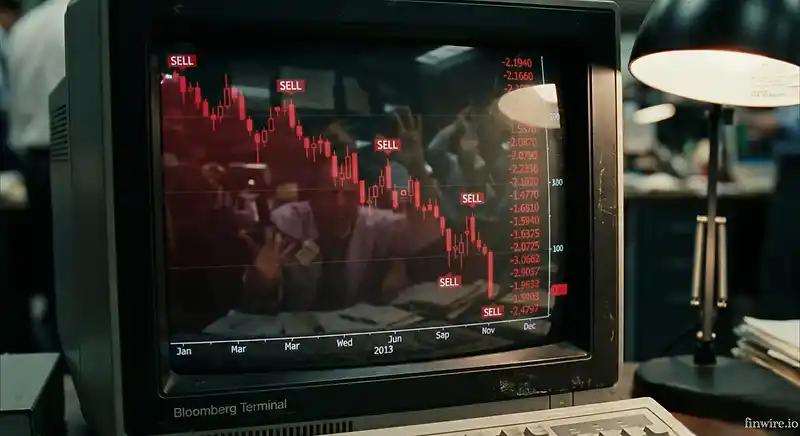
Following the emergence of the allegations, Nvidia shares reportedly fell by 4.3%. The company’s market value allegedly dropped by around $190–200 billion.
However, it would be misleading to blame the entire decline on this controversy. Broader movements in technology stocks and changing market expectations may also have played a role.
The deeper concern is investor confidence.
Nvidia’s success is closely tied to Huang’s leadership. Questions about his credibility could also raise concerns about the company’s management, transparency, and risk controls.
The controversy has reportedly led to a securities class-action lawsuit against Nvidia and its CEO.
The lawsuit refers to Section 10(b) of the US Securities Exchange Act and SEC Rule 10b-5.
The plaintiffs allege that Nvidia may have failed to disclose important information or provided misleading statements to investors.
However, these allegations do not automatically establish legal liability. The plaintiffs must prove the relevant legal elements, including material misrepresentation, the required level of wrongdoing, and investor losses.
The controversy also has major international implications.
For Washington, this is not simply a matter of a CEO’s private life. The possible diversion of advanced Nvidia chips to China is a national security concern.
US President Donald Trump has reportedly expressed support for Huang, saying he does not believe the CEO acted with malicious intent. Meanwhile, the FBI is said to be examining the matter.
China has rejected the espionage allegations. Beijing has described such reports as politically motivated attempts to discredit the country.
Singapore has offered a different perspective.
Its Ministry of Home Affairs has reportedly stated that Alice Huang is not under investigation for espionage. However, an investigation into Megaspeed over alleged commercial irregularities and fraud is said to be ongoing.
This distinction matters. A commercial fraud investigation is not the same as an espionage investigation. One does not automatically prove the other.
Beyond the allegations themselves, the case raises a broader question about Nvidia’s management structure.
Nvidia is one of the world’s most strategically important technology companies. Its processors power much of the global AI infrastructure. The company also plays a major role in America’s efforts to maintain its technological advantage over China.
Yet much of Nvidia’s public image and strategic direction is closely associated with one person:
Jensen Huang.
In management theory, this is known as a Single Point of Failure.
The term describes a situation in which an organization depends too heavily on one person or system. If that critical element fails, the entire organization can be affected.
When a company’s success depends heavily on one executive, personal, legal, or political problems involving that individual can quickly become corporate risks.
The stakes are particularly high for Nvidia. The issue is not just its share price or a possible change in leadership. It is the stability of a company at the heart of the global AI supply chain.
Jensen Huang has spent years building Nvidia into a technology powerhouse. He has outperformed competitors and placed the company at the center of the AI revolution.
But this controversy shows how much the nature of global technology competition has changed.
The battle is no longer limited to factories, data centers, and corporate boardrooms. The personal relationships, business partners, and social circles of senior executives can also become matters of national security.
Still, one key question remains unanswered:
Was Jensen Huang really the target of an intelligence operation, or has he become caught up in allegations surrounding his business relationships and private life?
The answer could affect not only Nvidia’s future but also the wider technology rivalry between the United States and China.
Because the real battle is now about who controls the information, the people, and the decisions behind these chips.
***
The views and opinions expressed in this article are solely those of the author and do not necessarily reflect the views of Investing.com.
Related Articles
- World
Zoe Kleinman: Nvidia CEO's affair will cause ripples across US and beyond
- World
US chipmaker Nvidia investigates CEO Jensen Huang over affair
- Stock Markets
Explainer-What we know about Nvidia’s probe into CEO Jensen Huang
- Stock Markets
Who is Jensen Huang and why is Nvidia so important in the AI race?
- Stock Markets
How Nvidia’s Jensen Huang got entangled in a China chip and spy scandal