Bank of America Is Being Priced for Problems It Isn’t Having
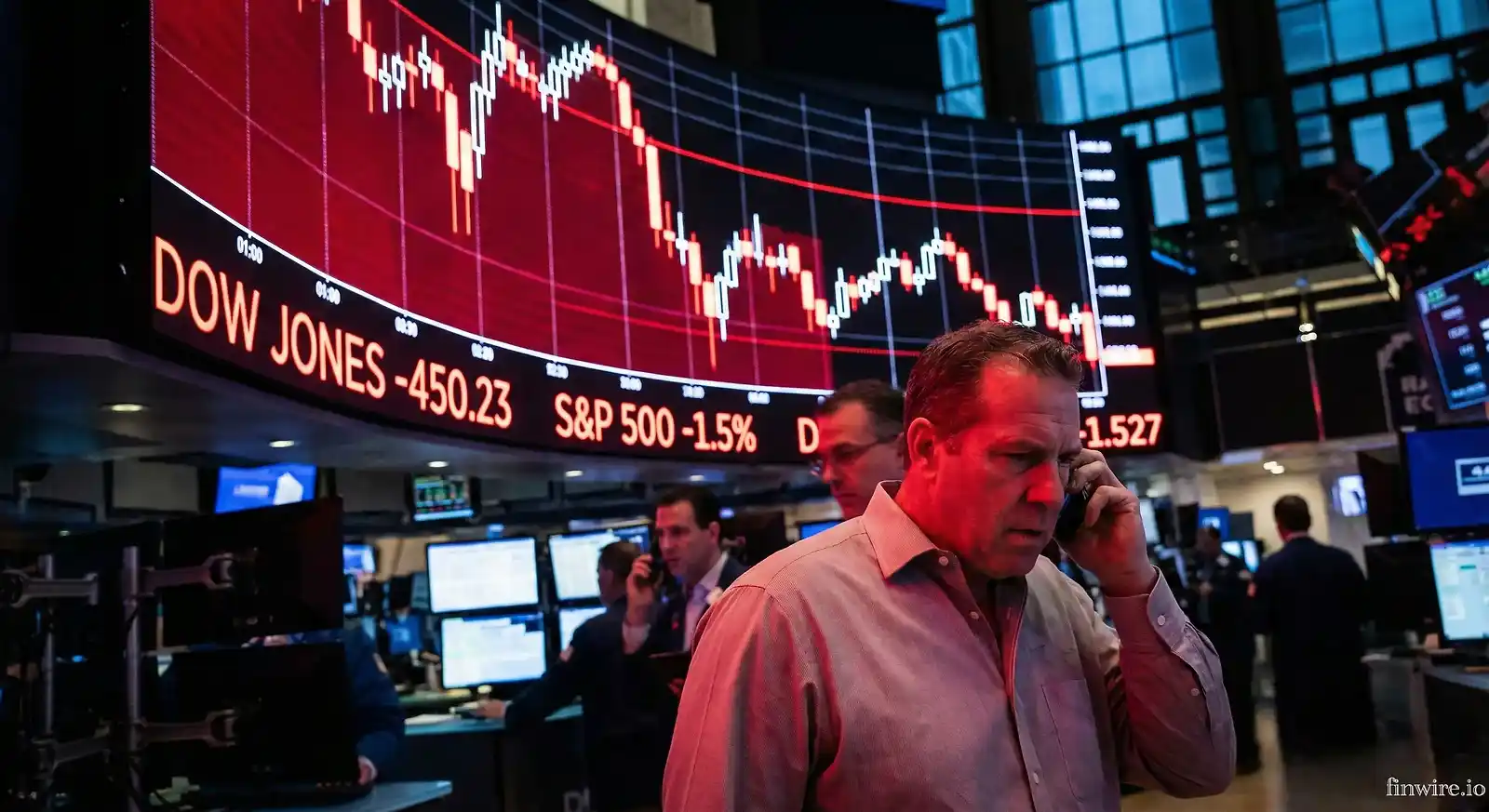
When I look at the current state of the banking sector, I see a classic disconnect between fear and reality, and nowhere is this more apparent than with Bank of America. The stock market is currently punishing the company based on political headlines and fears of regulatory changes, yet the actual business is performing significantly better than anyone expected.
I believe we are witnessing a setup for a sharp, V-shaped recovery in the share price because the underlying engine of the bank is firing on all cylinders. The recent fourth-quarter earnings report for the fiscal year 2025 was not just good; it was a clear demonstration that the bank has built a fortress capable of withstanding the exact headwinds the market is worried about. While traders are selling based on what might happen in Washington, I am looking at the cold, hard cash the bank is generating right now.
My conviction in this trade comes from a simple observation: the narrative has become too negative relative to the numbers. We have a company that just beat analyst expectations on both the top and bottom lines, yet the stock price has dipped, offering what I consider to be a gift to patient investors. The fear revolves around potential caps on credit card interest rates and the future path of Fed policy, but when I dig into the balance sheet, I see a company that is growing loans, expanding margins, and managing credit risk better than almost any of its peers. The sell-off feels emotional, driven by knee-jerk reactions to news bites rather than a sober analysis of earnings power. In my view, the fundamentals are intact, the guidance for 2026 is solid, and the valuation has compressed to a level that provides a massive margin of safety.
I am approaching this as a strong buying opportunity because the market is ignoring the resilience of the American consumer and Bank of America’s specific strengths. The bank is not just a lender; it also has a booming investment banking division and a massive wealth management arm. The market seems to be focusing too heavily on one or two regulatory risks. I see a path to significant capital appreciation over the next twelve months as the political noise fades and the market is forced to acknowledge the bank’s growing earnings power. I am not trying to time the exact bottom, but I am confident that it will play out well in the long run.
Fundamentals
The most recent financial results from the fourth quarter of 2025 tell a story of strength that completely contradicts the bearish sentiment in the market. Bank of America reported normalized earnings per share of $0.98, which comfortably beat the consensus expectation of $0.96. On the revenue side, the bank pulled in roughly $28.4 billion to $28.5 billion, surpassing Wall Street’s prediction of around $27.9 billion. This is not a company that is struggling; it is a company that is growing its net income by a massive 12% year-over-year to $7.6 billion. What stands out to me is that this growth isn’t coming from one-off accounting tricks but from core operational strength. The bank’s net interest income, which is essentially the money it makes on loans minus what it pays on deposits, surged to a record level of nearly $15.9 billion. That is a 10% jump compared to the same time last year, driven by higher interest rates and a larger loan book.
Even more impressive is how the bank is managing its expenses and credit quality. In the banking world, we look for operating leverage, which basically means growing revenue faster than expenses. Bank of America delivered this beautifully in the fourth quarter, with revenue growing by 7% while expenses only ticked up by about 4%. This gap shows that management is being incredibly disciplined with costs, keeping the headcount relatively flat at around 213,000 employees while using technology to handle more volume. But the real surprise for me was the credit quality. For months, the doom-and-gloom crowd has been predicting a wave of loan defaults. Instead, the bank reported provisions for credit losses of just $1.3 billion, which was significantly lower than the $1.5 billion analysts had braced for. The rate at which the bank is writing off bad debt actually dropped to 0.44%, which is an improvement from earlier in the year. This tells me the consumer is much healthier than the headlines suggest.
The diversity of Bank of America’s business is also saving the day. While the consumer bank is the steady anchor, the Global Markets division (essentially the trading arm) is performing exceptionally well. Sales and trading revenue jumped by roughly 10% to 11% year-over-year, and investment banking fees hit their highest level since 2020. This is exactly why I like the big banks; when one part of the economy slows down, another part often speeds up. Volatile markets are actually good for trading desks, and Bank of America is capitalizing on that. The bank is proving it can make money in almost any environment, whether rates are rising or falling. When you combine record net interest income with a booming trading business and better-than-expected credit quality, you have a fundamental picture that is screaming buy, regardless of what the stock price did yesterday.
When I zoom out from a single quarter and look at the longer-term trends, the case for Bank of America gets even stronger. The bank is demonstrating sustained growth in its loan portfolio, which is the lifeblood of any traditional lender. Average loans and leases grew by a robust 8% year-over-year to reach $1.17 trillion. This wasn’t just in one area; the bank saw growth across credit cards, mortgages, auto loans, and commercial lending. This suggests to me that despite high interest rates, the demand for credit in the US economy remains strong. Furthermore, the bank’s deposit base has grown to over $2 trillion. The bank’s ability to grow this massive pile of cheap funding is a competitive moat that is incredibly difficult for rivals to cross.
Looking ahead to 2026, the guidance from management reinforces my positive outlook. They are projecting net interest income to grow by another 5% to 7%, assuming the economy continues on its current path. They also expect to deliver continuous operating leverage, widening the gap between revenue growth and expense growth. This tells me that the bank’s earnings power is durable. Even if the economy softens a bit, the efficiency gains they have locked in will protect the bottom line. The bank is also over-capitalized, meaning it has more cash on hand than regulators require. This excess capital is being returned to shareholders aggressively, with over $6 billion in share buybacks and $2 billion in dividends in just the last quarter. This consistent return of capital is a long-term trend that puts a floor under the stock price and boosts earnings per share over time.
The Specific Risks
I cannot write an honest analysis without addressing the massive political cloud hanging over the stock. The primary reason for the recent sell-off is the proposal by President Trump to cap credit card interest rates at 10%. On the surface, this sounds terrifying for a bank. If you force a bank to lower the interest it charges, it makes less money. However, when I look at the actual math, the panic seems overblown. Bank of America’s gross interest yield on its credit card portfolio is currently about 11.76%. That is less than 2% higher than the proposed 10% cap. While a reduction would hurt, it is not a death blow. Unlike some subprime lenders who charge 20% or 30%, Bank of America’s prime customer base already pays rates that are relatively close to the proposed cap. Furthermore, credit card interest is only a small slice of the bank’s total pie; estimated to be around 5% of total earnings.
Beyond the math, there is the reality of implementation. As an analyst, I have seen many political headlines that never become law. Implementing a hard cap on interest rates would likely require an act of Congress, and the banking lobby will fight this tooth and nail. Even if it does pass, it would likely come with delays, carve-outs, or exceptions. We have seen this movie before with tariffs; the bark is often worse than the bite. The CEO has already stated that if such a cap were imposed, the bank would simply tighten its lending standards. This means fewer people would get credit cards, which is an unintended consequence that politicians usually try to avoid. I view this risk as a headline risk that creates volatility but is unlikely to destroy the fundamental business model of the bank.
The other major worry is the direction of interest rates and the Fed. The market is pricing in rate cuts in 2026, and there is a fear that the Fed could become too dovish due to political pressure. Bank of America is asset sensitive, which means it generally makes more money when rates are higher. If rates fall faster than expected, the bank’s net interest income could take a hit; potentially around $2 billion for every 1% drop in rates. However, there is a flip side to this coin. Lower rates typically stimulate the economy. They lead to more people taking out mortgages and auto loans, and they usually boost the value of the investment assets the bank holds. Lower rates also tend to encourage companies to do deals, which generates huge fees for the investment banking division. I believe that the increase in business volume from a stronger economy would largely offset the lower profit margins on individual loans.
Valuation Disconnect & Guru Activity
When I look at the valuation of Bank of America right now, I see a stock that is simply too cheap to ignore. The shares are trading at a Price-to-Book ratio of roughly 1.37 times. To put that in simple terms, for every dollar of actual equity the bank holds, the market is paying $1.37. When you compare this to one of it’s biggest rivals, Wells Fargo, the disconnect is glaring. Wells Fargo is trading at a premium of about 1.67 times its book value. While Wells Fargo has been aggressive with buybacks, there is no fundamental reason for such a massive gap between two banks that are so similar in size and quality. In fact, one could argue that Bank of America’s superior deposit franchise and lower regulatory drama should command a premium, not a discount.
If we look at the earnings potential, the math for a higher stock price is very straightforward. Current estimates for fiscal year 2026 suggest the bank could earn around $4.34 per share. Given the bank’s history of beating estimates, I think a realistic earnings power is closer to $4.45 per share. If we apply a fair valuation multiple of roughly 14.5 times earnings; which is a standard multiple for a high-quality bank in a decent economy; we get a price target of $64.50. That represents an upside of more than 25% from the current trading levels in the high $40s. Even if I am conservative and use a lower multiple of 12 times earnings, the floor for the stock seems to be around $52. This tells me that the downside risk is already priced in, while the upside potential is significant.
For investors who are nervous about the stock market volatility, there is another way to play this valuation disconnect. I am also looking at the bank’s preferred shares, specifically the Series HH. These are trading slightly below their liquidation value and offer a dividend yield of nearly 6%. This is significantly higher than the roughly 2% yield on the common stock. While you don’t get the same potential for massive capital gains with preferred shares, you get a much safer, steady income stream. For my analysis, however, I focus on the common stock because the gap between the current price and the fair value is just too wide. The market is offering us a dollar of value for eighty cents, and I believe that gap will close as the year goes on.
It is always instructive to look at what the guru investors are doing, and the recent data paints a fascinating picture of conflicting opinions. When I analyze the portfolio moves from late 2025, I see a clear split between momentum traders and deep-value investors. On one side, we have legendary investors like Warren Buffett (Trades, Portfolio) reducing their stakes. Buffett sold about 6% of his holdings, and other major hedge funds like Point72 and Viking Global cut their positions significantly. This selling pressure helps explain why the stock has struggled to gain traction recently. When big names sell, it creates a headwind that can suppress the price in the short term. However, on the other side of the trade, we see some incredibly smart money stepping in to buy. The most notable move came from Stanley Druckenmiller (Trades, Portfolio), who nearly tripled his position in Bank of America.
When a guy like Druckenmiller loads up on a bank, it usually means he sees a macroeconomic setup that the rest of the market is missing; likely a bet that the US economy will remain stronger than expected. We also saw heavy buying from T. Rowe Price and Ken Fisher (Trades, Portfolio), both of whom are known for taking a longer-term view. Perhaps the most telling signal comes from Li Lu (Trades, Portfolio), a deep-value investor who manages money for Charlie Munger’s family. He held his position steady, with Bank of America making up a massive 16% of his entire portfolio. This kind of concentration suggests an extremely high level of conviction in the long-term future of the bank.
Conclusion
After reviewing all the evidence, my conclusion is straightforward: Bank of America is a strong buy. The market has overreacted to political headlines and interest rate fears, creating a rare opportunity to buy a top-tier financial institution at a discount. The bank’s fundamentals are excellent, with record net interest income, growing loans, and credit quality that is defying all the pessimistic predictions. The management team is executing well, keeping costs down while investing in the future, and they are returning massive amounts of cash to shareholders through dividends and buybacks.
I believe the risks that are dragging the stock down; specifically the credit card cap and the Fed policy; are manageable and largely priced in. The 10% cap is unlikely to be implemented in its harshest form, and even if it is, the bank has plenty of other levers to pull to maintain profitability. The valuation gap between Bank of America and its peers is unjustified, and I expect it to close as the market realizes that the earnings engine is not broken. There may still be some volatility as the political news cycle plays out. But I have high certainty that the recovery will be V-shaped once the uncertainty clears. Whether you are looking for capital appreciation or steady income, this setup is compelling.
