U.S. Jobs Report October 2026: Payrolls Jump 165,000


U.S. payrolls jumped 165,000 in October 2026, beating BabyPips forecasts near 40,000, while wages rose and December Fed hike risk climbed.
The U.S. economy added 165,000 jobs in October 2026, more than double the 65,000 that economists expected. The unemployment rate dipped to 4.1% from 4.2%, and revisions added 84,000 jobs to August and September. But involuntary part-time work jumped by 339,000, and 3.1% annual wage growth trails the latest 3.7% inflation rate.
U.S. Jobs Report October 2026: Key Takeaways
- Nonfarm payrolls:+165,000 jobs in October, versus a 65,000 forecast and a revised 60,000 gain in September.
- Unemployment rate:4.1%, down from 4.2% in September and below the 4.2% forecast.
- Revisions: August rose to +186,000 (from +133,000) and September rose to +60,000 (from +29,000), a combined +84,000.
- Wages: Average hourly earnings rose 0.4% month-over-month to $38.00 and 3.1% year-over-year.
- Underemployment: The broad U-6 rate climbed to 7.9% from 7.6% in September.
- Next up: October CPI lands at 8:30 a.m. ET (13:30 GMT) on Nov. 10, and the Fed announces its next rate decision at 2:00 p.m. ET (19:00 GMT) on Dec. 9.
What Were the U.S. Jobs Report Results for October 2026?
Employers added 165,000 jobs in October, according to the Bureau of Labor Statistics (BLS). That beat the 65,000 consensus by 100,000 and tops the 48,000 monthly average from the prior 12 months. Private companies supplied 159,000 of those jobs, and government added 6,000.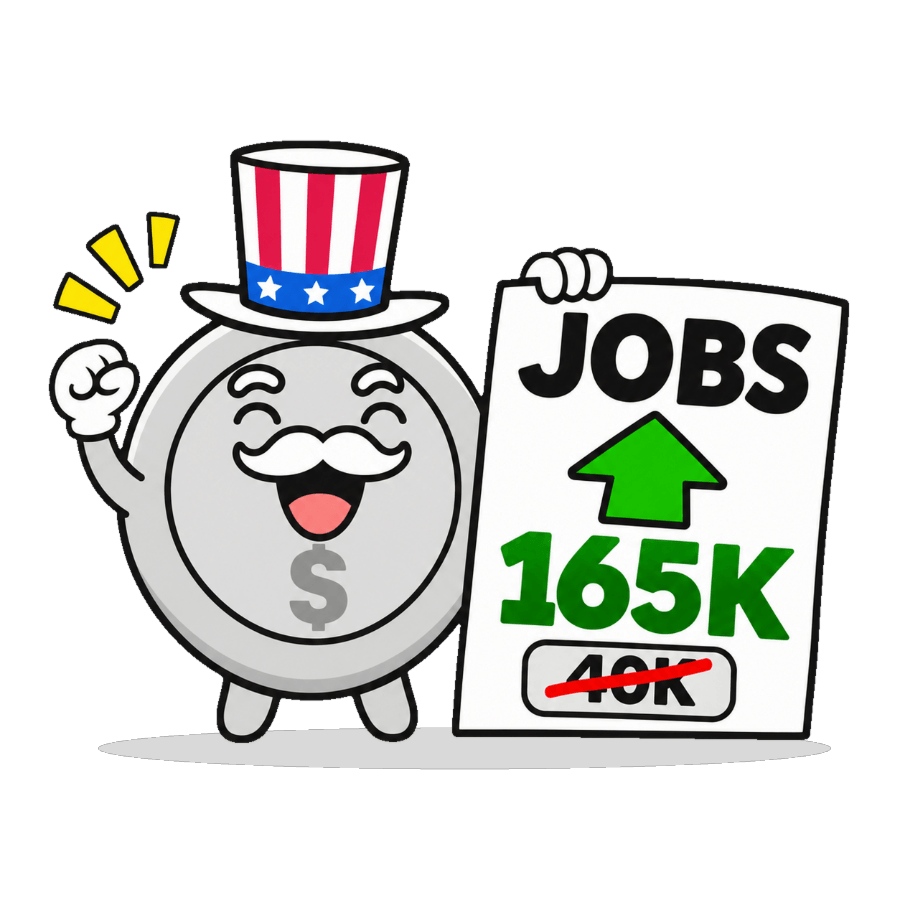
The BLS revised the two prior months higher. August now shows a 186,000 gain, and September’s weak 29,000 print turned into 60,000. Think of revisions as the BLS correcting its homework once late surveys arrive. This time, the corrections made the summer look healthier.
The unemployment rate (the share of people who want work and can’t find it) slipped to 4.1% from 4.2%. The labor force participation rate, which tracks how many adults work or look for work, edged up to 61.9% from 61.8%.
Where Did the New Jobs Come From?
Three sectors did most of the lifting. Professional and business services added 70,000 jobs, far above its 15,000 monthly average over the past year. Health care added 42,000, led by hospitals and home health care. Transportation and warehousing added 25,000, with couriers and messengers supplying 17,000 of them.
Factories joined in with 19,000 new jobs, and manufacturing employment sits 101,000 above its December 2025 low. Construction, retail, finance and leisure showed little change. So the hiring came from a handful of sectors, with most of the economy treading water.
Are U.S. Workers Better Off After This Report?
The headline looks strong, but the fine print is messier. The number of people working part time for economic reasons rose by 339,000 to 4.8 million, per the BLS household survey. These workers want full-time jobs but got cut hours or couldn’t find full-time roles.
That jump pushed the U-6 underemployment rate to 7.9% from 7.6%. U-6 is the broadest jobless gauge. It counts the unemployed, discouraged job seekers and part-timers who want more hours.
Paychecks tell a similar story. Hourly pay grew 3.1% over the past year, while consumer prices rose 3.7% in the 12 months to September. If prices outrun wages, a worker’s dollar buys a little less each month. More people have jobs, yet the typical paycheck is losing ground to inflation.
What Does This Mean for the Fed?
The Federal Reserve held its target range at 3.75% to 4.00% on Oct. 28 in a 10 to 2 vote. The two dissenters, Lisa Cook and Beth Hammack, wanted a quarter-point hike. The statement said inflation remains elevated and job gains have kept pace with the workforce.
A 165,000 print with upward revisions gives the hawks (officials who favor higher rates) a stronger hand. Firm hiring weakens the case that the labor market needs protection from tighter policy. The soft spots in part-time work and real wages give the doves (officials who favor lower rates) a counterpoint.
October CPI comes out at 8:30 a.m. ET (13:30 GMT) on Nov. 10, and the Fed announces its next decision at 2:00 p.m. ET (19:00 GMT) on Dec. 9. That CPI print could tip the December debate. The November jobs report lands at 8:30 a.m. ET (13:30 GMT) on Dec. 4, before the Fed meets.
AI disclosure: The Babypips editorial team used AI tools to help research, write, and check this article. A Babypips editor reviewed and edited it before publication. AI tools can misread data, make arithmetic errors, and state wrong information in a confident tone. Check figures and quotes against the linked sources before you rely on them. Our Editorial Policy explains how we create and review our content.
Related Articles
- Economy News
US economy adds 165,000 jobs in October, blowing past expectations
- Business News
US employers surprisingly add 165K jobs in strong October, unemployment dips
- Economy News
US adds 165,000 jobs in October, crushing forecasts as Dec rate hike bets grow
- Economy News
US job growth exceeds expectations in October despite economic uncertainty
- World News
The U.S. added 165,000 jobs in October, a bright spot for the economy