U.S. Eyes New Tariffs on 16 Trading Partners: What Forex Traders Need to Know

Reports of potential new U.S. tariffs on 16 trading partners are moving currencies as traders weigh inflation and growth risks.
It looks like tariffs are making their way back onto forex traders’ radars.
Several major financial news outlets reported Tuesday that the U.S. government could soon propose new import tariffs on 16 of its biggest trading partners.
While the White House has yet to confirm the reports and details on tariff rates remain scarce, forex traders aren’t exactly sitting on their hands.
What’s driving these currency moves when we don’t even have an official announcement yet?
What’s Actually Being Reported?
Sources familiar with the matter say U.S. Trade Representative Greer is expected to announce the findings of a Section 301 investigation into 16 economies.
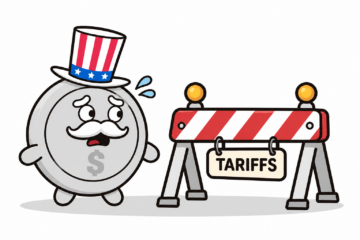 For those unfamiliar, Section 301 is part of the Trade Act of 1974that allows the U.S. to impose tariffs on countries it believes are engaging in unfair trade practices.
Who’s on the list? China, India, Japan, South Korea, Mexico, Vietnam, Taiwan, Thailand, Malaysia, Indonesia, Switzerland, Norway, Singapore, Bangladesh, Cambodia, and the EU.
One trade expert familiar with the investigation suggested we could see tariffs of 15% to 25% on top of existing duties, or lower rates with provisions for future increases.
Who needs to watch reality shows like The Traitors when there’s plenty of drama and shifting alliances on the global stage?
The good news is that there may be limits to how high these tariffs can go.
The proposed duties would reportedly respect caps negotiated under existing U.S. trade deals. We’re looking at a possible 15% ceiling for the EU, Japan, and South Korea, 19% for Malaysia, and 20% for China, assuming its trade truce gets extended beyond January 10.
Keep in mind that even if Greer makes an announcement this week, we’re still talking about a proposal. There would be hearings and a public comment period before rates are finalized.
What Is “Excess Industrial Capacity” and Why Does Washington Care?
The probe centers on allegations that governments subsidize domestic factories to produce more than global demand can absorb, flooding world markets with goods at prices unsubsidized competitors can’t match.
The Trump administration has singled out China, citing steel, aluminum, EVs, solar panels, and home appliances. Beijing argues its export competitiveness reflects genuine efficiency gains. The dispute isn’t new, but Washington’s legal approach is.
The probe also covers Southeast Asian economies like Vietnam, Cambodia, and Malaysia, where USTR alleges Chinese companies have shifted production to circumvent existing U.S. tariffs. Washington is targeting both the alleged overcapacity and the tariff workaround.
How Did We Get Here?
The Trump administration has been trying to rebuild its global tariff framework after running into a series of legal roadblocks.
In early 2026, the Supreme Court struck down the administration’s “Liberation Day” tariffs, ruling that the emergency economic powers law didn’t authorize such sweeping trade measures.The administration responded by imposing a temporary 10% global tariff under a different law, but that authority expired in July.
In the meantime, the U.S. Trade Representative’s office wrapped up a separate investigation into forced labor practices in foreign supply chains. The findings led to new tariffs of 10% to 12.5% on dozens of trading partners, replacing the temporary duties in July.
The investigation making headlines now has been underway since March and tackles a different issue: government-subsidized overproduction. Think countries producing more goods than the market needs and selling them at prices foreign competitors struggle to match.
What’s particularly important for traders is that each new round of tariffs adds to the duties already in place.
What Does This Mean for Currencies?
In theory, tariffs should support the dollar. Higher import prices fuel inflation, keep Fed interest rates elevated, and attract investors chasing higher yields. Yet EUR/USD climbed about 0.6% on Tuesday.
With tariff rates, product coverage, and potential retaliation still uncertain, concerns about economic growth can outweigh inflation expectations. Tariff headlines likely weighed on the dollar, though the tech selloff and shifting Fed rate expectations also played a role.
Which currencies should traders keep an eye on?
EUR/USD and USD/JPY: Reported 15% tariff caps for the EU and Japan could limit the fallout, but expect volatility around any official announcement. USD/JPY deserves extra attention near 159.00, where talk of Japanese currency intervention could pick up.
Asian currencies (MYR, THB, TWD, VND): These currencies could be particularly vulnerable if tariffs land at the higher end of the reported range.
USD/CNY: China’s trade truce expires January 10. If negotiations stall and the truce lapses, tariffs could exceed 20%, putting additional pressure on the yuan.
Quick Takeaways
- Several financial outlets say a new tariff proposal could be announced soon, though there’s been no official confirmation as of writing.
- An announcement doesn’t mean tariffs are final. Hearings and a public comment period would follow.
- Section 301 offers a stronger legal foundation than the tariffs struck down in February, potentially making this round harder to overturn.
- Tariffs don’t automatically boost the dollar. Growth concerns and the threat of retaliation can outweigh expectations of higher inflation and interest rates.