Hot October CPI Puts a Bigger Fed Hike on the Table


U.S. consumer prices rose 0.4% in October, beating the 0.3% forecast, and the surprise helped push the U.S. dollar higher as traders raised their bets on a December Fed rate hike.
When the U.S. Bureau of Labor Statistics (BLS) released the October CPI report this week, consumer prices showed a 0.4% monthly rise against a 0.3% forecast, slower than September’s 0.6% uptick.
Still, the U.S. dollar climbed against every other major currency, as traders appear to have priced a firmer path of Fed rate hikes.
Here’s why markets are still buying the hawkish Fed narrative even after inflation cooled.
What Did the October CPI Report Show?
The Consumer Price Index (CPI) tracks what U.S. households pay for a basket of goods and services, from rent to groceries to car insurance. Traders watch two versions:
- Headline CPI counts everything. It rose 0.4% in October after 0.6% in September.
- Core CPI strips out food and energy, which swing around a lot. It rose 0.3%, above the 0.2% forecast, matching its pace in August and September.
Shelter costs rose 0.3% and accounted for over 30% of the headline gain, according to the BLS. Food prices rose 0.5%. Energy rose 0.7%, a big slowdown from September’s 5.2% jump.
One number is missing. The BLS did not publish a year-over-year inflation rate because the agency never collected October 2025 prices during last year’s government shutdown.
Picture a diary with a page torn out. Economists filled the gap with estimates, with number-crunchers estimating the annual headline inflation near 4.2%, up from 3.7% in September.
Why Did U.S. Inflation Beat Forecasts?
Most forecasters expected relief in October. The Cleveland Fed’s nowcast, a real-time model estimate, pointed to core CPI near 0.2% the day before the release. Prices kept climbing in places that have little to do with oil.
Recreation prices rose 0.8%. Motor vehicle insurance gained 0.7%, and transportation services and hospital services each rose 0.8%. Food got pricier too, with beef up 0.9% and full-service restaurant meals up 0.7%. Used car prices fell 1.2%, which kept core from running hotter.
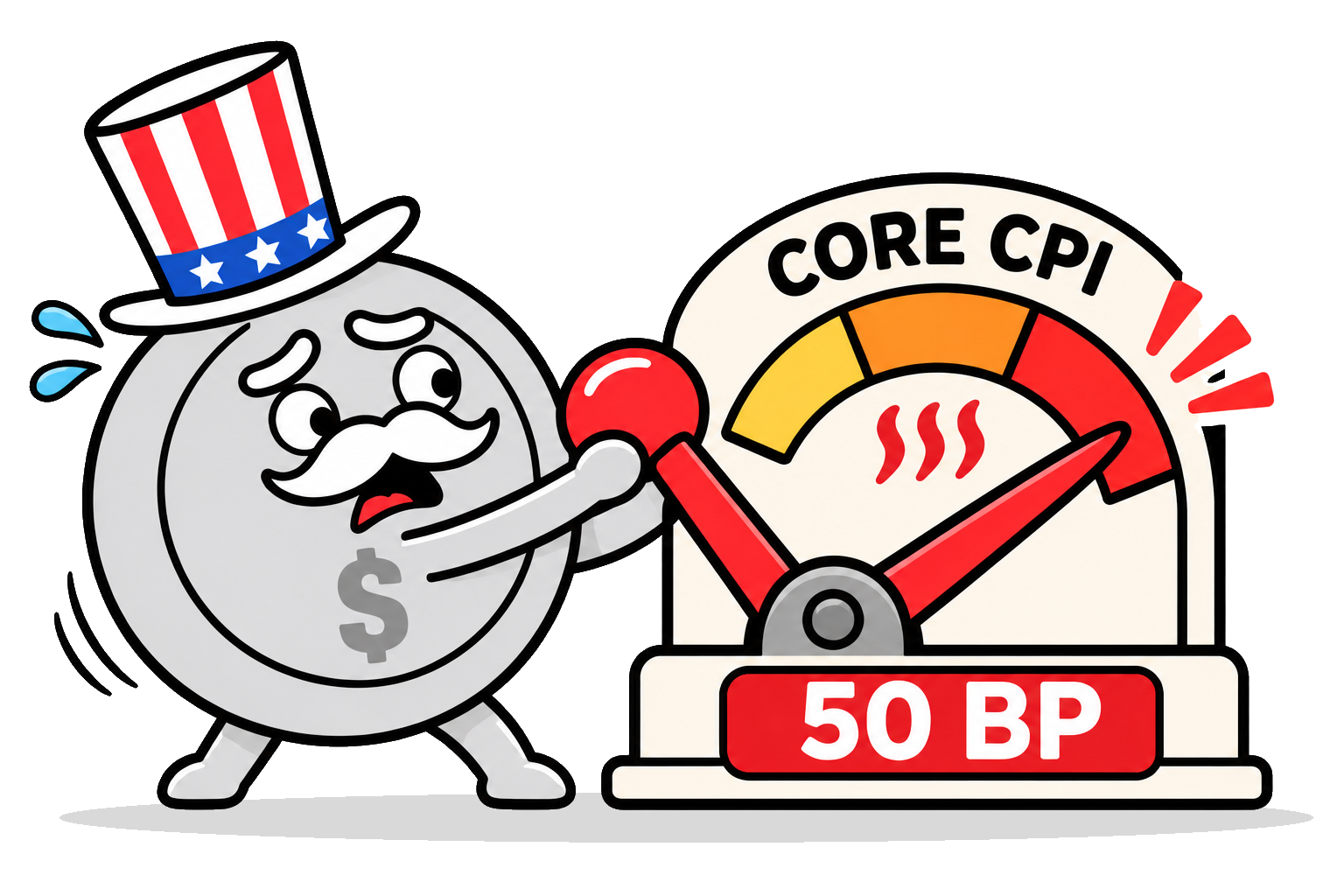
Three straight 0.3% core months signal the trend isn’t a fluke — it’s compounding at nearly twice the Fed’s 2% target. Compound that pace for a year and you get about 3.7% core inflation. The Fed targets 2%.
 Energy sits in the background. BLS data show unadjusted gasoline prices up 37.4% from a year earlier, one of the few annual figures the agency could publish. Higher fuel costs can seep into shipping, airfares and food over time, which may explain part of the stickiness.
Timing amplified the reaction. Hours before the data, Fed Governor Christopher Waller told a Bank of England conference in London that the Fed should consider a 50 basis point hike in December if core CPI came in around 0.3% or higher.
Waller warned that a quarter-point move alone “would put our credibility at risk.” After the release, Dallas Fed President Lorie Logan said the Fed may need at least two more quarter-point hikes.
How Did the U.S. Dollar React to the October CPI Report?
The U.S. dollar rose against all seven other majors. The U.S. Dollar Index (DXY, which measures the dollar against six major currencies) gained about 0.6% to near 102.26.
- EUR/USD fell about 0.5% to near 1.1166
- USD/JPY rose about 0.6% to near 158.81
- AUD/USD dropped about 0.8%, the weakest major on the day
The chain runs through interest rates. Hotter inflation raises the odds of Fed hikes. Expected hikes push Treasury yields up. Higher yields can draw global money toward dollar assets.
The 2-year Treasury yield, the bond most tied to Fed expectations, jumped about 18 basis points to near 4.73%, according to Investing.com. The 10-year yield briefly topped 5%, and a soft 10-year note auction priced at 5.02% added pressure.The CME FedWatch Tool revealed that traders priced about 88.7% odds of a 25 basis point December hike and 11.3% odds of a 50 basis point move after the data, up from zero for the larger option. The Fed’s policy rate sits at 3.75%-4.00%.
The Bottom Line
- Forecast vs. actual drives the reaction. Headline CPI slowed from September, yet the dollar rose because the 0.4% print beat the 0.3% forecast.
- The Fed leans on core CPI. Three straight 0.3% core readings suggest underlying inflation runs well above the 2% target.
- Fed speakers can set the bar. Waller gave traders a specific number to judge the report against before it came out.
- Rates move before currencies. The 2-year Treasury yield shows you how fast traders reprice Fed expectations.
- Data gaps add uncertainty. Without an official annual rate, analysts rely on estimates that can differ.
What Should Traders Watch Next?
- U.S. PPI (October): Friday, Nov. 13, 8:30 am ET. Forecasts call for 0.4% after September’s 1.3%.
- PCE price index (October): later in November. The Fed treats PCE as its main inflation gauge.
- FOMC meeting: Dec. 8-9, with the decision on Dec. 9.
- November CPI: Thursday, Dec. 10, 8:30 am ET.
Related Articles
- Economy News
US consumer prices expected to have risen at slower pace in October
- Stock Markets News
investingLive Americas FX news wrap 10 Nov: It’s a Wrap. Hot US CPI puts a bigger Fed hike in play
- General News
US Stocks Slip on Hot CPI as Nvidia Falls, AMD Rallies
- Economy News
October CPI sparks December Fed hike fears as yields surge and tech stocks slide
- Economy News
Fed’s Waller says larger hike should be considered if October CPI runs hot