Hawkish Fed Meets Stock Market Surge: Can The Rallies Last?


U.S. stocks won back most of last week’s AI selloff while Fed officials floated bigger rate hikes, so new traders can watch earnings and interest rates pull on prices at the same time.
The stock market rebound since last week’s post-elections AI rout has an awkward guest: a Federal Reserve that wants to hike faster.
CoreWeave’s results revived the AI trade on November 11, and the S&P 500 rose 1.31% to 7,619.38 within 2.6% of its all-time high. That close sits about 3.6% above the Nov. 5 low, even as Fed officials talked up a half-point December hike and a hot CPI print supported the more hawkish view.
What Actually Happened to Stocks?
Let’s rewind to November 5. The S&P 500 dropped 4.4% to 7,353.73 in its steepest one-day fall since the April 2025 tariff shock. Investors feared the Democrats’ midterm sweep would bring tougher AI regulation, and chipmakers took the worst of it.
Buyers came back in stages:
- Monday, Nov. 9: Oil fell sharply after President Donald Trump called renewed strikes on Iran very unlikely while talks continue, yet the S&P 500 jumped about 2.4%.
- Tuesday, Nov. 10: October’s consumer price index ran hot, and the S&P 500 slipped 0.38% to 7,520.93.
- Wednesday, Nov. 11: CoreWeave, a company that rents out AI computing power, raised its revenue outlook, and its shares surged as much as 25%.
Why Are Stocks Rallying While the Fed Turns More Hawkish?
On November 10, Fed Governor Christopher Waller said he would support a quarter-point rate increase in December and might push for a half-point move if core inflation landed at 0.3%. Core CPI printed exactly 0.3% that morning, the level Waller had flagged.
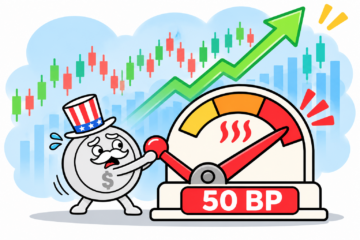 Dallas Fed President Lorie Logan went further. She mentioned she favors two more rate increases and estimated the Fed’s target range sits at least half a percentage point below the level that would begin to bring inflation back to target.
That hawkish talk led traders to fully price a hike of at least 25 basis points, with a 10.4% chance of a 50-basis-point increase, per CME FedWatch.
Stocks rose anyway, and two forces appear to explain it:
First, the December hike looks priced in. Markets tend to move on surprises, so a hike that everyone expects may already be baked inside today’s stock prices.
Second, earnings may matter more than rates right now. A stock’s price reflects what investors think a company will earn in the years ahead. Higher rates shrink the present value of those future profits.
Faster profit growth can outweigh that drag, though, and CoreWeave’s outlook seems to have convinced some investors that AI spending has room to grow. The S&P 500 technology index gained 2.7% on Wednesday, the best of the 11 major sectors.
In short, the rally leans mainly on one industry. AI updates that turn sour tend to drag the whole index with it. As an example, Nvidia shares fell more than 8% in after-hours trading on Wednesday after reports that its board would discuss the future of CEO Jensen Huang, dragging Nasdaq 100 futures down 0.8% and S&P 500 contracts lower by 0.4% on the news.
What Does This Mean for Markets and Forex Traders?
If stocks and the dollar keep climbing together, rate bets may be doing most of the work. A slide in stocks alongside gains in the yen and franc would suggest fear has taken over again.
Bond yields raise the stakes. The 10-year Treasury yield, which is the interest rate the U.S. government pays to borrow for ten years, briefly topped 5% on Tuesday before easing toward 4.98%. At a 5% return, bonds pay you a solid return with less risk than stocks, so stocks have a higher bar to clear. With that, the stock market rebound’s staying power may depend on earnings growth large enough to justify elevated valuations.Forex traders can read the same tension in currencies. On Wednesday, stocks moved higher while dollar buyers extended their control. The dollar’s largest gain came against the Swiss franc, while the Australian dollar held up best. That fits two stories at once: rate-hike bets lifted the dollar, and risk appetite pulled money away from the franc, a safe-haven currency.
The Bottom Line
So is the AI-led stock market rebound sustainable? The evidence points both ways:
- Two forces, one price. Earnings optimism and Fed hike fears are moving stocks at the same time, and neither has won.
- Expected news moves markets less. Traders treat a December quarter-point hike as settled. A half-point move, or signals of more hikes in 2027, could still surprise them.
- Concentration cuts both ways. AI stocks led the drop and the recovery. The Nvidia leadership news shows how fast that support can crack.
- Yields set the hurdle. A 10-year yield near 5% means stocks need strong profit growth to stay attractive next to bonds.
- Cross-asset clues help. The dollar, safe-haven currencies and Treasury yields can show you whether rates or risk appetite are steering the day.
What Should Traders Watch Next?
- Cisco and Applied Materials earnings after the U.S. close on Thursday, Nov. 12. Cisco sells networking gear for data centers, and Applied Materials sells chipmaking equipment, so both can show whether companies are still spending on AI. Strong outlooks may support the rebound, while weak ones could revive last week’s worries.
- U.S. October producer price index (PPI) and core PPI on Friday, Nov. 13, at 8:30 a.m. ET (13:30 GMT). PPI tracks the prices businesses receive for their goods and services, and rising costs there can feed into consumer prices later. A hot reading may add weight to the half-point hike debate, and Friday leaves no next session to confirm the first reaction.
- Nvidia earnings after the close on Tuesday, Nov. 17. Nvidia ranks among the largest companies in the S&P 500, so its results tend to move the whole index. Questions about the company’s leadership may draw as much attention as its sales figures.
- The Fed’s Dec. 8–9 policy meeting, followed by November CPI on Thursday, Dec. 10. Traders may focus less on the December hike itself and more on the size of the move and any hints about 2027. The CPI report one day later will test whether the Fed’s inflation read holds up.
Related Articles
- Economy News
Earnings flood, Fed meeting will test rickety AI market rally
- Economy News
Earnings flood, Fed meeting will test rickety AI market rally
- Economy News
Trading Day: AI cheer banishes rate hike fear
- General News
Dips Like These Don’t Come Often - Should You Double Down?
- Stock Markets News
Dow falls 162 points as hotter US inflation fuels fears of Fed rate hikes