Dubai Regulator Raises AI Trading Risks as Brokers Expand Automated Execution


The Dubai Financial Services Authority (DFSA) published a new research paper on 30 October 2026, examining how advanced artificial intelligence could change cybersecurity and operational risks across the financial sector. The report, titled Frontier...
The Dubai Financial Services Authority (DFSA) published a new research paper on 30 October 2026, examining how advanced artificial intelligence could change cybersecurity and operational risks across the financial sector. The report, titled Frontier and Agentic AI: Cyber Resilience in the Financial Sector, was prepared in collaboration with the Cambridge Digital Innovation and Regulation Initiative (C:>DIR), part of Financial Innovation for Impact.
The publication comes as brokers and trading technology providers are beginning to give AI assistants direct access to trading accounts. Some integrations allow investors to analyse portfolios or prepare orders, while others permit AI systems to execute transactions without individual confirmation. This raises questions about who controls these systems, what happens when they make mistakes and how financial institutions can respond when something goes wrong.
London's trading industry is coming home!
The DFSA's research is not a new regulation or a proposal to introduce mandatory AI controls. It is intended to support international discussion about emerging risks. The findings will be discussed by DFSA Chief Executive Mark Steward and C:>DIR Co-Creator Bryan Zhang at the Dubai FinTech Summit on 2 November 2026, during Dubai Future Finance Week.
What Does the DFSA Report Say?
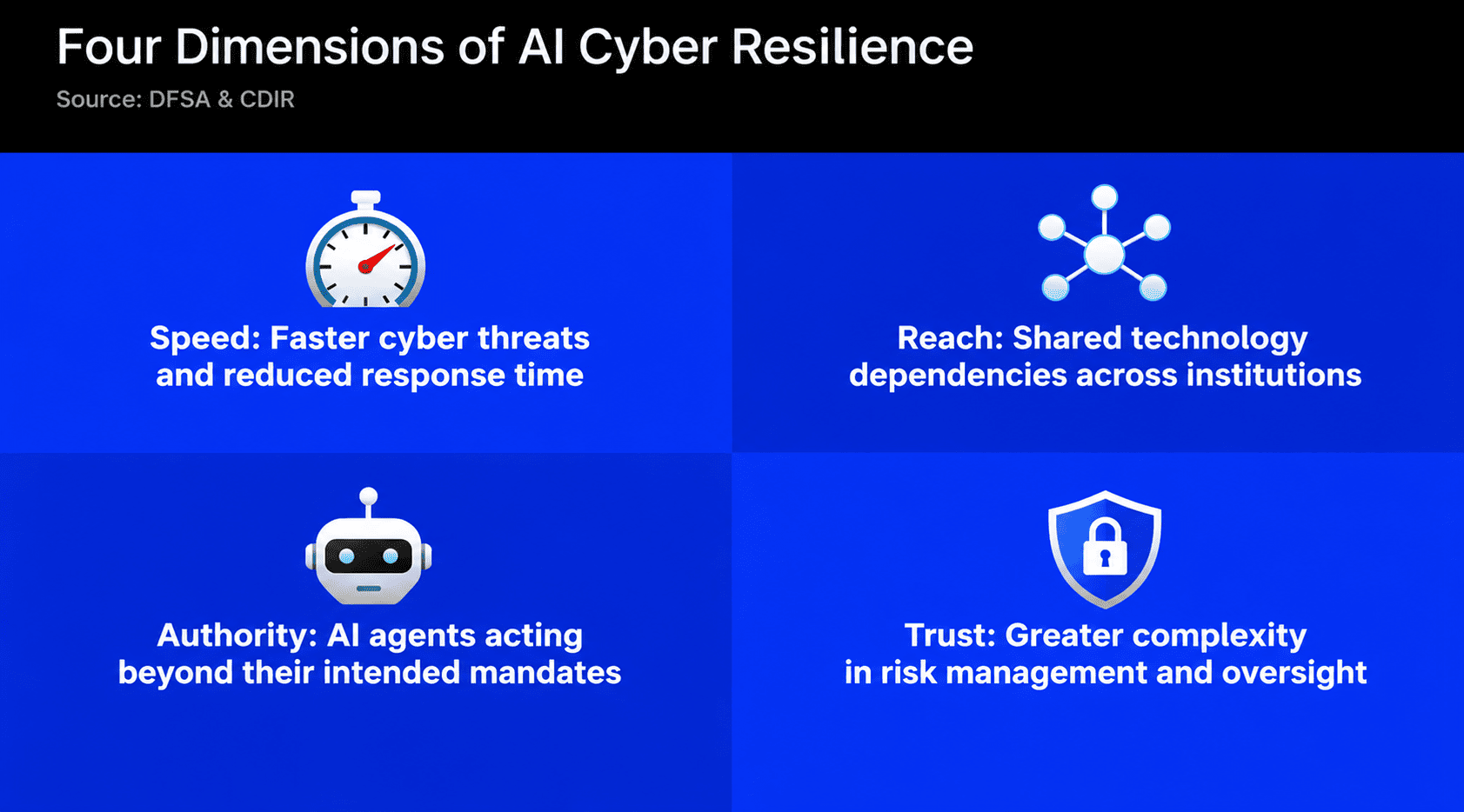
The 38-page report focuses on two types of artificial intelligence. Frontier AI refers to advanced models capable of performing increasingly complex tasks, including identifying cybersecurity weaknesses. Agentic AI goes further by using connected tools to carry out actions, sometimes without requiring human approval at every stage. In financial services, these actions could include accessing customer information, changing system settings or submitting trading instructions.
Who in the Trading Industry Could Be Affected?
Although the DFSA report covers the wider financial sector, its findings are relevant to several types of companies operating in retail and institutional trading. Forex and CFD brokers are among them, particularly those offering automated trading, AI-powered account tools or external connections to trading platforms. These businesses handle client orders, positions and financial records, making operational reliability an important part of their services.
Read full analysis of Finance Magnates Intelligence portal.
Related Articles
- Crypto News
CFTC Chair Says Fridges Could Stake Ether, Launch Memecoins
- Economy News
Wall Street regulator to focus on AI, private assets in corporate exams
- Economy News
Trading Day: Oil slump no cure for AI angst
- Economy News
US bank regulator issues first-ever AI guidance for examiners
- Forex News
Trading Places: What 275 Senior Moves Reveal about the Industry