Brazil’s Election Upset Tests Prediction Markets’ Pitch to Brokers


Prediction markets position their prices as real-time forecasts. However, Brazil’s presidential runoff put that claim under scrutiny just as event contracts are reaching brokerage apps. London's trading industry is coming home! Both Polymarket and...
Prediction markets position their prices as real-time forecasts. However, Brazil’s presidential runoff put that claim under scrutiny just as event contracts are reaching brokerage apps.
London's trading industry is coming home!
Both Polymarket and Kalshi strongly favoured Flávio Bolsonaro on the eve of the vote, but Luiz Inácio Lula da Silva won.
What the 80% Price Actually Meant
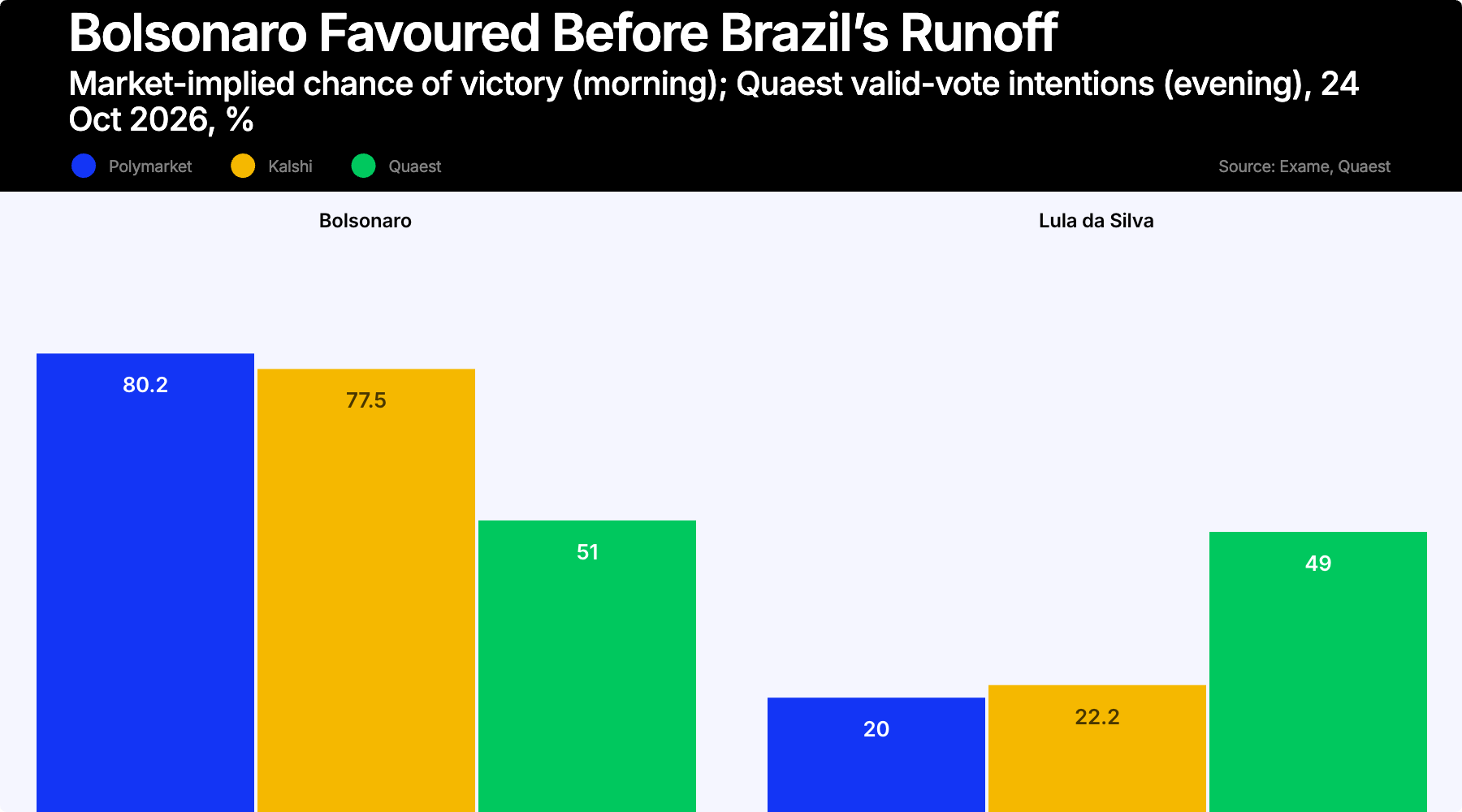
On the morning of 24 October, Exame recorded Bolsonaro’s implied chance of winning at 80.2% on Polymarket and 77.5% on Kalshi. A Quaest poll published later that day suggested 51% of valid voting intentions for Bolsonaro and 49% for Lula, within the poll’s two-point margin of error.
Luiz Inácio Lula da Silva subsequently won the runoff with 51.79% of valid votes, against Bolsonaro’s 48.21%, according to Brazil’s Superior Electoral Court.
For a contract buyer, the market price also determines the amount at risk. At an illustrative purchase price of 80 cents, a contract paying $1 for a Bolsonaro victory would have lost its full purchase price when Lula won, before fees.
Polymarket promotes the forecasting value of prices formed by traders with money at stake.
Bolsonaro’s defeat puts that claim to a test, but does not, by itself, disprove its broader accuracy claim: an outcome assigned roughly a one-in-five chance can happen. But assessing that claim requires looking at many forecasts and their eventual outcomes.
When Event Prices Become Investment Signals
The question of forecasting value now reaches customers inside brokerage apps. Kalshi’s integration with Apex Fintech Solutions brought its event contracts to tastytrade, the first broker to go live through the arrangement.
A partnership with Public takes the use of those prices further: Public says its AI agents can use prediction-market data as a signal for stock or bond trades.
That gives an event price a role beyond the contract it represents. A customer can trade directly on an election result, but the market’s implied probability may also influence a decision about another asset.
In an interview with Finance Magnates, Kalshi’s Head of Institutional Andy Ross said some institutions already consult its prices when deciding how to trade in conventional markets.
“Day one, there’s value in listing a market and having it priced,” he said. That wider use makes the Brazilian result relevant to brokers even if their customers never traded the election contract.
The price offered a way to take a position on Bolsonaro’s victory, and, presented elsewhere in an investment app, it could also be read as a forecast.
Brazil is one conspicuous upset, not a verdict on prediction markets’ overall accuracy.
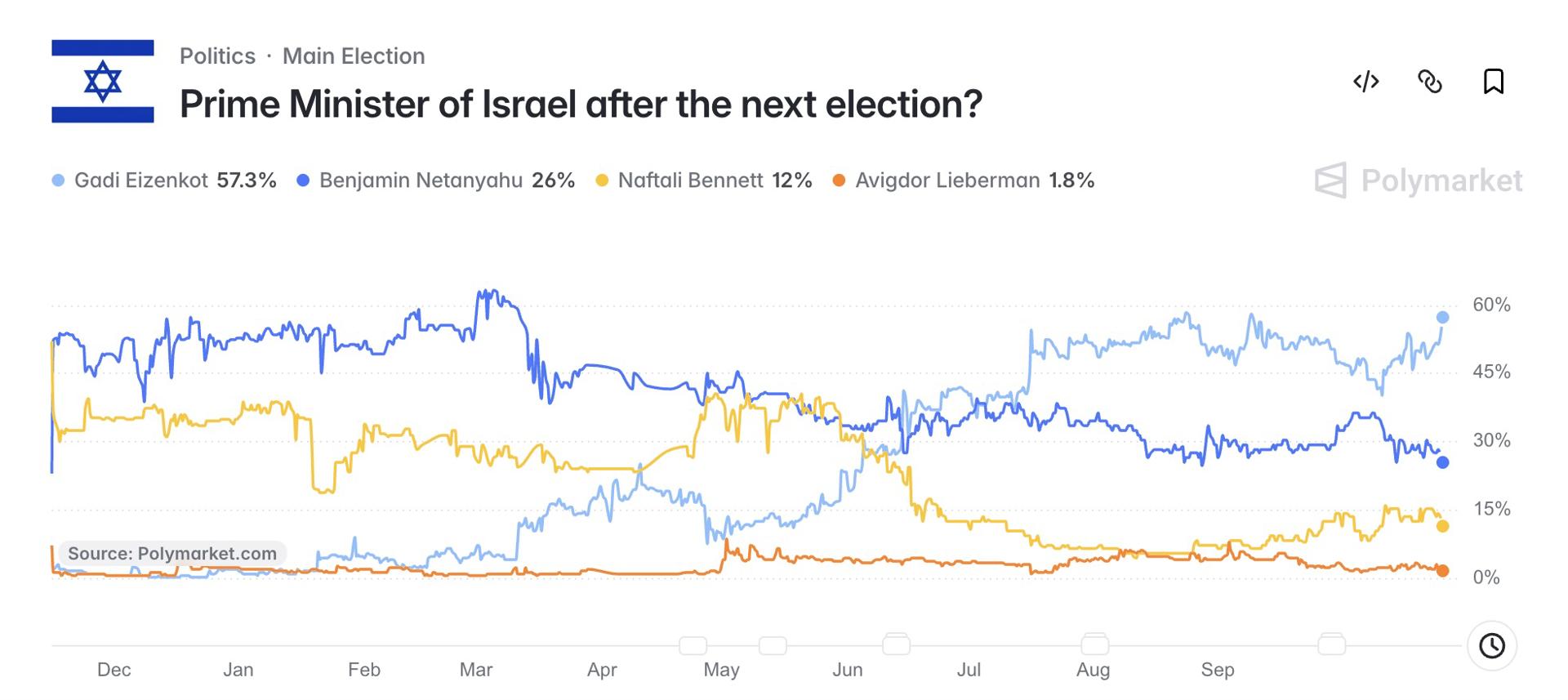
Israel’s 27 October election will set up another test of those forecasts: Polymarket currently favours Gadi Eisenkot to become the next prime minister, ahead of Benjamin Netanyahu and Naftali Bennett. Let's wait and see, how it plays out.