BOE Finally Hiked Rates. Why GBP Just Shrugged


The BoE’s first hike since 2023 shows how an energy shock pushes a central bank to act, and why a priced-in decision can leave a currency flat.
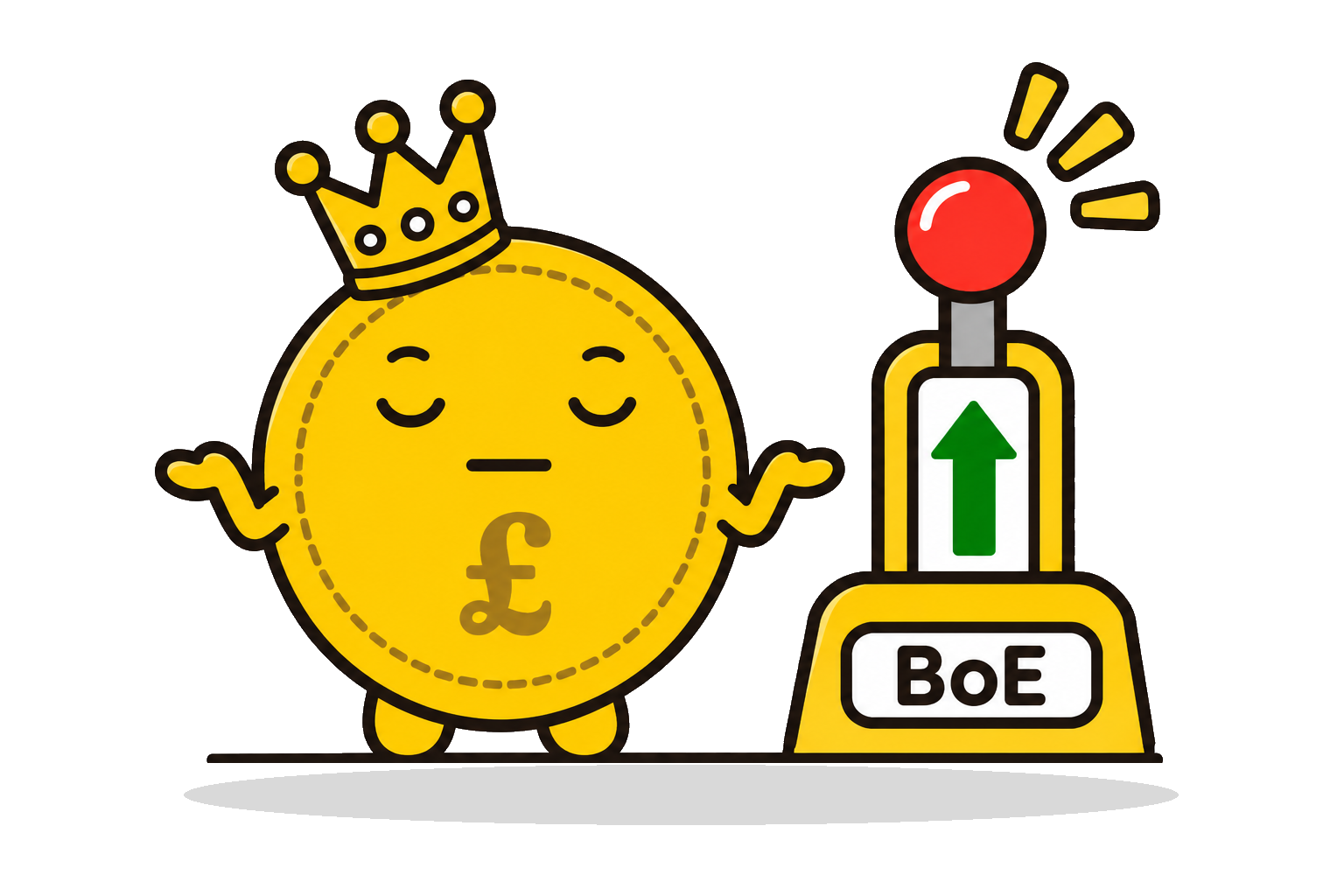
The Bank of England (BoE) raised borrowing costs by 0.25 percentage points to 4.00% in its November 2026 decision.
It’s the BoE’s first hike since August 2023, but GBP/USD barely moved.
Here’s why a priced-in decision can leave a currency unbothered and what traders should look out for next.
What Did the Bank of England Announce?
The Monetary Policy Committee (MPC), the nine-member panel that sets UK interest rates, voted 8-1 for the quarter-point increase in the Bank Rate. Catherine Mann wanted more and voted for a half-point hike to 4.25%.
The Bank Rate is the rate the BoE pays commercial banks on their reserves. It steers what U.K. households pay on a mortgage or loan, and what they earn on savings.
The November Monetary Policy Report came with fresh numbers:
- UK CPI inflation rose to 3.5% in September, up from 2.6% in June.
- BoE staff expect CPI to peak around 5% in mid-2027 (4.9% in 2027 Q2).
- The central projection has inflation back at the 2% target in 2028 Q3.
Why Did the BoE Raise Interest Rates Now?
Energy sits at the center of this decision. According to the MPC minutes, front-month Brent crude futures averaged $108 per barrel and UK gas futures averaged 216 pence per therm over the 15 working days to October 27. Those prices ran 38% and 81% above their levels at time of the July report.
 Pricier fuel and utility bills (economists call these direct effects) added about 1 percentage point to September’s inflation rate.
Central banks often look past direct effects because the bigger fear is second-round effects. Workers demand bigger raises to cover higher bills. Firms lift prices to pay for those raises. Repeat. That loop can keep inflation high long after oil cools.
The BoE says it has found little evidence of that loop so far, but the committee hiked anyway. The report points to a few likely reasons:
- Growth beat forecasts. UK GDP grew 0.5% in Q2, and BoE staff expect 0.7% in Q3. In July, the BoE had projected 0.3% and 0.1%.
- Underlying inflation stopped falling. Services inflation hit 3.7% in September, and underlying services measures have held near 4% for months.
- Households pay closer attention now. Five years of above-target inflation may make wage demands react faster to rising prices.
Rate changes take months to work through the economy. Waiting for hard proof of second-round effects could leave the BoE acting too late. MPC member Alan Taylor described the move as a “one-for-now” insurance hike.
Why Didn’t the Pound Rally After the BoE Hike?
Markets trade expectations. The pound had already been climbing six sessions in a row into the meeting and stalled near 1.3500. By Thursday afternoon, GBP/USD traded around 1.3467, close to flat on the day.
Traders call this pattern “buy the rumor, sell the fact” in reference to how prices rise ahead of an expected event, then stall once it happens.
The vote details may carry more weight than the hike. Deputy Governor Clare Lombardelli and Chief Economist Huw Pill both flagged a case for another increase in the near term. Governor Andrew Bailey wrote in the minutes that he could see an argument for a further rise unless news softens inflation risks.Interest rate differentials (the gap between two countries’ rates) fill in the bigger picture. Bank Rate at 4% now matches the top of the Fed’s 3.75%-4.00% range and sits well above the European Central Bank’s (ECB) 2.50% deposit rate. That gap probably helped keep EUR/GBP near multi-month lows.
The story has a flip side. Two-year fixed mortgage rates have climbed nearly 50 basis points since early September, and GfK consumer confidence fell sharply in October. In the BoE’s “weaker demand” scenario, inflation drops to 1.2% by 2029 and the committee would likely need lower rates. That path tends to weigh on sterling.
Key Takeaways: What the BoE Hike Teaches New Traders
- Priced-in news moves prices less. Compare any decision with what traders expected, and the muted reaction makes sense.
- Watch the vote split and the forecasts. Hints about the next meeting can matter more than the decision itself.
- Central banks respond to energy shocks by watching wages. Oil prices alone rarely force a hike. Signs of a wage-price loop can.
- Currencies trade in pairs. Strong U.S. jobless claims and hawkish Fed comments helped offset the BoE hike in GBP/USD, while EUR/GBP reflected the widening UK-euro area rate gap.
- Policy can swing either way. Taylor said rates could rise, fall, or hold from here, depending on energy prices and the 2027 pay round.
What Should Forex Traders Watch Next?
- November 6: US October nonfarm payrolls, a likely driver for GBP/USD.
- November 17: ONS quarterly productivity data under its new measurement method.
- November 18: UK October CPI.
- December: BoE Agents’ first estimate of 2027 pay settlements, a direct read on second-round effects.
- December 17: Next BoE rate decision and minutes.
Disclaimer: This article is for educational purposes only. It isn’t investment or trading advice or a recommendation to buy or sell anything. Your trading decisions, including how much to risk, are your own.
AI disclosure: The Babypips editorial team used AI tools to help research, write, and check this article. A Babypips editor reviewed and edited it before publication. AI tools can misread data, make arithmetic errors, and state wrong information in a confident tone. Check figures and quotes against the linked sources before you rely on them. Our Editorial Policy explains how we create and review our content.
Related Articles
- Economy News
Sterling drifts as BoE rate decision comes into focus
- Economy News
Sterling drifts as BoE rate decision comes into focus
- Business News
Interest rates hiked to 4% in first increase in over three years
- Economy News
Bank of England poised to hike rates for first time in 3 years
- Business News
Bank of England set to hike interest rates to 4% to tackle rising inflation