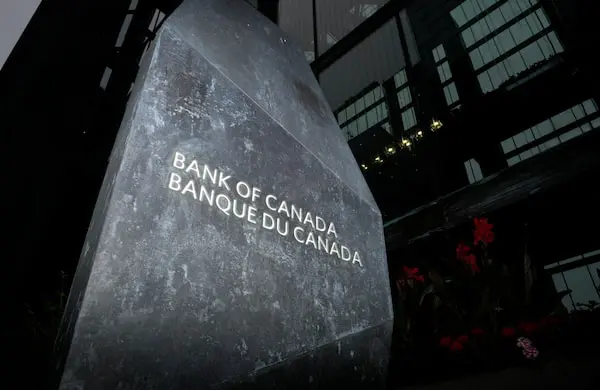
Bank of Canada Hiked Rates to 2.50% As Expected


The Bank of Canada raised its policy rate by 0.25 percentage points to 2.50% on in their October rate decision, but the Loonie barely moved. Here are the points worth noting in their latest announcement.
The Bank of Canada raised its policy rate by 0.25 percentage points to 2.50% on October 28, 2026, matching market expectations. It was the bank’s first hike since July 2023.
The Loonie barely moved, though. Governor Tiff Macklem left the door open to more hikes without promising one, and core inflation still sits near 2%.
Bank of Canada October 2026 Decision: Key Takeaways
- Policy rate: Up 25 basis points to 2.50% from 2.25%. The Bank Rate moved to 2.75% and the deposit rate to 2.45%.
- Expectations: Markets priced about an 82% chance of a hike, and 19 of 34 economists in a Reuters poll expected one.
- Inflation forecast: CPI has run near 3% since April. The bank expects about 3.5% by year-end and a 3% average in 2027.
- The caveat: Inflation excluding gasoline was 2.2% in September, and core inflation measures remain close to 2%.
- Growth: GDP grew at an annualized 3.3% in Q2 2026. Recent data points to about 2% in Q3.
- CAD reaction: USD/CAD traded near 1.4046 after the decision, little changed. The loonie has gained about 1.3% against the U.S. dollar in October.
- Next decision: December 9, 2026.
What Did the Bank of Canada Decide in October 2026?
The Bank of Canada lifted its target for the overnight rate to 2.50% from 2.25%. The overnight rate is the interest rate big banks charge each other for one-day loans. It shapes borrowing costs across Canada, from mortgages to business loans. The bank also set the Bank Rate at 2.75% and the deposit rate at 2.45%.
Traders saw this move coming. Credit markets priced an 82% chance of a hike before the announcement, and 19 of 34 economists in a Reuters poll expected one. The rate had sat at 2.25% for nearly a year before the October hike.
Why Did the Bank of Canada Raise Rates?
Energy prices pushed the bank to act. The Middle East conflict has run for eight months with no clear path to resolution. High fuel costs make it more expensive for companies to produce and ship goods.
 The bank worries about pass-through. Pass-through happens when businesses push their higher costs onto customers through higher prices.
So far, firms have absorbed most of those costs. Bank surveys suggest they will pass on more over the next year. Policymakers hiked to stop high energy prices from spreading to other goods and services.
Macklem admitted the call was close. The Governing Council considered holding rates because the jump in inflation stays concentrated in energy. He added that 2.50% still sits at the low end of the bank’s neutral range, which covers rate levels that neither speed up nor slow down the economy.
Is Canada’s Economy Strong Enough to Handle More Hikes?
Growth gave the bank room to move. Canada’s economy grew at an annualized 3.3% in Q2 2026, and early data points to about 2% in Q3. Both numbers beat the bank’s July forecast. Oil and gas activity lifted business investment, and strong U.S. demand boosted exports.
The bank also raised its outlook. The October Monetary Policy Report projects GDP growth of 1% in 2026 and 2% in 2027 and 2028. The bank cited stronger data, new business investment incentives, and higher population estimates.
Weak spots remain. Unemployment has hovered near 6.5% for several months. New U.S. tariffs should slow growth in Q4 2026, and the bank expects housing to stay weak. The bank also sees some excess supply, meaning Canadian businesses and workers could produce more than buyers currently demand.
Will the Bank of Canada Hike Again in December?
Macklem made no promise. The statement says the bank could need to raise rates further but will “proceed carefully.” He told reporters the council will make its choices “one meeting at a time.”
You can track three things before the December 9 BOC decision: Canada’s October CPI, the next jobs reports, and oil prices. Softer inflation or weaker hiring would favor a pause. Oil holding above US$100 would push the bank toward another hike.
What Does This Mean for Canadian Dollar Traders?
The loonie barely reacted. USD/CAD traded near 1.4046 after the decision, little changed on the day. USD/CAD shows how many Canadian dollars one U.S. dollar buys. A lower number means a stronger loonie.
This muted reaction was likely because markets had already priced in the hike. Currencies tend to move on surprises, so an expected decision often leaves them flat. The Loonie firmed later in the day as the U.S. dollar slipped after the Federal Reserve held rates.Higher Canadian rates relative to U.S. rates tend to draw investors into Canadian assets and lift CAD. With the Fed on hold, December BoC expectations now drive that gap. Oil matters too. Canada exports a lot of crude, so higher oil prices often support the Loonie.
Frequently Asked Questions About the Bank of Canada October 2026 Rate Decision
What is the Bank of Canada’s policy rate?
The policy rate is the bank’s target for the overnight rate, the rate big banks charge each other for one-day loans. It now stands at 2.50%. Canadian lenders use it as a guide for prime rates, variable mortgages, and other loans.
Why did the Bank of Canada raise rates in October 2026?
High oil prices from the Middle East conflict have kept Canadian inflation near 3% since April. The bank wants to stop those energy costs from spreading into the prices of other goods and services. Stronger-than-expected growth gave it room to act.
How did the Canadian dollar react to the rate hike?
USD/CAD held near 1.4046 after the decision, so the loonie barely moved. Markets had priced in about an 82% chance of a hike beforehand. The Canadian dollar firmed later as the U.S. dollar weakened after the Fed held rates.
Why do Bank of Canada decisions matter to forex traders?
Interest rates help decide where global investors park their money. When Canadian rates rise relative to U.S. rates, Canadian assets pay more and can attract buyers, which supports CAD. Guidance about future moves often matters more than the decision itself.
Will the Bank of Canada raise rates again in 2026?
The bank says it could hike again but will move carefully. RBC expects a hike in December or January, while CIBC expects a pause. The next decision lands on December 9, 2026, and inflation, jobs, and oil data will shape it.
Related Articles
- Economy News
Bank of Canada to raise rates to 2.50% on October 28 and once again by end-March
- Stock Markets News
Is the Bank of Canada about to make a big mistake?
- Stock Markets News
Canadian dollar hits five-week high as data supports rate hike bets
- Stock Markets News
Six ways the Bank of Canada rate hike could cost or benefit you
- Stock Markets News
Canadian dollar steadies after posting longest daily winning streak in four years