
The Finance Magnates Singapore Summit 2026 entered its third and final day today (Thursday) at the Suntec Singapore Convention & Exhibition Centre, with continued meetings, panel discussions, and exhibition activity focused on the brokerage, fintech, and trading industries.
The event began on Tuesday evening with an opening networking session at Paulaner Brauhaus, where delegates and industry executives gathered ahead of the formal conference programme.
Following the opening event, the summit moved into two full days of conference sessions and exhibition activity at Suntec. As Thursday’s programme begins, discussions are expected to continue focusing on artificial intelligence in brokerage operations, tokenised finance, and liquidity infrastructure across Asia-Pacific markets.
Other topics on the agenda include regulatory compliance, regional market expansion, client acquisition strategies, and operational challenges facing brokers and fintech Fintech Financial Technology (fintech) is defined as ay technology that is geared towards automating and enhancing the delivery and application of financial services. The origin of the term fintechs can be traced back to the 1990s where it was primarily used as a back-end system technology for renowned financial institutions. However, it has since grown outside the business sector with an increased focus upon consumer services.What Purpose Do Fintechs Serve?The main purpose of fintechs would be to suppl Financial Technology (fintech) is defined as ay technology that is geared towards automating and enhancing the delivery and application of financial services. The origin of the term fintechs can be traced back to the 1990s where it was primarily used as a back-end system technology for renowned financial institutions. However, it has since grown outside the business sector with an increased focus upon consumer services.What Purpose Do Fintechs Serve?The main purpose of fintechs would be to suppl Read this Term firms in Southeast Asia.
Final Day Focuses on Practical Implementation
Throughout the final day, conference panels are set to examine how firms are adapting technology and infrastructure to changing market conditions. Sessions are expected to focus on practical implementation, including market access, settlement systems, risk management Risk Management One of the most common terms utilized by brokers, risk management refers to the practice of identifying potential risks in advance. Most commonly, this also involves the analysis of risk and the undertaking of precautionary steps to both mitigate and prevent for such risk.Such efforts are essential for brokers and venues in the finance industry, given the potential for fallout in the face of unforeseen events or crises. Given a more tightly regulated environment across nearly every asset class, One of the most common terms utilized by brokers, risk management refers to the practice of identifying potential risks in advance. Most commonly, this also involves the analysis of risk and the undertaking of precautionary steps to both mitigate and prevent for such risk.Such efforts are essential for brokers and venues in the finance industry, given the potential for fallout in the face of unforeseen events or crises. Given a more tightly regulated environment across nearly every asset class, Read this Term, and digital asset adoption.
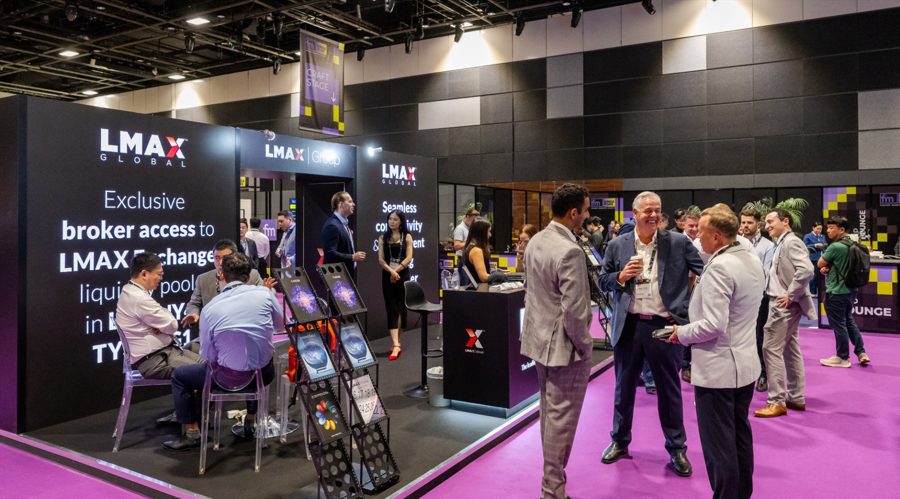
On the exhibition floor in Hall 405, fintech firms, liquidity providers, trading infrastructure companies, and platform operators continue with meetings and product demonstrations.
Payment Infrastructure Expands Across Financial Platforms
The “Rails for Growth: ‘Payments as Infrastructure’ for Financial Superapps” session examined how payment systems are increasingly being integrated into investment and trading platforms across Asia-Pacific markets.
Speakers discussed how stablecoins, tokenised money, and on-chain settlement systems are being used in institutional payment and settlement workflows, particularly as fintech firms seek to combine payments, investing, and custody services within unified platforms.
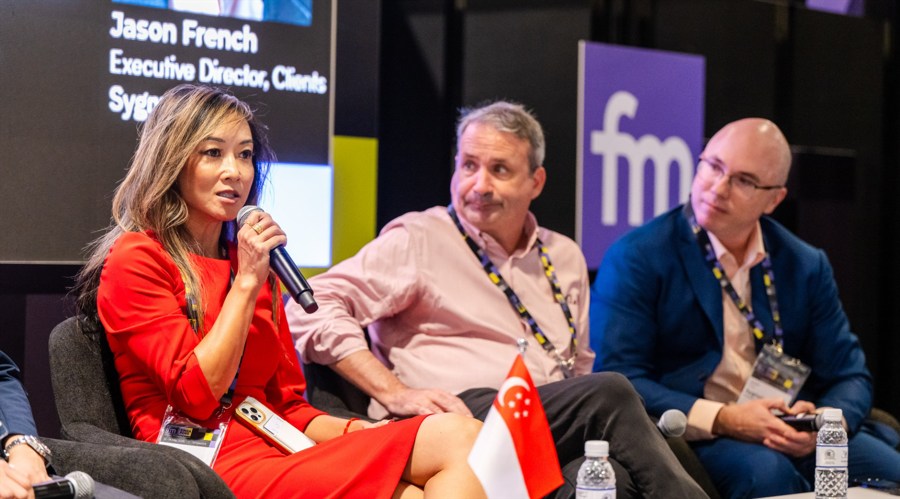
The discussion also focused on regulatory and infrastructure developments in Singapore, including initiatives such as Project Orchid and Project Bloom, and what they may signal for the future of digital money and capital market infrastructure.
Panelists further examined compliance, custody, and operational challenges that emerge as payment, trading, and settlement functions converge on shared systems. Participants included Wendy Yew of Singapore Blockchain Week, Andrea Ang, APAC Relationship Manager at Zodia Custody, Chris Holland, Chair of the Web3 Subcommittee at Singapore Fintech Association and Partner at HM Strategy, and Leona Gan, Director of Business Development (iBiz) at FOMO Pay.
APAC Brokers Face Rising Compliance Costs
The “Regulation Roundup: Setup, Compliance, and Hidden Costs of Entry” session examined the regulatory and operational requirements for retail brokers across Asia-Pacific markets, with a particular focus on market entry conditions and compliance obligations.
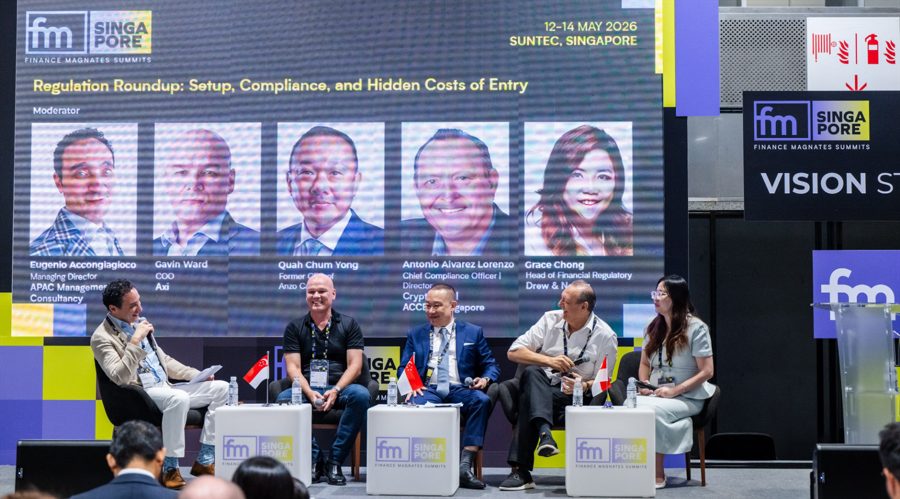
Speakers discussed how capital requirements and licensing frameworks continue to shape broker presence in jurisdictions such as Singapore, where higher entry thresholds limit the number of active retail operators.
The discussion also covered differences in regulatory approaches across the region, highlighting both established and emerging frameworks governing brokerage and digital asset activity.
Panelists compared operational costs, setup structures, and compliance burdens across APAC markets, while also noting developments in related areas such as digital assets and real-world asset tokenisation.
Participants included Eugenio Accongiagioco, Managing Director at APAC Management Consultancy, Gavin Ward, COO at Axi, Quah Chum Yong, former CEO of Anzo Capital, Antonio Alvarez Lorenzo, Chief Compliance Officer at Crypto.com and Director at ACCESS Singapore, and Grace Chong, Head of Financial Regulatory at Drew & Napier.

Loyalty Programmes Face Design and Compliance Risks
The “From Rewards to Retention: The 5 Loyalty Program Mistakes Brokers Need To Avoid (Case Study)” session examined how broker loyalty programmes are evolving from marketing add-ons into structured retention tools within trading platforms. The discussion focused on rising client acquisition costs and the growing importance of post-deposit engagement in driving long-term value.
Great talk at the @financemagnates Singapore Summit today!Our @jakub_ceo just moderated an excellent panel on “Outrageous Predictions? Retail Brokers & Event Contracts” — super insightful discussions on the super-cycle in volumes, how brokers are approaching prediction/event… pic.twitter.com/OFVjCTLvvG
— For Traders (@fortraderscom) May 13, 2026
Desmond Leong, CEO of Returning.AI, outlined common design and execution mistakes in loyalty programmes, including the use of retail-style rewards, weak alignment with regulatory constraints, and over-reliance on bonuses. The session also covered how loyalty structures can be integrated into client lifecycle management, linking rewards to trading behaviour, activity levels, and retention metrics rather than short-term engagement.
Prop Trading Boom Raises Regulation Concerns
The “Overfunded or Underregulated? The APAC Prop Trading Story” session examined the rapid expansion of proprietary trading firms across the Asia-Pacific region, where the market now accounts for nearly half of global sign-up growth.
Speakers noted that while registration volumes have increased significantly in emerging markets, pass rates and funded trader outcomes present a more uneven picture. The discussion focused on the gap between headline growth figures and actual funded trading activity, and what this divergence means for the sector’s sustainability.
🚀 The FM Singapore Summit 2026 has officially kicked off at the Suntec Singapore Convention & Exhibition Centre! 🎉Day 1 was full of energy, featuring industry leaders like David Jenkins and Christopher Forbes, and bringing together key players from fintech, trading, payments,… pic.twitter.com/57f4HyX1u4
— FXStreet News (@FXStreetNews) May 13, 2026
Panelists also addressed structural challenges shaping the industry, including mobile-first acquisition models, legacy grey-market practices, and the resulting complexities around KYC processes, payout systems, and regulatory alignment. The session further explored how markets such as India, Vietnam, and Singapore are transitioning from offshore leverage-driven models toward more regulated frameworks. Participants included Jakub Roz, CEO of For Traders, and Lubomir Marasi, Commercial Director at Axcera LLC.
Regulation Shapes Stablecoin Adoption Across APAC
The “Stablecoins from Experimentation to Implementation” session examined how stablecoins are moving from pilot use cases into broader operational deployment across Asia-Pacific markets.
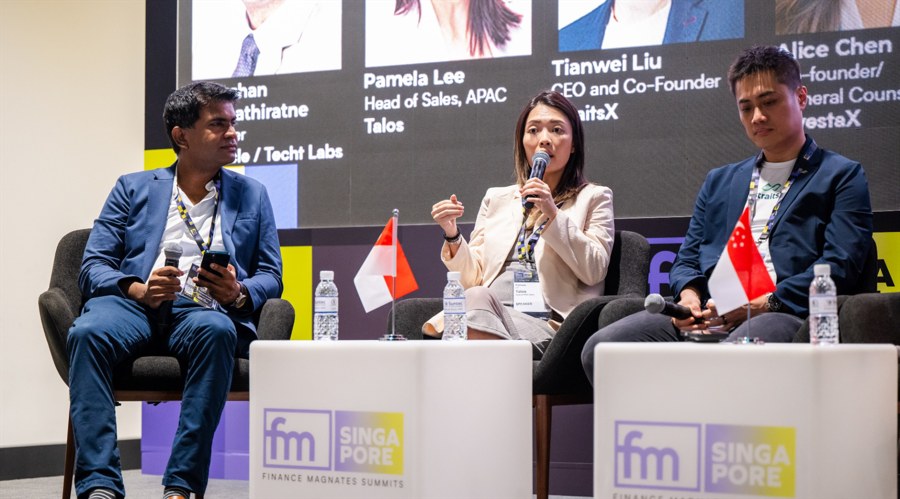
Speakers noted that with more than $300 billion in circulation, stablecoin adoption is increasingly shaped by regulatory enforcement, as jurisdictions in the region move from framework design to licensing and supervision.
The discussion, held in partnership with 8 Circle, focused on how payment providers, trading infrastructure firms, and financial institutions are integrating stablecoins into live systems.
Panelists also discussed the practical implications of regulatory regimes such as the Monetary Authority of Singapore’s Payment Services Act and Hong Kong’s fiat stablecoin licensing framework, particularly for brokers, custodians, and payment firms operating across multiple jurisdictions.
The session highlighted infrastructure gaps that often emerge during implementation, including settlement processes, compliance workflows, and operational readiness.
Speakers included Vidushan Premathiratne, Founder of 8 Circle and Techt Labs; Pamela Lee, Head of Sales, APAC at Talos; Tianwei Liu, CEO and Co-Founder of StraitsX; Alice Chen, Co-Founder and General Counsel at InvestaX; Jason French, Executive Director, Clients at Sygnum; and Eric Barbier, CEO and Founder of Triple-A.