Rural voters were feeling left behind before the midterms, poll shows


Polling done for the Guardian shows plummeting support from a former key constituency of Donald Trump’s base Polling conducted by the Harris Poll for the Guardian before the election shows just how angry voters were and points to one key reason Republicans lost so badly: plummeting support from rural voters, once a key constituency of Donald Trump’s base. Over the summer, 95% of Americans...
Polling conducted by the Harris Poll for the Guardian before the election shows just how angry voters were and points to one key reason Republicans lost so badly: plummeting support from rural voters, once a key constituency of Donald Trump’s base.
Over the summer, 95% of Americans indicated they believed there was an affordability crisis, particularly because of steep gas and grocery prices. By October, 61% of voters believed the country was experiencing a recession, even though technically it wasn’t.
It’s hard to ignore the impact inflation has had on this election. Key voters had expressed for months deep discontent with what had become the status quo. Loggers in Maine said that tariffs against Canada were hurting their already-battered industry. Drivers in Texas facing three-hour commutes to work were spending $400 a month on gas. Farmers across the midwest said diesel prices were exacerbating a growing season beleaguered by drought.
Recent data showed the flip wasn’t just seen among Democrats and independents, who have held pessimistic views on the economy since Trump returned to office, but among some Republicans, too.
In February, right before the war in Iran began, 49% of Republicans said the economy was getting better. By October, that number would drop to just 28%.
The pain seemed especially acute for rural voters, long considered a core base for Trump.
The president had gained many of his supporters by angling himself as a successful businessman who would be an outsider in Washington. But soaring gas and diesel prices have been a major pain point in parts of the country where driving long distances is an everyday part of life.
Rural voters were much more likely to say that gas prices were hurting their finances and that they were in economic “survival mode”, or that one surprise bill could sink them, compared with their urban and suburban counterparts. They were also slightly more likely to say that Republicans had a bigger problem with corruption, or elected officials using their position for personal financial gain, than Democrats.
In the month before the midterms, the number of rural Americans who said the economy was getting worse climbed 17% since Trump took office, compared with a 5% increase for those in the suburbs and a 3% jump among urban voters.
Yet on the eve of the midterm elections, Trump was trying to speak a different reality into existence, one where gas prices were going down, wages were rising and the US’s trade with other countries had never been stronger.
“I’ve traveled all across the country, spoken at all of these rallies I’ve done over the last two and a half weeks, and America is ready to go. They’re ready to vote,” Trump said in front of the Lincoln Memorial’s reflecting pool on Monday. “I hope they’re ready to do the right thing.”
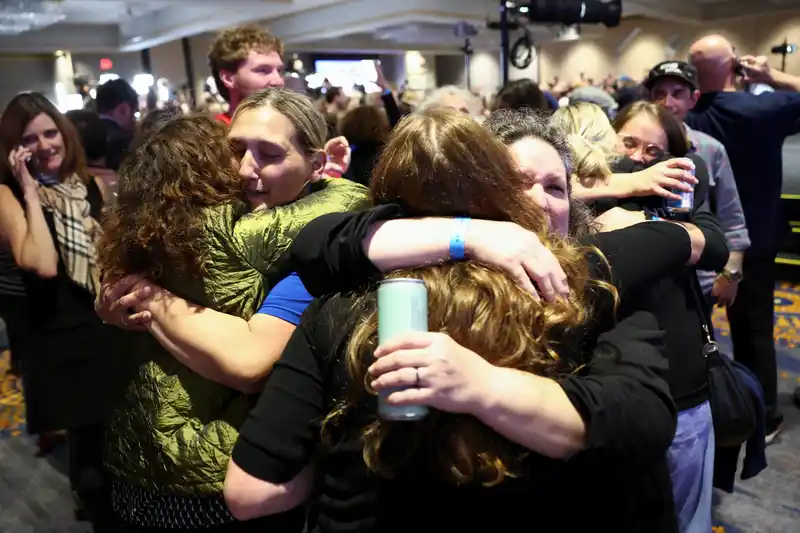
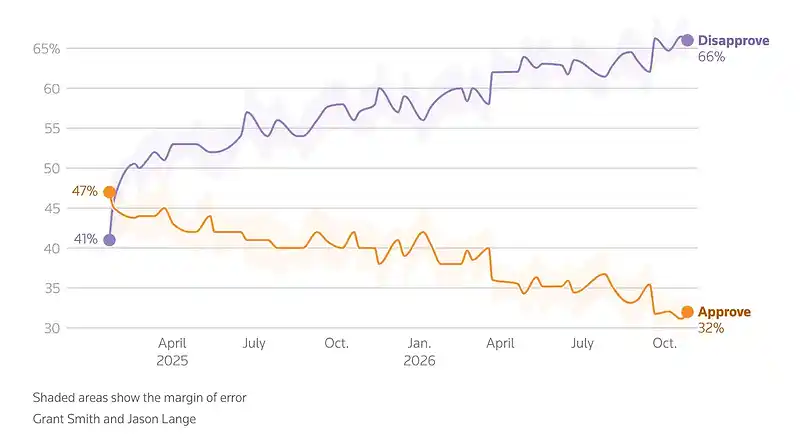
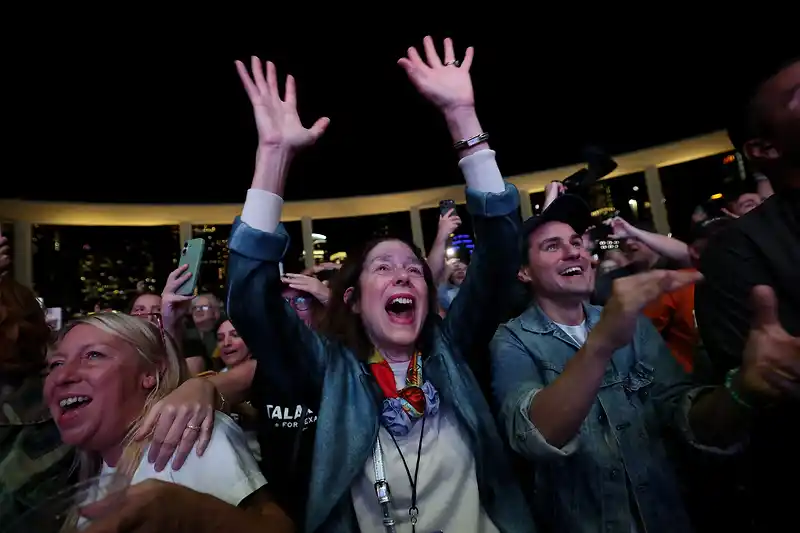
But the reality that Americans have been facing is vastly different, and Americans responded accordingly. Republicans in key races from Maine to Texas lost their toss-up races on Tuesday, and Democrats will have control of Congress for the next two years.
Democrats have promised they will be busy trying to address the issues that were at the forefront of the election: the Trump administration’s brutal immigration crackdown, corruption in the White House, rising healthcare costs and the economy, specifically higher prices.
Republicans are just starting to take stock of the role prices had on the election outcome. JD Vance on Wednesday said the loss was the “cost to pay” for the Iran war. “Any honest conversation about where we go from here must start there,” Vance said.
As much as the midterms were a “blue-nami” for Democrats, pre-midterm polls showed voters were still unsure about the party’s ability to deal with affordability. When asked which party had the solution to the affordability crisis a month before the election, 34% said that neither party had a solution. Democrats (27%) slightly edged out Republicans (24%), but many voters seemed unsure whether any party could deal with these pocketbook issues.
Similar polling conducted before the 2024 presidential election showed that key independent voters were feeling just as pessimistic about the economy. Inflation had reached a generational high in 2022, and many Americans felt that Biden and Democrats weren’t doing enough.
Price increases under Trump, particularly after the Iran war, have only gotten worse. But many voters are dealing with years of economic burnout and will expect results in the coming years.
Related Articles
- World News
How Republicans lost the midterms as Hispanic and young voters fled Trump’s party
- World News
Trump approval rating tracker: How unpopular is the president as Democrats triumph?
- World News
Nearly half of voters saw midterm election as a rebuke of Trump, NBC News Exit Poll shows
- World News
Americans vote in midterms that could define Trump's closing chapter
- World News
Trump asked voters to pretend he was on the ballot and they responded