SEC and CFTC Launch Project Crypto, Coordinating Regulation

SEC and CFTC Launch Project Crypto, Coordinating Regulation
- Launch of Project Crypto by SEC and CFTC, aimed at unified regulation.
- Targets clear regulation, reducing compliance costs.
- Focus on trading, custody, and market oversight.
SEC Chair Paul S. Atkins and CFTC Chair Mike Selig successfully launched Project Crypto on January 29, 2026, at CFTC headquarters to unify cryptocurrency market regulations.
This initiative aims to streamline regulations, reduce confusion among investors, and prepare for forthcoming congressional legislation, potentially lowering compliance costs through cohesive inter-agency efforts.
Regulatory Coordination Transforming Crypto Market Oversight
Project Crypto seeks to coordinate regulatory standards between the SEC and CFTC, addressing trading, clearing, custody, and risk management in the crypto markets. This reflects the changes anticipated by upcoming bipartisan legislation.
The initiative brings a shift from enforcement-driven actions to a clearer regulatory framework, aiming for an international crypto oversight standard in the U.S. It targets significant clarity across market structures.
BingX offers exclusive rewards and top-tier security for new and high-volume crypto traders.
Michael S. Selig, CFTC Chairman, “Project Crypto recognizes that crypto markets span across our agencies’ respective regulatory boundaries… advance a clear crypto asset taxonomy, clarify jurisdictional lines, remove duplicative compliance requirements.”
Crypto Market Stabilization and Institutional Investment Opportunities
Ethereum (ETH) currently stands at $2,730.53 with a market cap of $329.56 billion, showing a 24-hour decline of 2.57% and a 90-day drop of 29.98%, according to CoinMarketCap. The 24-hour trading volume reached $44.71 billion.
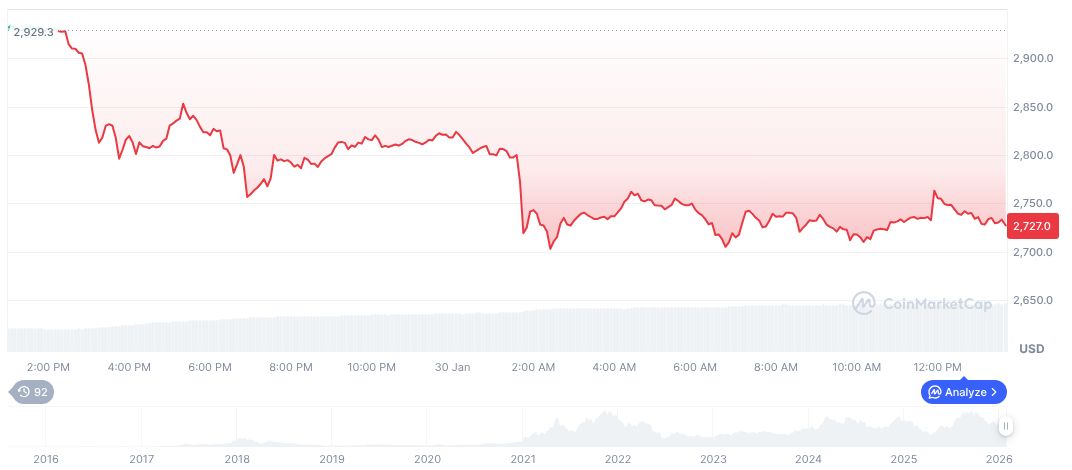
The Coincu research team suggests that by aligning jurisdictional definitions of crypto markets, the regulatory environment may stabilize, attracting greater institutional investment. This strategic alignment could reduce compliance issues faced by crypto entities in divergent frameworks.