How a chat with ‘auntie’ helped a young worker bag free money in a UK pensions scheme


Joining a company scheme at 18 seemed ‘too expensive’ for Rio until someone close put him right One 20-year-old’s financial future is looking brighter after his aunt convinced him to join his workplace pension and take advantage of the “free money” on offer. Rio started working at 18, too young to be “auto-enrolled” into his company’s pension scheme. He as given the option to join but had decided...
One 20-year-old’s financial future is looking brighter after his aunt convinced him to join his workplace pension and take advantage of the “free money” on offer.
Rio started working at 18, too young to be “auto-enrolled” into his company’s pension scheme. He as given the option to join but had decided not to because he felt it was too expensive – but, fortunately for him, his “Auntie Susan” is a pensions expert at a leading retirement firm, and she soon put him right.
Nearly two years later, being in the scheme has cost him about £2,000 in his own contributions, but he already has £8,000 in his fund.
“I’m glad my Auntie Susan could explain to me what I would be losing out on if I didn’t join my workplace pension early,” he says. “All I really saw was the fact that I would have less money to spend right now, but I didn’t really understand the free money I was giving up.”
Since 2012, employers have had to enrol eligible workers into a workplace pension scheme into which both pay money. This regime is known as automatic enrolment, or auto-enrolment for short. It usually starts at age 22, if you are employed and earn more than £10,000 a year.
But you do not have to wait until you meet the criteria – you can ask to join a workplace pension from age 16.
Starting to pay into a pension early can make a huge difference to the amount you end up with when you retire. The government says every £1 that you save into a pension in your early 20s could be worth £9 by the time you retire. That’s includes tax relief and your employer’s contribution, but the lion’s share is investment growth.
With this in mind, parents, relatives and family friends are being urged to have this sort of conversation with young people about the benefits of joining a workplace scheme as soon as they are able to, as opposed to waiting until they are automatically put into it by their employer.
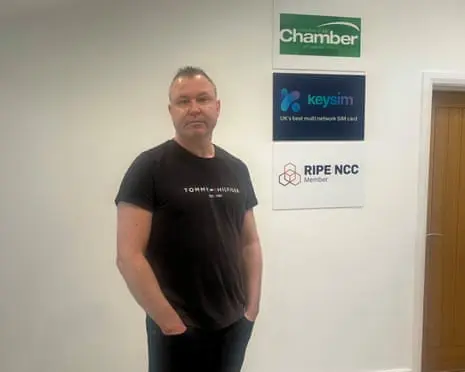
Rio’s Auntie Susan is Susan Hope, a pensions expert at Scottish Widows who specialises in workplace schemes and retirement planning.
Rio left school and got a job as a technical trainee in September 2024.
She says: “The next month, he told me he wasn’t going to join his workplace pension because it was ‘too expensive’. What he meant was that he felt his £83 a month (5% employee contribution) was too much for him.”

Hope adds: “We had a long conversation about the benefits of pension saving and the free money available.”
Under auto-enrolment, the minimum contribution into a pension totals 8% – usually made up of 4% from the worker’s salary and 1% from the government in tax relief, plus 3% from their employer.
Rio – who lives and works in Scotland – had been told he would benefit from a more generous payment from his company. If he paid in 5% of his earnings, he would get a 10% contribution paid into his pension by his employer.
Hope worked out that once the employer contribution and tax relief (a top-up payment from the government) were taken into account, Rio’s £83 a month payment was turning into £312 a month. That was an extra £229 a month going towards his financial future.
For pension savers investing over a long period, returns will hopefully be turbocharged by the power of compounding. This is where your investment grows, and so you have more money to attract future returns.
Hope says in the case of her nephew, those extra four years of contributions before being auto-enrolled at age 22 could mean – assuming 5% investment growth – that he ends up with an extra £110,000 in his pension after 40 years.
“I know how much of a material difference starting early can make to your financial future,” she says.
“We need to have these conversations with our families and friends early, so young people can understand the power and the benefit of compounding and what it means for their retirement.”
Rio says he is very happy he had that chat.
He adds: “I was really pleased to get my first annual statement, and now I have my pension in an app, too, so it’s good to check it and see the value increasing!”
How much will I get when I retire?

Almost half of savers have avoided asking a question about their pension because they thought it was too basic, a survey has found.
Research by the retirement savings provider PensionBee found 49% of people were put off making an inquiry about their money out of embarrassment, despite many sharing the same concerns.
When asked what part of their pension they were least sure about, 22% said it was how much they would have when they retired while 19% said it was how much they needed to save. Only 13% said they were very confident about how their pension works.
PensionBee said people’s worries about looking uninformed could be preventing them from getting the information they need to make better retirement decisions.
Becky O’Connor, the head of pensions at the company, says: “Nobody wants to admit they don’t know what their pension is worth, or that they’ve lost track of an old workplace pot from a job they left a decade ago, but there’s no such thing as a silly pension question when it comes to your retirement savings, and it’s far better to overcome the shame and ask it, rather than be left in the dark.”
Related Articles
- Stock Markets News
Why Gwen, 54, shouldn’t feel bad about spending a bit more in retirement
- World News
Higher training costs for older workers risks plan to tackle youth jobs crisis, employers say
- World News
‘I earn £126,000 – but nothing’s left at the end of the month’: readers react to the budget
- Business News
Money moves you can make before the Budget - and one key thing to avoid
- Business News
What the Budget offers for under 25s - and what it leaves out